Translated with AI




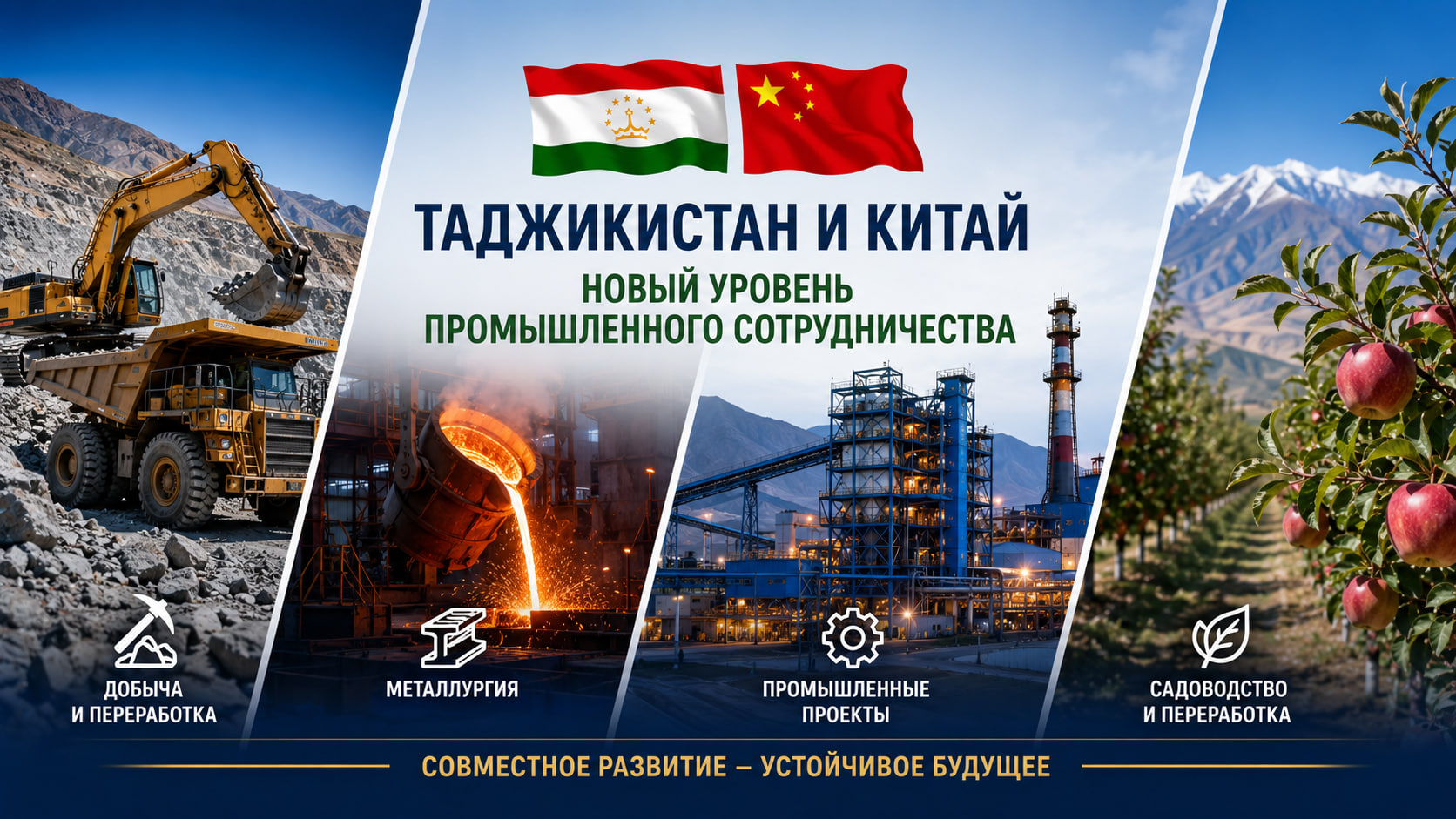
Tajik President Emomali Rahmon's working visit to Sughd Region from July 7–9, followed by Tajik-Chinese talks in Dushanbe on July 10, demonstrated a new stage in the economic partnership between the two countries. From mining and metallurgy to modern horticulture, cooperation between Dushanbe and Beijing is gradually becoming a key factor in the country's industrial development.
New production and new projects
On July 7, the head of state's working visit began in the Ayni District, where an antimony production facility was commissioned at TALCO Gold CJSC. The new plant is capable of processing up to 5,000 tons of raw materials annually and producing metallic antimony.
The enterprise was created to develop the Kanchoch gold-antimony deposit, whose reserves exceed 23 million tons of ore, containing approximately 50 tons of gold and over 265,000 tons of antimony. Experts estimate it to be one of the largest deposits in the region.
On the same day, the President laid the foundation stone for another metallurgical plant, which, once operational, scheduled for August 2027, will be able to produce up to two tons of gold annually.
Speaking to the company's management, Emomali Rahmon emphasized that the development of the processing industry and the production of high-value-added products are the most important areas of the state policy for accelerated industrialization.
The largest Tajik-Chinese metallurgical project
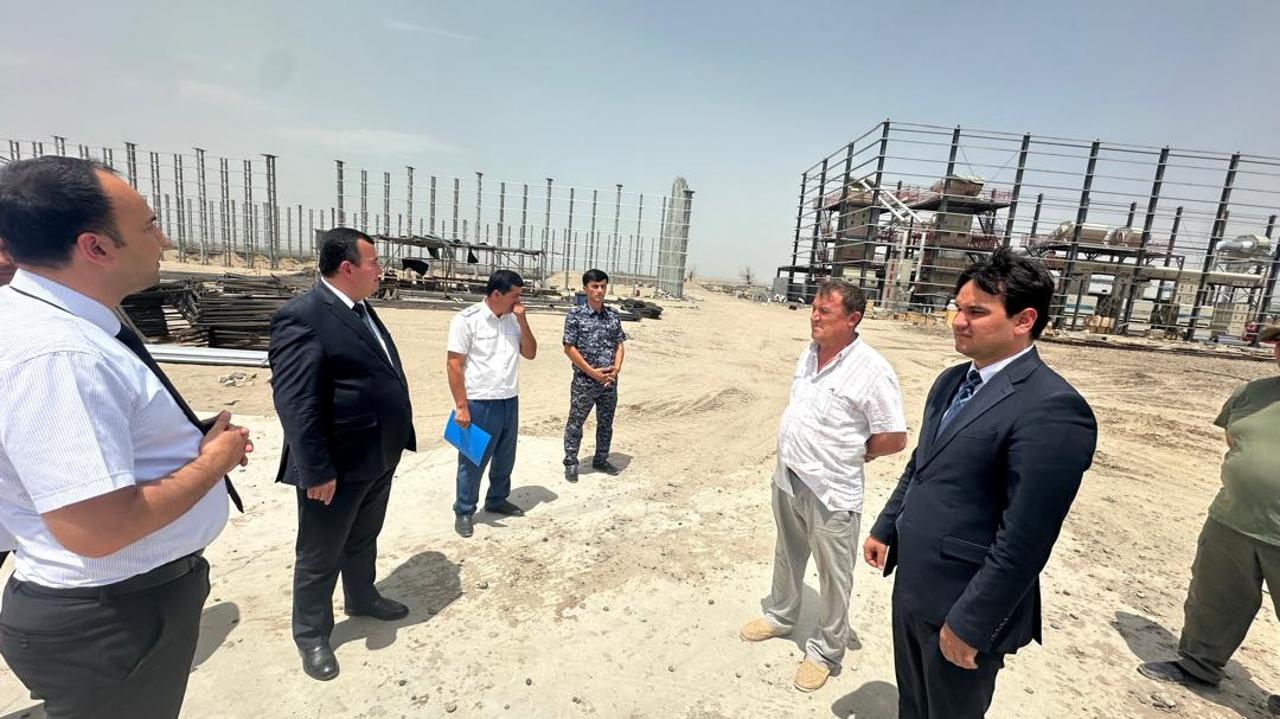
One of the highlights of the working trip was a visit on July 9 to the construction site of the Tajik Metallurgical Plant in the Bobojon Gafurov district.
The project is being implemented on the territory of the Shokhkadam iron ore deposit, the confirmed reserves of which, after additional geological exploration, amount to 59 million tons.
The plant's construction is divided into two phases. The first involves the production of iron ore concentrate and pellets and is scheduled for completion in September 2027. The second phase, scheduled to run until 2029, will enable the production of iron briquettes with an iron content of 90 percent, as well as blooms and construction rebar.
Once it reaches its design capacity, the plant will be able to produce up to 300,000 tons of metal products annually, significantly reducing the country's dependence on imports.
The President recalled that in 2025 alone, Tajikistan imported rebar worth almost $600 million, emphasizing the need to develop its own metallurgical production.
Chinese technologies become the basis of the project
The wide participation of Chinese companies gives particular significance to the new metallurgical complex.
The general contractor for the construction is the Chinese company NETC, responsible for organizing the entire production cycle—from the production of iron ore concentrate to the manufacture of finished metal products.
Another key partner of the project is the Chinese company Lisen, which is participating in the construction of the plant together with the Tajik Metallurgical Plant.
In cooperation with NETC, the construction of a 90 MW power supply center is also underway, which will ensure the stable operation of future production.
At the same time, all necessary infrastructure is being created. A 14.3-kilometer-long 220 kV high-voltage power line, a 17.5-kilometer-long water pipeline with four pumping stations, and the expansion of the road to the deposit are ongoing.
More than 1,200 specialists are working around the clock on the construction site. After the first phase is launched, 900 permanent jobs will be created, and upon completion, this number will exceed 1,500.
Negotiations with leading Chinese metallurgical companies
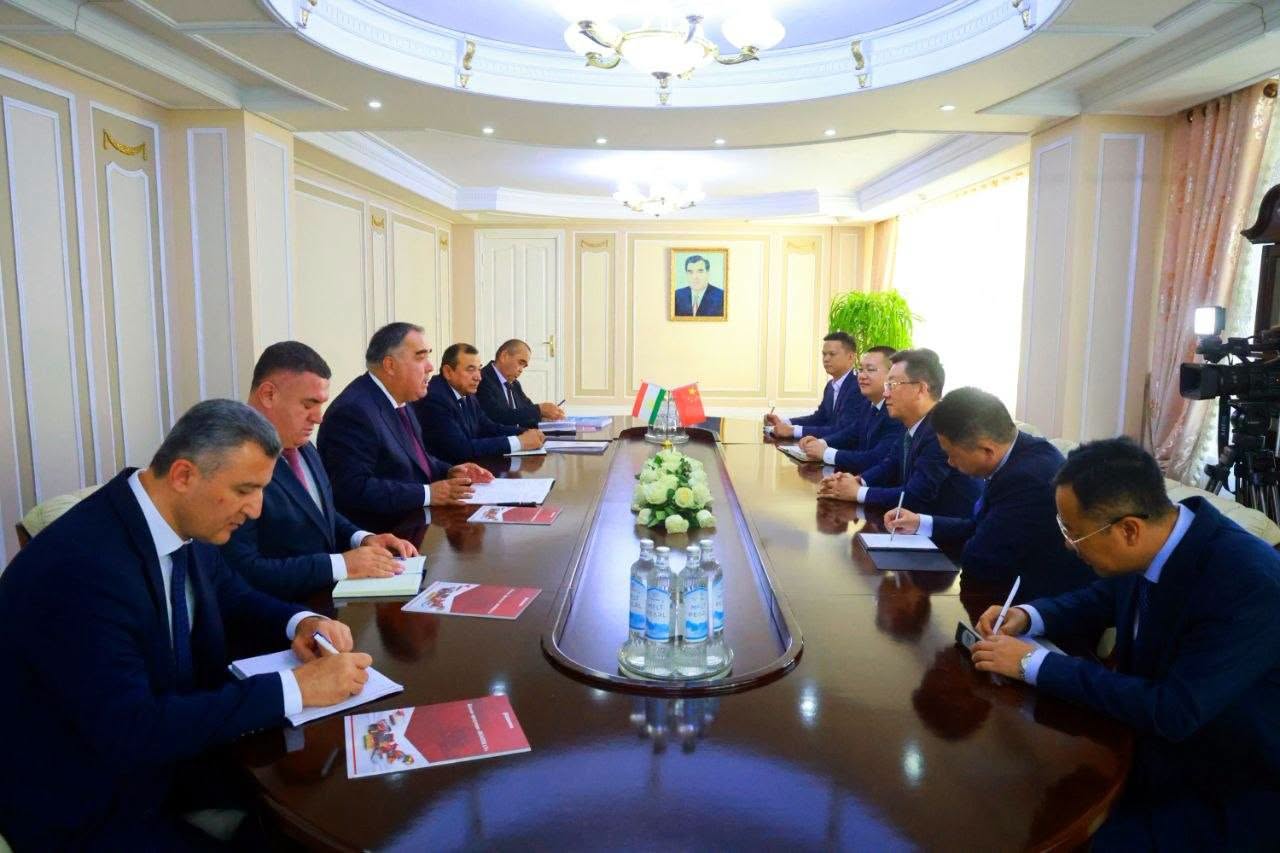
On the same day, July 9, Emomali Rahmon held a meeting with the heads of the three largest metallurgical companies in the People's Republic of China.
The parties discussed prospects for cooperation in the ferrous metallurgy, cement, lime, and glass production, and the implementation of modern technologies.
Particular attention was paid to cooperation with MMC Capital Engineering & Resource Inc. Corporation, whose participation is considered an important step in the development of modern industry in Tajikistan.
According to meeting participants, the implementation of such projects will increase industrial exports, create new jobs, and enhance the competitiveness of domestic industry.
New investments are also coming to agriculture
The development of cooperation with China is not limited to industry.
On July 10, Tajikistan's Minister of Economic Development and Trade, Abdurahmon Abdurahmonzoda, met with Yang Xixun, Chairman of the Board of Directors of the Chinese company Shaanxi Apple Group Co., Ltd.
The negotiations took place as part of the implementation of the memorandum signed on May 11, 2026, in Beijing.
The parties discussed the creation of modern apple orchards, the construction of processing plants in free economic zones, the introduction of new technologies, and attracting Chinese investment in the agricultural sector.
The Chinese company confirmed its interest in long-term cooperation in Tajikistan and its willingness to invest in the development of modern horticulture and agricultural processing.
Partnership becomes strategic
The events of July 7–10 demonstrated that cooperation between Tajikistan and China goes far beyond trade and infrastructure construction.
Today, Chinese companies are becoming key partners in the implementation of large-scale industrial projects, the introduction of modern technologies, the development of mineral deposits, the construction of processing plants, and the development of the agro-industrial complex.
The creation of new production facilities, the construction of the country's largest metallurgical complex, the expansion of cooperation with Chinese investors, and the implementation of joint projects indicate that the Tajik-Chinese economic partnership is entering a new phase—a phase of deep industrial cooperation focused on the long-term development of Tajikistan's economy, the creation of thousands of jobs, and an increase in the country's export potential.