Translated with AI






























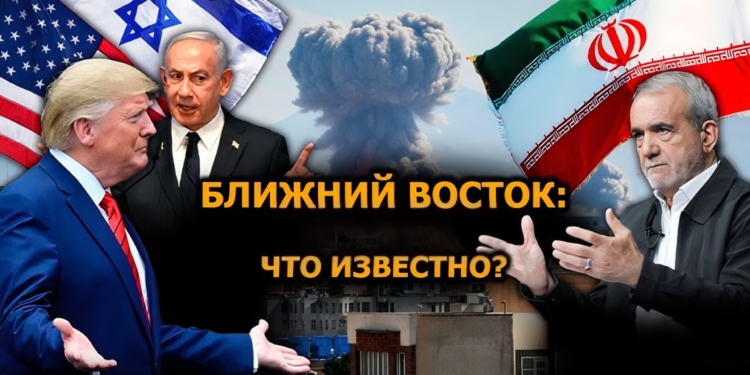
On the 34th day of the US-Israeli war against Iran, the world finds itself on the brink of a major escalation, accompanied by strikes on key infrastructure, an expanding geography of attacks, threats to close the Strait of Hormuz, and the conflict's growing impact on the global economy.
UN Secretary-General António Guterres stated through his press service that the world is on the brink of a wider war that could engulf the entire Middle East and have a dramatic impact on the entire world. According to him, the consequences of the current conflict are already being felt globally. He emphasized that disputes must be resolved peacefully and the "spiral of death and destruction" must be stopped.
Following an online discussion with representatives of 40 countries blocking the Strait of Hormuz, UK Home Secretary Yvette Cooper emphasized the importance of diplomatic and economic pressure on Iran to ensure safe passage of ships. She stated that "Iran's reckless strikes target international shipping and are an attempt to hold the global economy hostage." She emphasized the need for diplomatic and economic pressure, as well as dedicated military strategists, to maintain safe navigation in the long term, noting that all possible diplomatic, economic, and coordinated measures to open the Strait are being considered.
Western media outlets note that the issue of ship passage through the Strait of Hormuz during an armed conflict remains complex. According to international law, neutral vessels must be allowed to transit the strait. Ships from countries involved in the conflict may also transit the neutral part of the strait, provided they do not use it for military action. Whether the strait currently contains neutral waters remains controversial, as part of the strait is considered Iranian territorial waters, while part is considered Omani. Despite Muscat's assurances of neutrality, the Iranian military has repeatedly fired on Omani territory, which, according to some experts, calls into question the strait's de facto neutral status.
Additional complications arise from the convoying of ships by warships. When ships are escorted by a warship, the "nationality" of the convoy is determined by the country the ship represents. Thus, if a US Navy ship escorts vessels belonging to neutral countries, the entire convoy may be considered a legitimate target for Iran. However, if both US and neutral ships are involved in the escort, the convoy will not be considered neutral, and the neutral countries themselves may be effectively drawn into the conflict. The situation is further complicated by the fact that the UN Convention on the Law of the Sea only partially regulates these issues: Iran has signed but not ratified it, and the US has not.
Iranian Foreign Minister Abbas Araghchi stated that American strikes on civilian infrastructure will not lead to victory and are damaging the US's reputation. He asserted that attacks on civilian targets, including unfinished bridges, will not force the Iranians to surrender and demonstrate the "moral collapse of the enemy." He emphasized that the destroyed facilities can be restored, while the US's reputation cannot.
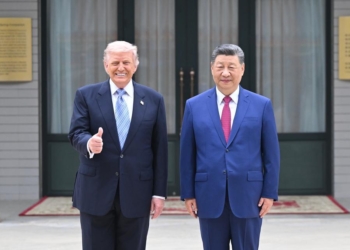
Earlier, US President Donald Trump called on Iran to conclude a ceasefire agreement before the country's infrastructure is completely destroyed. He also stated his readiness to carry out further strikes on bridges, power plants, and oil infrastructure if the deal is abandoned.
Airstrikes were reported to have struck a bridge connecting Tehran with the city of Karaj. The attack killed eight people and injured nearly 100. The bridge, the tallest in the Middle East at 132 meters, spans a gorge west of Tehran.
The UAE Ministry of Defense reported that its air defense forces shot down 19 ballistic missiles and destroyed 26 attack drones launched by Iran. No casualties or damage were reported. The Jordanian Ministry of Defense also reported intercepting one ballistic missile incoming from Iran.
The Islamic Revolutionary Guard Corps (IRGC) reported striking the American aircraft carrier USS Abraham Lincoln (CVN-72) using four Ghadr missiles as part of the 91st wave of Operation True Promise 4. It also claimed to have struck US targets in the UAE and to have targeted a "secret meeting of American military specialists." Furthermore, the IRGC reportedly downing a fighter jet near the Qeshm and Hengam islands in the Strait of Hormuz. US Central Command (CENTCOM) denied this information, stating that all American aircraft are accountable and that similar Iranian claims have previously proven false.
According to CNN, citing US intelligence sources, approximately half of Iran's missile launchers remain operational despite US and Israeli strikes. Iran also retains thousands of drones, roughly half of its total capability. It is noted that some of these launchers may be temporarily inaccessible, but not destroyed. A significant number of coastal defense cruise missiles also remain intact, allowing Iran to maintain a threat to shipping in the Strait of Hormuz.
An Iranian attack reportedly damaged a U.S. AN/TPY-2 radar at Prince Sultan Air Base in Saudi Arabia, part of the Terminal High Altitude Area Defense (THAAD) missile defense system. Satellite images show damage to the antenna. Earlier reports also indicated damage to an AWACS aircraft and a tanker, injuring at least 10 U.S. service members. The strikes on radar systems are reportedly aimed at reducing the U.S.'s ability to detect missiles and drones.
US Defense Secretary Pete Hegseth, according to Time magazine, was surprised by the scale of Iran's retaliatory strikes. Sources claim he was "caught off guard," despite Pentagon officials' statements about being prepared for various scenarios.
Connecticut Senator Chris Murphy stated that the United States is losing this military campaign. He argued that the United States cannot destroy all of Iran's missile and drone capabilities, and that the country is demonstrating greater influence in the region than it did before the conflict, particularly in its control of the Strait of Hormuz. He also noted the significant financial costs and human losses.
Oil prices have risen sharply amid the conflict. Brent futures reached $109.03 per barrel, up 7.78%, while WTI reached $111.54 per barrel, marking their largest jump since 2020. The price increase is driven by uncertainty about the conflict's end date and concerns about oil supply disruptions.
Iranian drones attacked the Mina al-Ahmadi oil refinery in Kuwait, located 45 kilometers south of the capital. The strikes caused fires at the facility. Kuwaiti air defense forces repelled the missile and drone attacks. This is not the first strike on this facility.
A fire was also reported at the Habshan gas processing plant in Abu Dhabi after missile strikes were repelled. Operations at the plant were temporarily suspended. The country has issued multiple missile alerts.
Despite the tensions, some ships have begun transiting the Strait of Hormuz. According to analytics firm Windward, the number of such ships has increased to 16 per day, but this is significantly lower than the pre-war level, when approximately 130 ships crossed the strait daily. One of the ships, linked to France, was reportedly able to transit the strait by traveling along the Iranian coast.
Amid the threat of a blockage, Persian Gulf countries are discussing the construction of alternative oil supply routes. Pipeline projects costing between $5 billion and $20 billion are under consideration, which would allow oil exports to bypass the Strait of Hormuz.
The conflict is having an impact on the global economy. In particular, Australia has seen rising diesel prices, supply disruptions, and increased shipping costs. This increases inflation risks, increases the likelihood of a recession, and could lead to higher interest rates.
Thus, on the 34th day of the war, intense fighting continues, with mutual attacks on military and infrastructure facilities, tensions around the Strait of Hormuz persisting, and the consequences of the conflict are increasingly having a noticeable impact on the global economy and security.