Translated with AI


































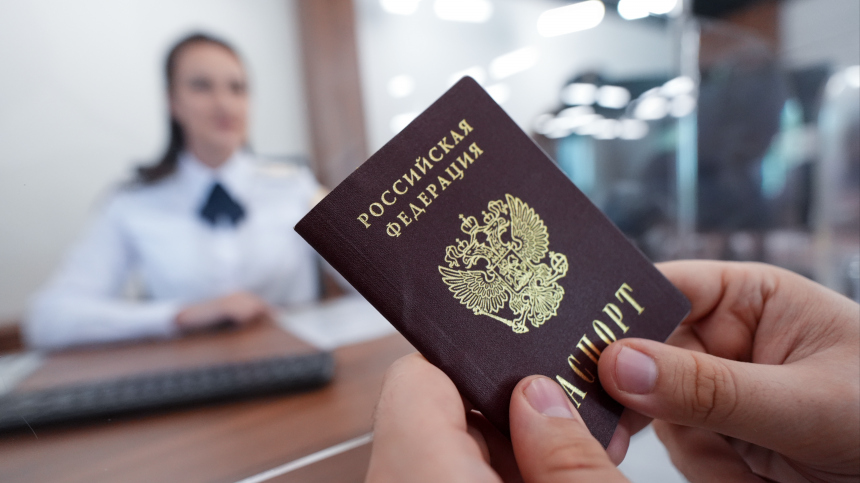
Russia has passed a law that prohibits foreign citizens with an outstanding or unremoved criminal record from obtaining citizenship, permanent residence, or temporary residence permits. The State Duma of the Russian Federation adopted the corresponding law in its second and third (final) readings at its session on Tuesday.
According to the document, the restrictions apply to individuals with outstanding or unremoved criminal records for crimes committed both within and outside of Russia. Furthermore, if such a criminal record is discovered after a residence permit or temporary residence permit has been issued, the previously issued documents are subject to cancellation.
However, the law provides for a number of exceptions. Foreign citizens under the age of 14, as well as individuals recognized as refugees or granted political or temporary asylum in Russia, are exempt from the requirement to provide proof of criminal record, provided they have not lost their status.
The same exemption applies to foreign citizens serving under contract in the Russian Armed Forces or other military formations, as well as to those who previously served in such a capacity and took part in combat operations as part of the Russian Armed Forces or military formations.
Foreign citizens residing in Russia on the basis of a temporary residence permit issued for the purpose of obtaining an education will also not be required to provide a certificate of criminal record.
The law also provides for a transition period. For two years from the date of its entry into force, Ukrainian citizens, as well as foreign citizens and stateless persons entitled to permanent residence in Ukraine, are exempt from the requirement to provide proof of criminal record.
State Duma Speaker Vyacheslav Volodin previously announced that, starting in 2024, Russia would adopt 30 federal laws aimed at improving migration policy, 21 of which were initiated by deputies. He stated that foreign citizens coming to Russia for work, study, or permanent residence must comply with Russian law, be proficient in Russian, and respect the country's traditions, history, and culture.