Translated with AI
























Analytical review for the 35th anniversary of state independence of the Republic of Tajikistan
The scale and meaning of Tajik migration
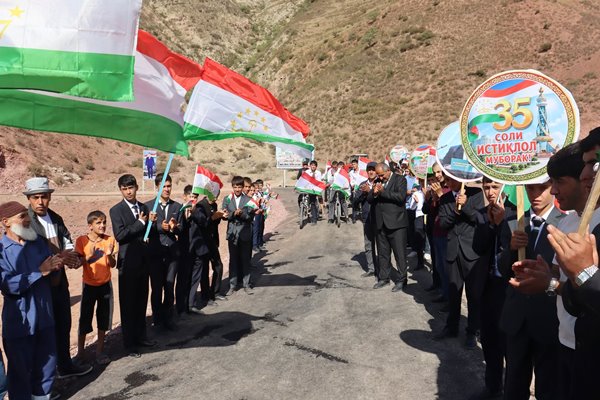
In 2026, the Republic of Tajikistan celebrates the 35th anniversary of its state independence. During this historical period, the country has undergone a complex and multifaceted process of political development, profound economic transformation, and large-scale social modernization. One of the most significant and defining socioeconomic processes in the republic's recent history has been external labor migration. For millions of Tajik citizens, it has served as an effective strategy for adapting to changing economic realities, while for the state, migration processes have become a crucial factor in maintaining macroeconomic and social stability, as well as a catalyst for long-term growth.
Over the 35 years of independence, the total volume of official remittances to Tajikistan has amounted, according to expert estimates, to approximately US$65 billion [1]. This sum is colossal: it is several times greater than the total volume of foreign direct investment (FDI) and the total volume of official foreign aid received by the republic throughout its entire modern history. According to various estimates, between 3 and 4 million Tajik citizens have gone through the school of labor migration during this period, gaining unique practical experience of working abroad. The Russian Federation has traditionally remained the main destination for Tajik migrants. Nevertheless, current statistics record the beginning of profound structural changes: the number of Tajik labor migrants in the Russian Federation has decreased by approximately 16% – from 978,000 people in the first half of 2024 to 825,000 people in the first half of 2025 [2]. Despite the decline in the physical flow, remittances continue to play a decisive role in the national economy.
The total volume of remittances from labor migrants to Tajikistan in 2025 amounted to approximately US$5.9–6.1 billion, and for the first half of 2026, the inflow is estimated at between US$2.8–3.1 billion [1] . Thus, in the first half of 2025, their volume reached US$1,066.9 million, which demonstrated a significant increase of 57% compared to the same period of the previous year [3]. Thirty-five years of independence represent 12,784 days of uninterrupted history, a significant part of which is inextricably linked to the creative work of Tajik migrants. Through their activities, they have contributed not only to the growth of the well-being of their own families, but also to the qualitative development of national human capital, as well as the long-term strengthening of the country's economic sustainability.
- Historical periodization of the development of migration processes
An analysis of the evolution of external labor migration allows us to identify four key stages, each of which reflects the specifics of the internal and external geopolitical and economic situation:
1.1. 1991–2000: Migration as a Survival Strategy
The first decade of sovereignty was marked by a profound systemic crisis caused by the collapse of the USSR and the dire consequences of internal civil conflict. High unemployment and declining real incomes turned external migration into a key, and often the only, mechanism for physical survival for a significant portion of the population.
1.2. 2001–2013: Formation of a sustainable migration system
The period of dynamic economic stabilization in the region was characterized by an exponential growth in labor migration. During these years, stable institutional channels for employment, extensive transnational migration networks, and a seamless infrastructure for cross-border remittances were established.
1.3. 2014–2021: Adaptation to New Economic Realities
This stage was marked by significant volatility in the Russian ruble exchange rate, a consistent tightening of migration legislation in recipient countries, and the global shock of the COVID-19 pandemic. Despite these complex barriers, the migration model demonstrated high adaptability and remained fundamental to maintaining Tajikistan's balance of payments.
1.4. 2022–2026: Migration in the Context of Global Transformation of Labor Markets
The current stage is characterized by a sharp increase in international competition for high-quality labor resources, deep digitalization of registration and migration procedures, as well as a pronounced vector of diversification of geographic areas of employment for citizens of the Republic of Tatarstan.
Life "before" and "after": New challenges for foreign workers in Russia
However, the lives of migrant workers in Russia today can be clearly divided into two fundamentally different periods: before the tragedy at Crocus City Hall and after. This tragic event was a tectonic shift that changed the rules of the game overnight. The life of the average worker within the country became incomparably more difficult, anxious, and complex. What was previously perceived as routine bureaucratic burdens has transformed into a harsh system of daily pressure. Migrants faced not only an unprecedented increase in scrutiny by law enforcement agencies but also a complex psychological climate in society, where trust has given way to wariness. Everyday life, finding housing, renewing documents, and even a simple ride on the subway now require enormous emotional stress and caution from foreign workers.
- Macroeconomic significance of labor migration
For comparative analysis, summarized macroeconomic indicators of financial inflows into the Republic of Tajikistan over the years of independence are presented below.
Table 1. Comparative analysis of the structure of external financing of the economy of the Republic of Tatarstan (1991–2026)
By channeling funds into housing construction, children's education, medical services, and the opening of local micro-businesses, labor migrants have de facto become the largest collective public investors in independent Tajikistan.
- Demographic imperatives and pressure on the domestic labor market
The importance of regulating migration processes is closely linked to the demographic context. Over the past 35 years, Tajikistan's population has nearly doubled—from 5.5 million to approximately 11 million. According to UN medium-term demographic projections, the country's population could reach 14.5 million by 2050. An analysis of operational data for 2025 reveals consistently high population reproduction rates:
– Number of births: 255.1 thousand people;
– Number of deaths: 34.4 thousand people;
– Absolute natural increase: 220.7 thousand people.
Thus, an annual population growth of 200,000–230,000 people means that a cohort of young people comparable to the population of a large industrial city enters the national labor market each year. On a Russian scale, this annual influx is equal to the entire population of cities such as Pskov, Veliky Novgorod, Syktyvkar, Stary Oskol, or Korolev. For Tajikistan, this scale is even more impressive: the annual influx exceeds the population of such major regional centers as Khujand, Bokhtar, or Kulob, effectively doubling their demographic weight on the labor force map.
- Transformation of Human Capital: "Migration University"
The key long-term outcome of the thirty-five-year period is not only financial capital but also a qualitative change in the structure of the country's human potential. In terms of scale, this process is comparable to the functioning of a continuous national "super-university." The passage of millions of citizens through competitive international labor markets has enabled them to develop essential modern competencies:
– professional and technical skills: practical mastery of advanced
– production and construction standards, modern technologies and industrial process management methods.
– entrepreneurial competencies: gaining experience in running an operational
– business activities, financial planning and risk management in a highly competitive environment.
– linguistic and cultural capital: deep mastery of foreign languages,
Social and communication skills:
Returning to their homeland, the "graduates" of this practical school serve as proponents of progressive ideas and quality standards. The evolution of the Tajik migrant over 35 years demonstrates a fundamental shift: from a forced refugee and low-skilled laborer in the early 1990s to a conscious professional, qualified specialist, and investor in the second half of the 2020s.
Labor potential of migration in the mirror of Russian financial indicators
According to expert estimates by Russian researchers, the contribution of migrant labor to Russia's GDP may amount to between 5 and 8%. At 5-8% of Russia's GDP, migrant labor's contribution ranges from 10.68 to 14.95 trillion rubles, which, converted at the official Central Bank exchange rate, is equivalent to approximately $127.8-$178.9 billion. This amount is several times greater than Russia's annual government spending on healthcare, education, and infrastructure development combined. The entire annual GDP of economies such as Hungary, Kazakhstan, or Morocco falls entirely within this range. Here's a simple arithmetic calculation: If Tajik migrant workers have remitted a total of $65 billion to their homeland over the past 35 years, this means they have invested an average of $1.86 billion in the Tajik economy annually. This financial flow amounted to approximately $155 million monthly, meaning migrants were sending home over $5 million daily. What do these $65 billion mean for the Russian Federation itself? According to the laws of economics, to send home one dollar, a migrant must earn almost two in Russia (including living expenses, housing, and patents), and produce goods worth four. Thus, the recorded $65 billion in remittances actually means that Tajik workers have created added value for the Russian economy, built infrastructure, and provided services worth over $220–250 billion.
- Public Diplomacy Tools
Migrant workers are key players in Tajikistan's soft power abroad. Through their daily work activities, demonstrating high standards of work ethic, and participating in the socio-cultural life of their host countries, migrants strengthen bilateral humanitarian ties. Of particular importance here are the activities of national diasporas, the holding of ethnocultural events (in particular, the international holiday Navruz), and the functioning of public associations that foster constructive intercultural dialogue.
- Contemporary challenges and institutional barriers (2024–2026)
At the present stage, migration flows are facing serious pressure from the regulatory authorities of traditional recipient countries. During 2024–2025, the Russian Federation saw a significant expansion of regulatory restrictions in the area of employment of foreign citizens. By the end of 2025, 49 of the 89 constituent entities of the Russian Federation had already introduced strict sectoral bans excluding the possibility of attracting migrants to healthcare, general and preschool education, social services, retail trade, and pharmaceutical production [2]. An additional financial and administrative burden was created by the adoption by the State Duma of the Russian Federation, jointly with the Federation Council, of a regulatory act providing for a multiple (5–12 times) increase in state duties in the area of registration of migration status and permits [4]. The adoption of the bill will allow regions to receive additional income from patents purchased by migrants. The potential volume of revenue for regional budgets after the adoption of the law could amount to billions of rubles [2] . After 2024, migration policy became one of the main areas of legislative activity of the State Duma. According to Vyacheslav Volodin, during this period 25 laws have already been adopted regulating issues of migration, control over the stay of foreign citizens and the fight against illegal migration [3] .
Over the 35 years of independence, Tajikistan has developed a modern migration policy: more than 50 laws, hundreds of regulations, state programs, and international agreements have been adopted.
- Strategic Development Vectors until 2050: Changing the Global Migration Architecture
By the middle of the 21st century, migration will be determined by a global transition from low-skilled physical labor to intellectual and high-tech mobility in the context of robotics and the introduction of artificial intelligence systems.