Translated with AI























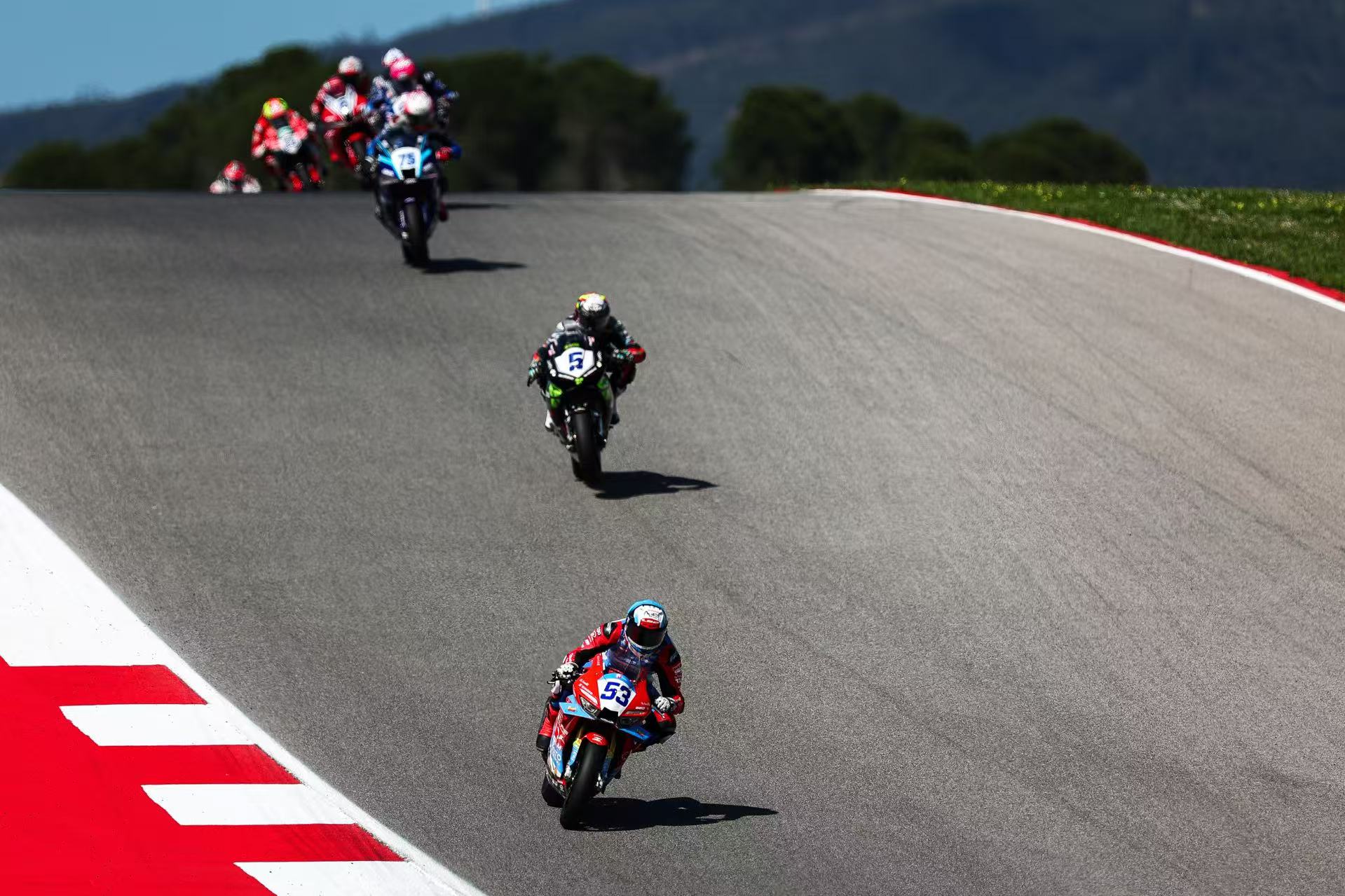
At the World Superbike Championship (WSBK) round in Portugal, French rider Valentin Debize, riding a Chinese ZXMOTO motorcycle, won both middleweight races. This result broke the long-standing monopoly of European, Japanese, and American motorcycle brands and marked a historic breakthrough for the Chinese manufacturer on the global stage.
ZXMOTO, a brand named after its founder, Zhang Xue, has raised awareness of the national "Made in China" brand. For Zhang Xue, this victory was the culmination of many years of work. Twenty years ago, as a 19-year-old boy, he chased a film crew in the pouring rain on an old motorcycle, hoping to be spotted by a professional team. He said back then, "Courage makes my life brighter." Today, these words are no longer just words, but a reality. Zhang Xue's path was not one of instant success. He went from repairing and tuning motorcycles to full-fledged design. In 2024, he founded ZXMOTO, and two years later, he led the brand to the top of the world championship. "I've been waiting for this moment for 20 years," he admitted.
However, this success shouldn't be viewed solely as a personal story—it reflects the breakthrough of the entire Chinese motorcycle manufacturing industry. As Zhang Xue noted, "Today, any part can be 100% manufactured in China from a design—and it's in no way inferior to products from Europe, the US, or Japan."
Chongqing, the center of China's motorcycle industry, played a key role. It boasts a fully-fledged supply chain involving over 400 major suppliers and a local content level of over 90%. This provides a unique advantage—high speed: the development and testing cycle for new solutions is reduced from several weeks to just days, significantly reducing the cost of trial and error and creating a favorable environment for technological innovation. At the same time, open labor mobility and a healthy competitive environment accelerate the dissemination of technologies and expertise, laying a solid foundation for sustainable innovation across the industry.
The winning 820RR-RS motorcycle is a clear embodiment of these capabilities. A three-cylinder engine producing 150 hp, sophisticated alloy processing technologies, and precision heat treatment—all of this builds on accumulated industrial potential. Furthermore, the production of key components is completely localized, demonstrating that China has ceased to be a mere "performer" on the periphery of the production chain and is moving toward its role as its "defining and driving link."
The international community also praised this success. WSBK President Gregorio Lavilla noted that such rapid success was no fluke, but rather a testament to the team's solid technical foundation, signifying the Chinese motorcycle industry's emergence at the global racing level. American industry portal Roadracing World also emphasized that ZXMOTO's success is not simply the story of a man "from nowhere" creating a championship brand, but also a testament to the strength of Chinese high-tech manufacturing, its industrial base, and its integrated national supply chain, which have enabled China to outshine its competitors.
Essentially, ZXMOTO's breakthrough is part of a broader picture of China's industrial modernization. Today, it's no longer individual companies that compete, but entire production and supply chains. China, the only country to encompass all UN industrial classification categories, has created the most comprehensive and extensive industrial system in the world—a key pillar of Chinese manufacturing.
From electronics in Shenzhen to robotics in the Yangtze Delta and motorcycles in Chongqing, industrial clusters are becoming a key driver of the transition from "Made in China" to "Created in China." China is connecting disparate innovations into a unified system and turning individual ideas into collective breakthroughs.
China is moving from quantitative growth to qualitative development, from product manufacturing to brand building. This once again confirms that, by relying on its own innovations, China is confidently integrating corporate development into its overall national strategy and consistently strengthening its position as a global industrial power.
Hao Guyuan, CGTN correspondent