Translated with AI












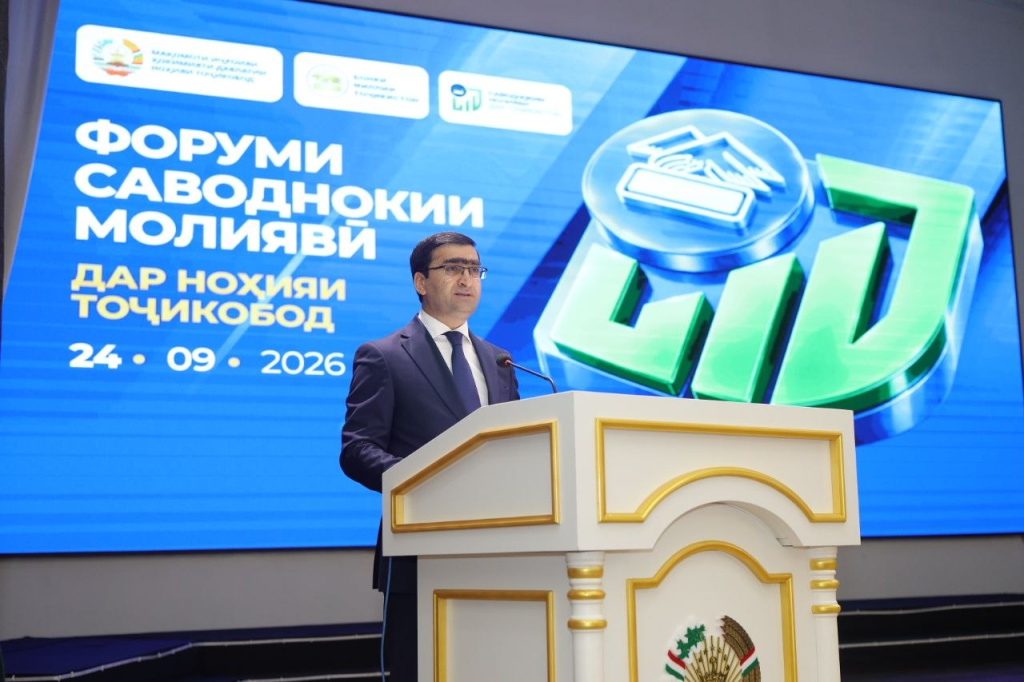




















First Deputy Chairman of the Tax Committee under the Government of the Republic of Tajikistan , Solehzoda Ayubjon Maruf, presented the country's experience in modernizing the tax system and developing digital tax administration at an international conference in Tashkent.
Speaking at an international forum, he noted that tax administrations around the world are currently undergoing a profound institutional transformation. The development of the digital economy, the rapid growth of e-commerce, the expansion of cross-border financial transactions, and the high mobility of capital are creating new challenges for national tax systems.
According to him, the effectiveness of tax administration in modern conditions directly depends on the ability of government institutions to quickly adapt to new economic realities, actively implement digital technologies, and ensure a high level of transparency in relations between the state and taxpayers.
Global trends in tax administration
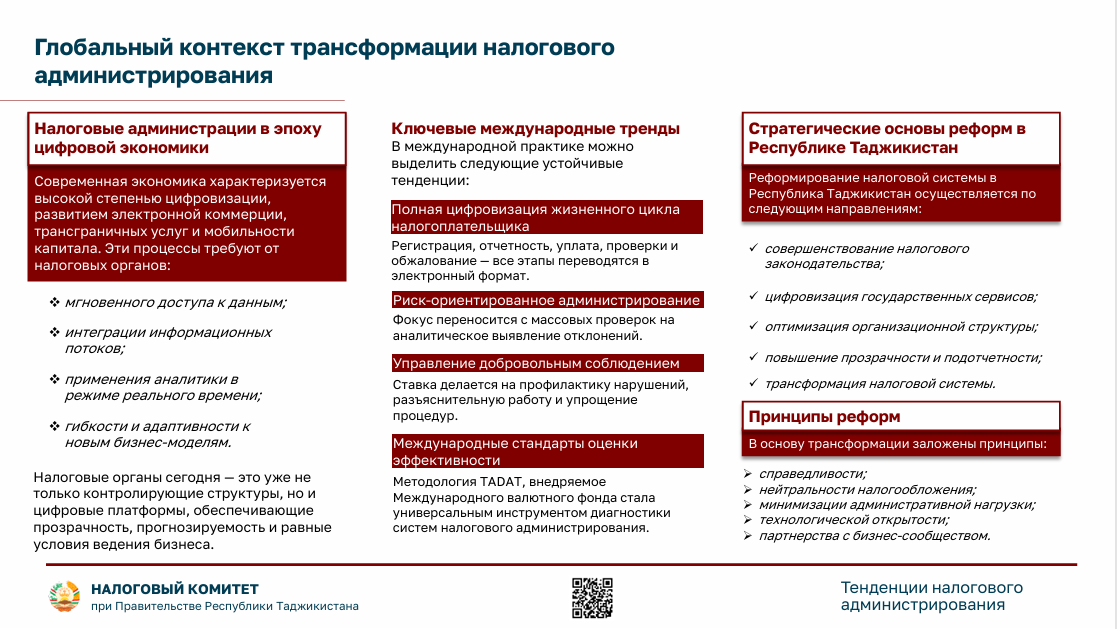
As Solehzoda noted, international practice shows that tax authorities are gradually transforming from traditional control structures into modern digital tax process management platforms.
Among the key trends in the development of tax administration, he highlighted:
- integration of information systems and data flows;
- instant access of tax authorities to financial information;
- using real-time data analytics;
- Flexibility of tax systems in the context of new business models.
According to him, modern tax administrations no longer perform only control functions but also act as digital service platforms that ensure transparency and a level playing field for doing business.
Taxpayer registration, reporting, tax payment, audits, and appeal procedures are gradually being transferred to electronic format.
Digitalization of the tax system in Tajikistan
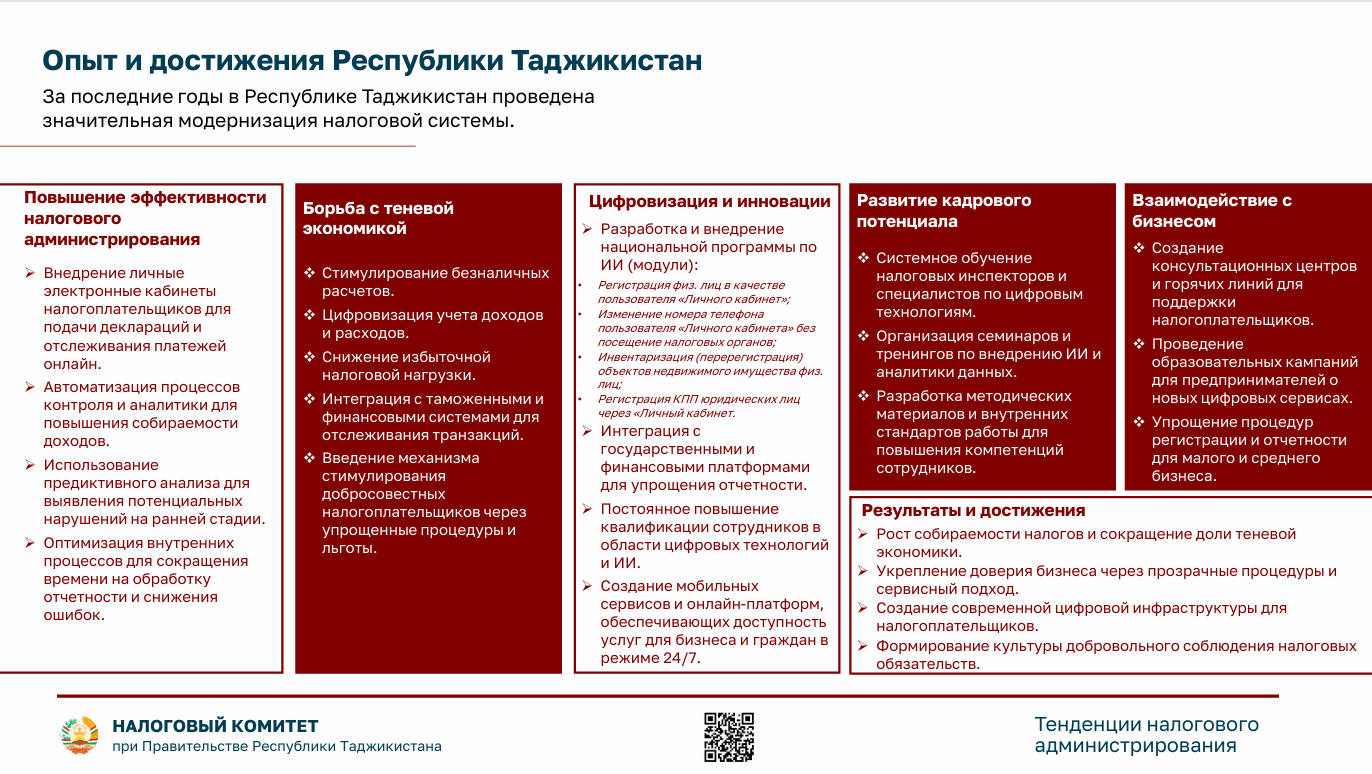
Solehzoda noted that the Republic of Tajikistan is consistently implementing a comprehensive program to modernize tax administration, taking into account global trends and the specifics of national socio-economic development.
The reforms being carried out are based on the following principles:
- fairness of taxation;
- transparency of the tax system;
- reducing the administrative burden on businesses;
- development of partnerships between the state and the business community.
One of the key areas of reform is the digitalization of tax procedures .
Electronic taxpayer accounts have been introduced in the country, which allow:
- submit tax returns;
- interact with tax authorities;
- receive government services online.
Measures are also being implemented to develop:
- electronic invoice systems;
- online cash registers ;
- integration of tax information systems with other government digital platforms.
These solutions help increase the transparency of financial transactions, reduce business administrative costs, and improve tax revenue monitoring.
Risk-based management and data analytics
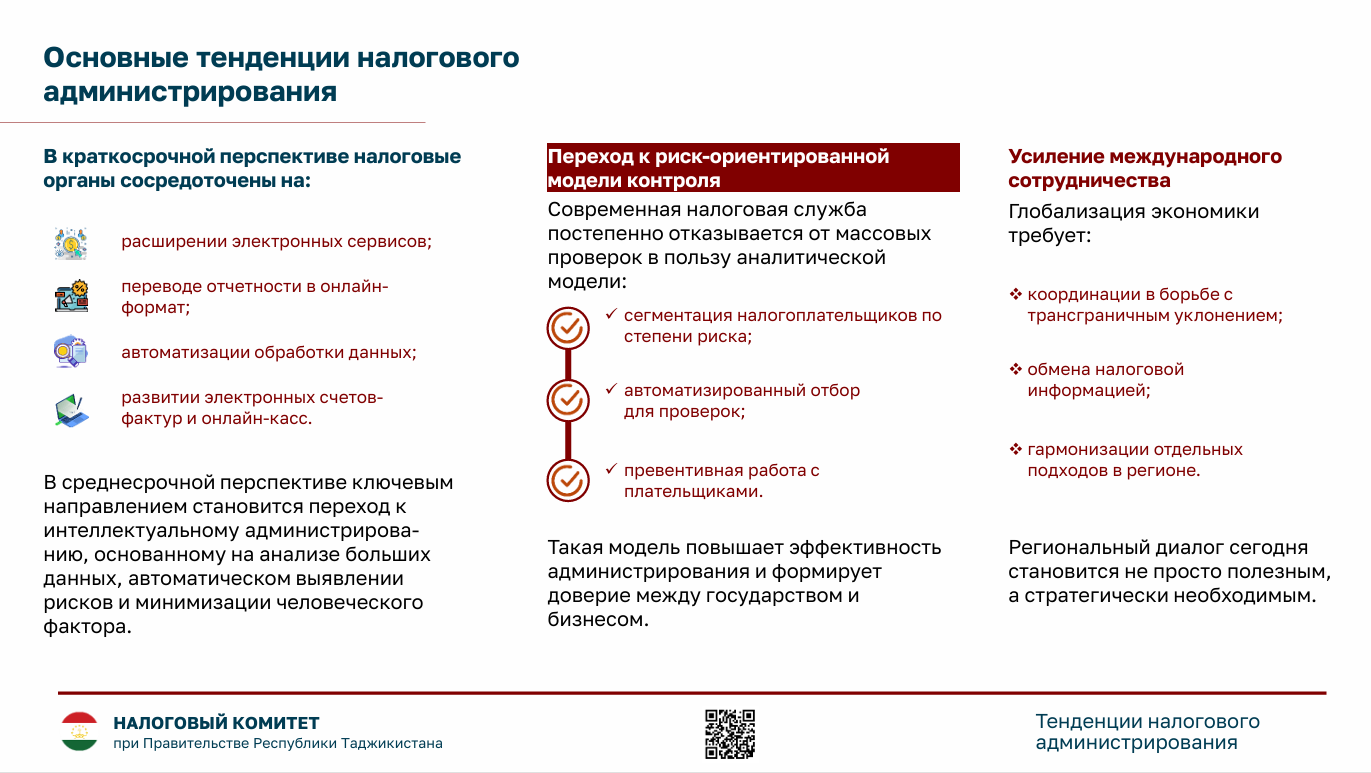
The next stage in the development of tax administration, noted Solehzoda, is the transition to intelligent models of tax process management.
Of particular importance are:
- big data analytical tools,
- automated tax risk assessment systems,
- digital mechanisms for identifying deviations in tax reporting.
The use of such technologies allows us to improve the accuracy of tax analysis, minimize the influence of the human factor, and focus control resources on areas of high tax risk.
At the same time, systematic work is being carried out in the country to reduce the scale of the shadow economy.
In this direction, measures are being implemented to:
- stimulating non-cash payments,
- development of digital payment instruments,
- expanding the use of electronic forms of accounting for business activities.
International assessment of the tax system
International cooperation plays an important role in the development of tax administration.
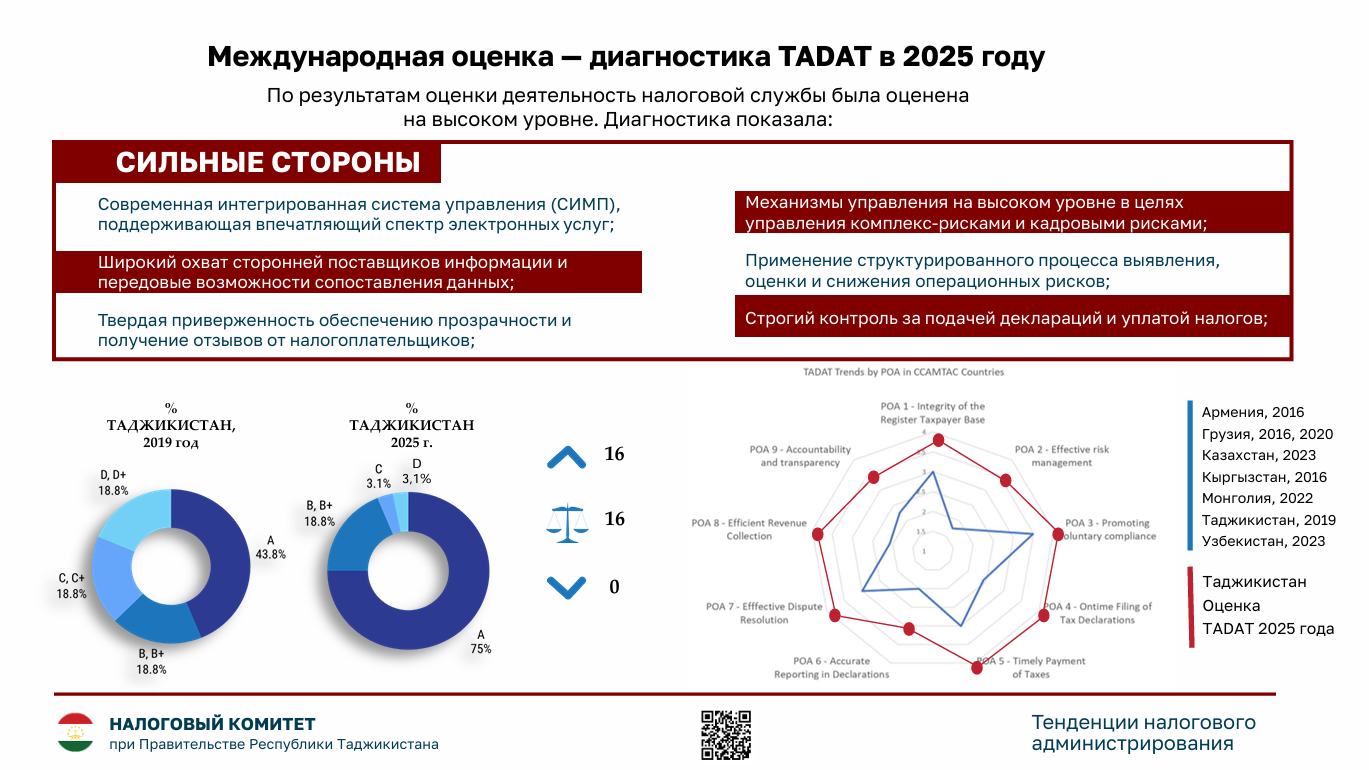
According to Solehzoda, in 2025 the Republic of Tajikistan passed the international diagnostic assessment of tax administrations using the TADAT methodology .
The assessment results confirmed significant progress in the development of the country's tax system, including:
- implementation of integrated information systems,
- development of electronic services,
- improving tax risk management mechanisms.
The recommendations received formed the basis for further improvement of tax policy and institutional development of tax authorities.
Increase in tax revenues
According to Solehzod, the reforms being implemented are already yielding tangible results.
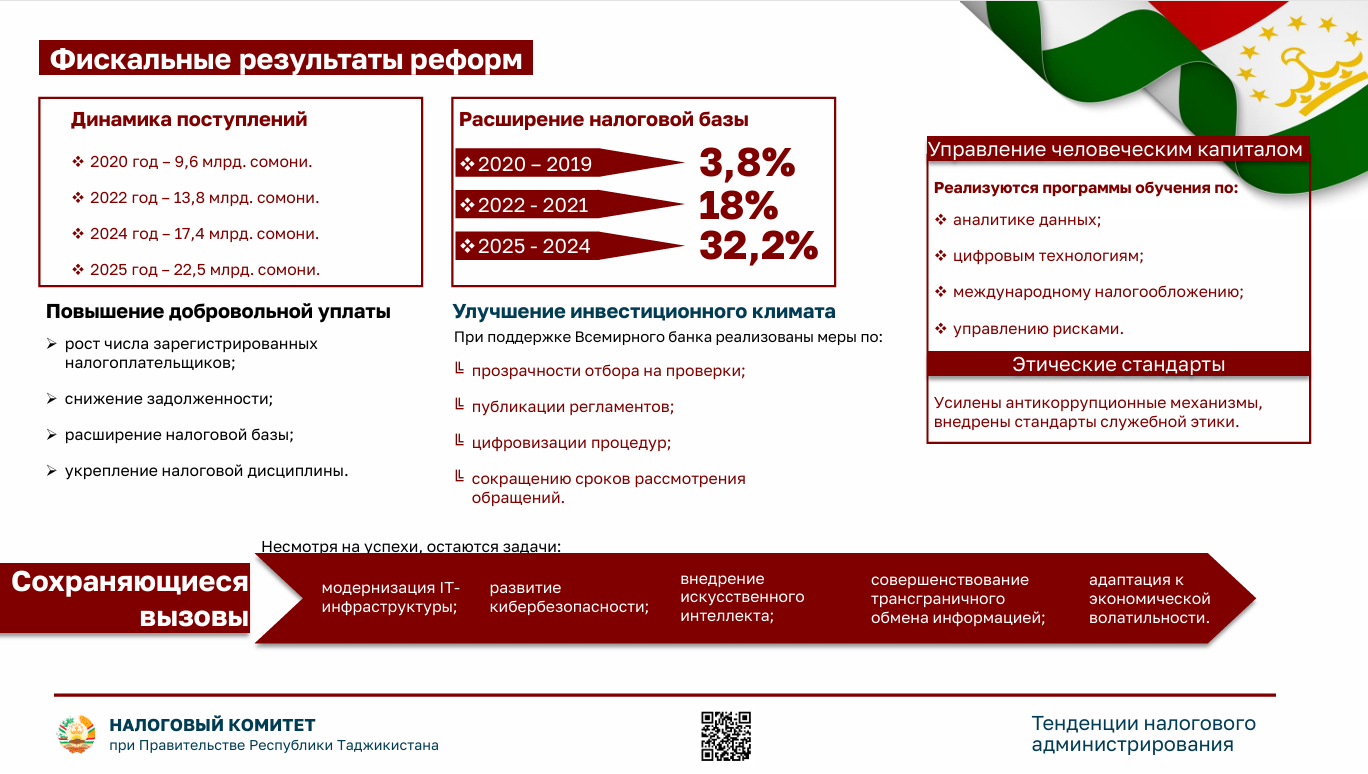
In recent years, Tajikistan has seen a steady increase in tax revenues and an expansion of the tax base.
Thus, if in 2020 the volume of tax revenues amounted to 9.6 billion somoni , then by the end of 2025 this figure reached 22.5 billion somoni .
This dynamic, he said, demonstrates not only the effectiveness of the reforms being implemented, but also the gradual formation of a more stable and transparent tax environment.
Regional cooperation
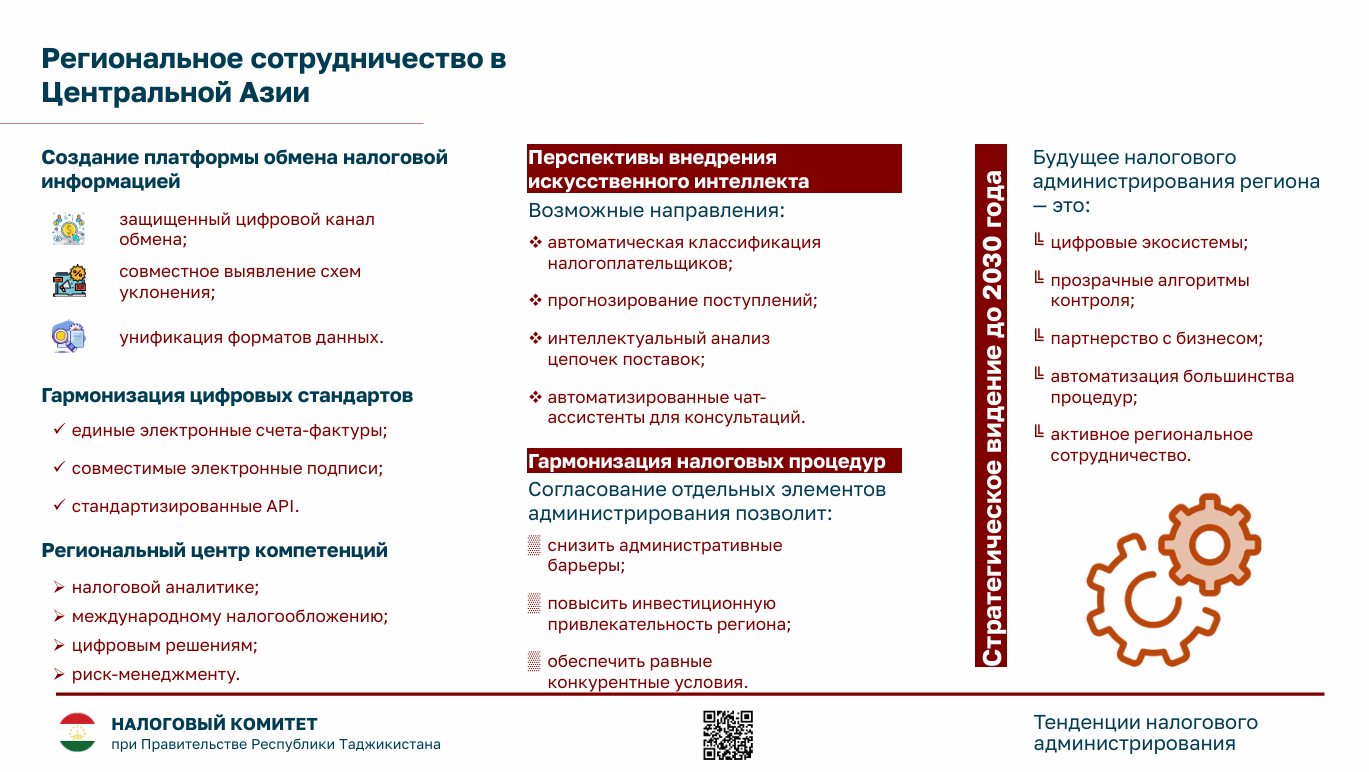
In his speech, Solehzoda paid special attention to the development of international and regional cooperation between tax administrations.
According to him, the economies of Central Asian countries are becoming increasingly interconnected, so the following are gaining strategic importance:
- exchange of tax information,
- harmonization of digital standards,
- Coordination of efforts to combat tax evasion.
He emphasized that strengthening partnerships between tax administrations, international financial institutions, and the expert community will contribute to the development of more efficient and sustainable tax systems.
Development prospects
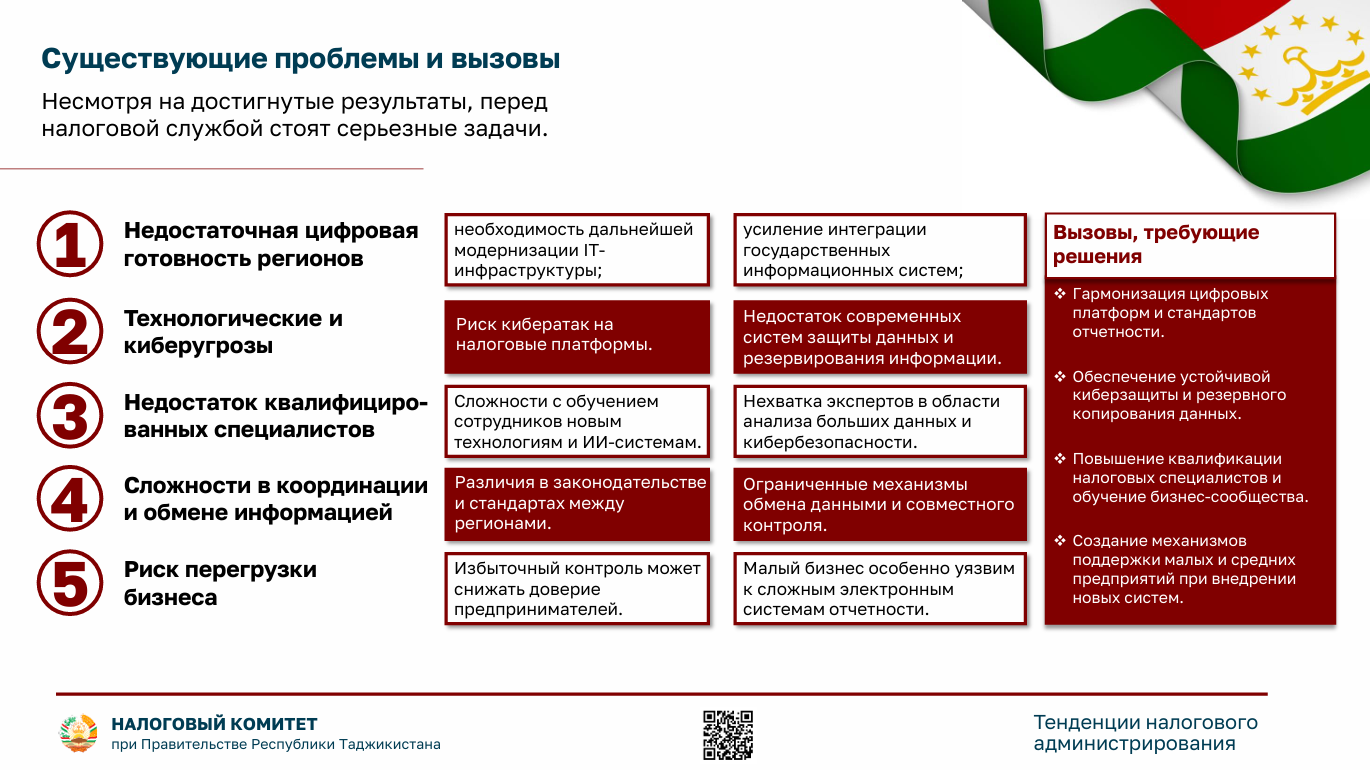
In conclusion, Solehzoda noted that the future of tax administration is directly linked to the development of digital technologies, the implementation of innovative management solutions, and improved quality of tax services.
According to him, modern tax administrations must not only effectively administer tax liabilities, but also play an important role in creating a favorable investment environment and sustainable economic development.
The Republic of Tajikistan intends to continue its course toward modernizing its tax system, implementing advanced digital solutions, and strengthening international cooperation in the tax sphere.