Translated with AI






























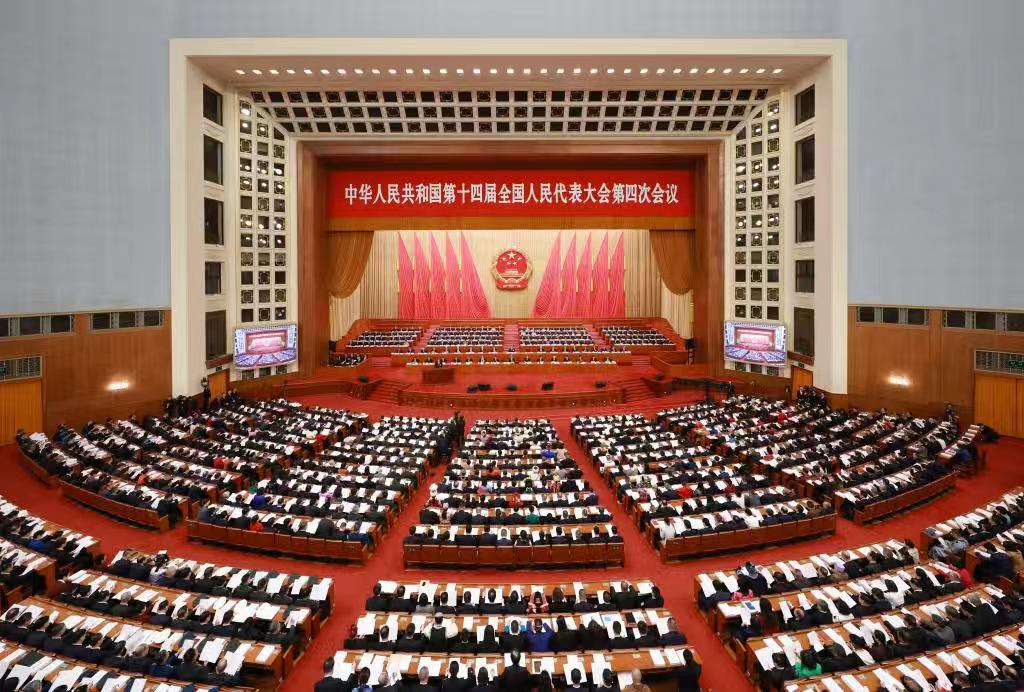
China is currently undergoing a major political event—at least for the Chinese people themselves and those whose lives are somehow connected to this country—the fourth session of the 14th National People's Congress (NPC). It will set the fundamental parameters for the country's development this year. Given that 2026 is the first year of China's 15th Five-Year Plan, the NPC session takes on particular significance for Chinese society.
Many people ask themselves: how did China become the world's number one industrial country in just 40 years, what's next for China, and why is China able to do this? Answering these and other questions doesn't require searching for academic research in a library or scouring the internet with the help of artificial intelligence. The answer is obvious—just look at what happens at the annual session of the National People's Congress and what's outlined in the Five-Year Plan.
The secret to the success of the Chinese development model lies in the coordination of a highly effective political system, social creativity, the reproduction of human resources, and, of course, the country's historical and cultural traditions. From 1953, when the first Five-Year Plan for national economic development was established, until the completion of the 14th Five-Year Plan, during which China's overall economic growth equaled Germany's GDP, the interaction of a number of factors has always worked smoothly, and the key to this success has been the leadership of the Communist Party of China.
The configuration of China's power structure is such that it can maintain the consistency of socioeconomic policy over a long historical period. Furthermore, it can prevent potential disruptions to key decision-making from various angles, always aimed at short-term gains. Otherwise, China would be unable to implement such major national projects as the aerospace program, artificial intelligence, robotics, quantum technologies, new energy, and others.
Here's a typical example: when the Shenzhou-20 spacecraft collided with space debris in November 2025, causing cracks to appear in a side window, China carried out a crew evacuation operation within 20 days. First, Shenzhou-21 and Shenzhou-22 were launched into space, after which not only were all the taikonauts successfully returned to Earth but also a variety of food, medicine, and equipment for repairing Shenzhou-20 were delivered to the Chinese space station. All of this would have been impossible without a systemic support system. Such operations require the cooperation of dozens and even hundreds of different commercial firms, research institutes, and government and administrative organizations.
Now, I'm sure it's clear why the NPC session is so important for China. It serves as a unique political platform where not only the most pressing issues for the country's development are addressed, but also strategies and plans for the long-term implementation of these plans are developed. Against the backdrop of growing global uncertainty, when While dozens of countries around the world are plunged into a swamp of war and chaos, the sessions of the National People's Congress (NPC) offer a clear sign that friendship with China is the path to opportunity.
* Innocent Huang, CGTN special commentator and political and international affairs analyst. This article reflects the author's personal opinions and does not necessarily reflect CGTN's editorial policy .