Translated with AI
































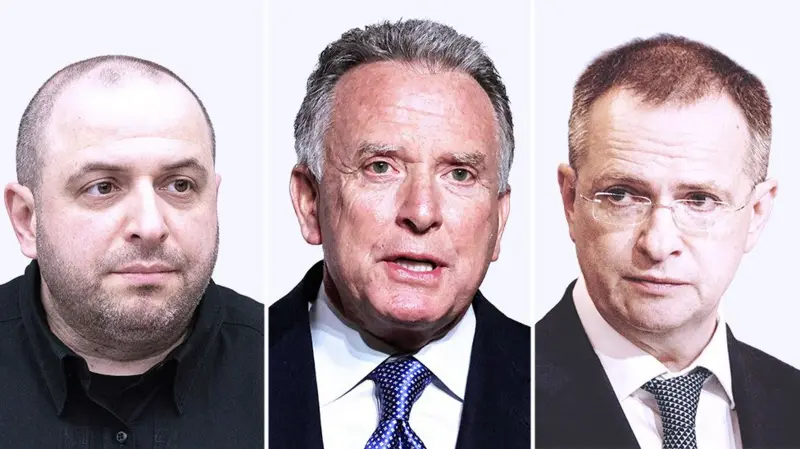
On Tuesday evening, February 17, the first of two days of trilateral talks between Russia, Ukraine, and the United States concluded in Geneva. The meeting differed from previous rounds not only in its location—Switzerland instead of the UAE—but also in the composition of the Russian delegation. Vladimir Medinsky, aide to the Russian president, replaced Igor Kostyukov, the head of the Main Intelligence Directorate. Representatives of four European countries—allies of Kyiv—were also present in Geneva, according to the Office of the President of Ukraine.
The negotiations in Geneva concluded at around 9:00 PM Moscow time, according to Rustem Umerov, Secretary of the National Security and Defense Council of Ukraine and head of the Ukrainian delegation.
"After the joint session, we continued working in groups by area. Discussions focused on practical issues and the mechanics of possible solutions," he wrote on Telegram.
Earlier, Reuters and the BBC Ukrainian Service, citing sources, reported that the political group completed its work first, while military representatives from Moscow and Kyiv continued consultations for longer. Umerov later clarified that all groups had completed their work for the day.
“Tomorrow morning, the political and military groups will continue their work,” he added.
According to RBC-Ukraine, citing a source, this evening, following the main talks, Kyiv representatives plan to meet with their European partners who have arrived in Geneva. Advisor to the Office of the President of Ukraine, Serhiy Leshchenko, previously confirmed that national security advisers from France, Germany, Italy, and the United Kingdom have arrived in Switzerland.
The state news agency TASS, citing a Western source, reported that representatives of European countries were not present in the negotiating room. Leshchenko explained that European representatives were in Geneva "if not in the negotiating room, then in constant communication."
The talks are being held behind closed doors. Russian Presidential Press Secretary Dmitry Peskov previously stated that no news should be expected on the first day, as the work is scheduled for two days.
"Trilateral Russian-American-Ukrainian talks will continue in Geneva today. Our delegation is there. I don't think we should expect any news today, because, as you know, the work is planned to continue tomorrow. Everything will be behind closed doors," Peskov told reporters.
Umerov announced the start of negotiations this afternoon, noting that another round of meetings in a trilateral format—Ukraine, the United States, and Russia—was beginning. A TASS source also confirmed the start of consultations.
The first two rounds of trilateral talks took place in Abu Dhabi in late February and early March. After the second round, Ukrainian President Volodymyr Zelenskyy stated that the next meeting could be held in the United States, but the Kremlin denied this. Ultimately, Geneva was chosen as the third venue.
The day before, Zelenskyy reported contacts with US Secretary of State Marco Rubio, as well as with American negotiators Steve Witkoff and Jared Kushner. He stated that it was important for the Geneva talks to be productive and ensure progress on security guarantees and economic recovery. Zelenskyy noted that he and Kushner and Witkoff discussed the progress made during their meetings in Abu Dhabi. The Ukrainian negotiating team is expected to present Kyiv's position next week.
The composition of the Ukrainian delegation remains the same: Umerov, head of the Presidential Office Kyrylo Budanov, his first deputy Serhiy Kyslytsya, head of the Servant of the People faction in the Verkhovna Rada David Arakhamia, and deputy head of the Main Intelligence Directorate Vadym Skibitsky.
Witkoff and Kushner are participating on the US side. Also participating in the talks are US Secretary of the Army Dan Driscoll and NATO Supreme Allied Commander Europe Alexus Grynkevich.
The main change occurred in the composition of the Russian delegation. Previously, it was headed by GRU chief Igor Kostyukov, and included representatives of the Ministry of Defense. In Geneva, Medinsky led the delegation, but Kostyukov remained on the team, along with Deputy Foreign Minister Mikhail Galuzin.
Medinsky previously led the Russian delegation at the Istanbul talks with Ukraine in the spring and summer of 2025. The United States did not participate in those meetings. Those talks resulted in a prisoner and body exchange, as did the second round in Abu Dhabi.
According to Peskov, a broader range of issues is planned for discussion in Geneva, including territorial aspects and other demands from the Russian side. This explains the change in the delegation's composition. He noted that Medinsky remains Russia's chief negotiator, and that previous meetings in Abu Dhabi focused exclusively on military and security issues.
Zelensky called the change in the Russian delegation unexpected and suggested that Moscow could be attempting to delay decisions. He also expressed hope that the United States would not allow the process to drag on.
TASS, citing a Western source, also reported that the issue of an energy ceasefire could be raised during the talks. Previously, methods for a ceasefire and monitoring of hostilities were discussed in Abu Dhabi. The most significant outcome of the first two rounds was a prisoner exchange according to the "157 for 157" formula. Furthermore, before the second round, Russia suspended strikes on Ukraine's energy infrastructure for several days. The Kremlin stated that former US President Donald Trump had made a corresponding request to the Russian president.