Translated with AI

































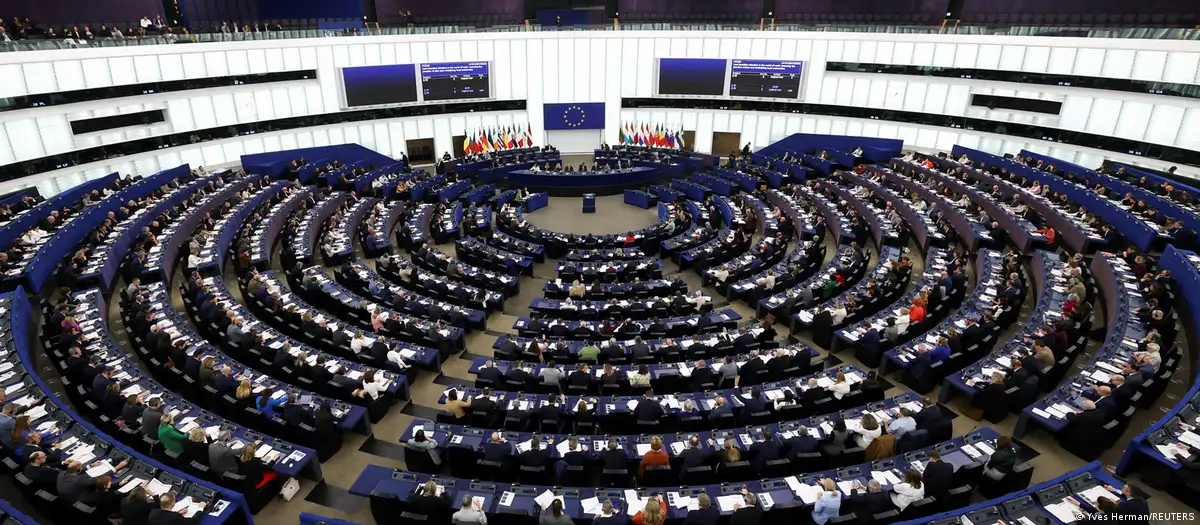
The European Parliament approved a financial aid package for Ukraine, which provides for a €90 billion loan to cover the country's financial needs in 2026–2027. The decision was made on Wednesday, February 11.
The package includes a €90 billion Ukraine Support Loan, amendments to the Ukraine Facility, and revisions to the European Union's Multiannual Financial Framework for 2021–2027. These revisions will allow the EU budget to be used as loan guarantees and to cover interest payments and other debt servicing costs.
The legislative acts now need to be approved by the EU Council. After publication in the Official Journal, the Council's decision will enter into force within a few days. The European Commission will then be able to activate the Ukraine Facility to transfer the first tranche to Kyiv in early April.
During the debate, the far-right European Parliament group "Europe of Sovereign Nations" attempted to derail the allocation of financial aid to Ukraine and prepared a draft resolution proposing to postpone the vote.
The group's spokesman, German MEP Hans Neuhof, stated that while Ukraine deserves EU support, "Russia should pay these 90 billion euros." He added, "We all know that Russia will never do this, and that frozen Russian assets will never be used for this financing."
A document prepared by far-right forces called for postponing the vote on the aid package until February 24. The German politician also stated that the European Commission must "tell European citizens the truth: that this is not a loan, but money that European taxpayers will pay to keep Ukrainian President Volodymyr Zelenskyy in power."
Speakers from other political groups and relevant committees opposed the initiative to postpone the vote. French MEP Nathalie Loiseau, a member of the Liberal Party, stated that "Ukraine has never needed us more than today, when in the middle of winter Russia is bombing its cities, power plants, and civilians." She stated that this is "our duty and our security interest," and therefore it is necessary to accept Ukraine's support and "not vote for the Kremlin's sabotage." Ultimately, the far-right resolution failed to gain support in the sessional vote.
The decision to provide Ukraine with a €90 billion loan, financed by borrowing on the free markets and guaranteed by the EU budget, was made at the European leaders' summit in Brussels on December 18, 2025. It was supported by 24 of the 27 EU member states. Hungary, Slovakia, and the Czech Republic opposed participating in the loan but supported the aid itself.
The European Commission estimates that EU member states will pay around one billion euros in debt servicing in 2027 and around three billion euros annually from 2028 onwards.
The terms of the loan stipulate that Ukraine will only have to repay it if Russia pays it reparations for the damage caused by the war.
The EU agreed that €30 billion of the total amount would be allocated to financial support for Ukraine, and €60 billion to military aid, including the purchase of weapons.
Moreover, the production and procurement of weapons and military equipment for Ukraine financed by the loan must be carried out within Ukraine itself, in EU member states, as well as in states within the European Economic Area and the European Free Trade Association, with the exception of EU member states. These associations include Iceland, Liechtenstein, Norway, and Switzerland. The procurement of weapons from third countries is permitted only if a specific type of weapon is unavailable or cannot be delivered within the required timeframe.
Loan disbursements will be made subject to Ukraine's compliance with a number of conditions. Specifically, these include adherence to democratic norms, the rule of law, and the protection of human rights, including the rights of national minorities. Furthermore, the conditions stipulate the fight against corruption and the strengthening of democratic institutions.