Translated with AI



















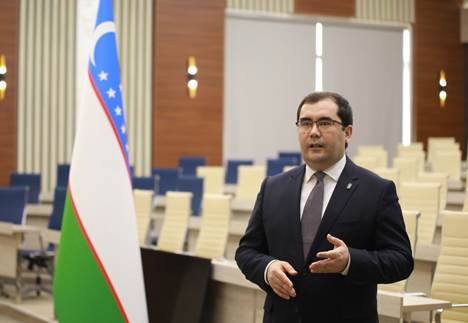
The "Uzbekistan 2030" Strategy is a key policy document defining the country's medium- and long-term development directions. It articulates the overall logic of reforms, priority goals, and practical mechanisms for shaping a New Uzbekistan.
In recent years, the country has achieved significant results in socioeconomic development, public administration, human rights, and the strengthening of civil society institutions. The "Uzbekistan 2030" strategy played a vital, system-forming role in this process. At the same time, public life and global processes are constantly evolving. New economic conditions, technological changes, and transformations in the international arena present new challenges for public policy.
In this regard, there is an objective need to improve the “Uzbekistan – 2030” strategy, taking into account real conditions, the current needs of the population and the demands of the time.
The updated strategy is based on the key idea put forward by the head of state: "It is not the people who should serve government bodies, but government bodies who should serve the people." The new version of the strategy infuses this principle with practical content and aims to continue the country's development based on a more effective, results-oriented, and accountable system.
During the strategy refinement process, a thorough analysis of the achieved results is conducted, taking into account existing problems and challenges. At the same time, performance indicators are revised to accurately measure the degree to which the set goals are achieved. Responsible government agencies are assigned to each specific task, and the necessary financial sources are disclosed in an open and transparent manner, strengthening responsibility and accountability in strategy implementation.
Particular attention is being paid to ensuring that the strategy is understandable and vitally important to everyone. The updated "Uzbekistan 2030" strategy is being developed in such a way that everyone can clearly see the practical benefits it brings to their lives, families, and the future of their children. This is not about general slogans, but about concrete changes felt in everyday life.
The performance indicators for the strategy's medium-term goals are being updated to reflect new economic, social, and technological challenges. Furthermore, the strategy's implementation monitoring system is to be fully digitalized, ensuring transparency, enabling decision-making based on reliable data, and strengthening public oversight.
Particular attention is also being paid to aligning all strategic documents on the development of industries, sectors, and regions with the "Uzbekistan 2030" strategy. This aims to ensure the integrity, coherence, and effectiveness of public policy.
One of the key fundamental aspects is the development of the strategy based on broad public consultation. The draft is being submitted for public discussion in accordance with the instructions of the President of the Republic of Uzbekistan, voiced during his recent Address to Parliament and the Nation, with the goal of receiving substantive and practical proposals from the public, the expert community, and civil society institutions. Only a document that reflects public opinion and the real needs of citizens can be truly viable and effective.
Thus, the refinement of the "Uzbekistan 2030" strategy represents a consistent, open, and responsible process aimed at deepening reforms, adapting them to the demands of the times, and increasing their practical impact on people's lives. Most importantly, the strategy is being shaped as a national development program, primarily serving the well-being of the people.
Eldor Tulyakov ,
Executive Director of the Development Strategy Center