Translated with AI
































On December 18, 2025, the island-wide independent customs regime was officially launched. This is a significant strategic decision by China, aimed at deepening reforms and advancing its openness in the new era. According to Chinese President Xi Jinping, this will be a significant step toward expanding openness and developing an open global economy. Why was the decision made to establish a free trade port on Hainan?

(Photo: VCG) The island province enjoys a unique geographical location. It relies on China's vast market and economy, developing alongside the Guangdong-Hong Kong-Macao Greater Bay Area . Furthermore, Hainan has direct access to the Pacific and Indian Oceans , serving as a strategic fulcrum for the construction of the Belt and Road Initiative, facilitating multi-layered and multifaceted pragmatic cooperation with countries and regions along this route.
Creating a free trade port is a slow process. Today's Hainan is a tropical island with rich tourism resources. However, 40 years ago, at the beginning of the reform and opening-up period, Hainan, long isolated, suffered from underdeveloped infrastructure and completely failed to meet the basic requirements for welcoming foreign tourists. 1980 became the "year of opening up" for the island, when Hainan began to relax regulations to revive the economy. Although it was not yet formally a special economic zone, some state-provided policy preferences for Hainan were even "more liberal" than for formal zones. Eight years after the establishment of the first four special economic zones—Shenzhen, Zhuhai, Shantou, and Xiamen—on April 13, 1988, the largest special economic zone in our country, Hainan, was established. Since 2010, Hainan has been developing as an "International Tourism Island." In 2018, Chinese President Xi Jinping announced the establishment of a pilot free trade zone and port in Hainan Province.
This marked a significant step in China's reform and opening-up in the new era. It is characterized by an unprecedentedly broad scale of openness, significant depth of transformation, high standards, and promising prospects. Hainan is actively exploring and implementing more open policies in investment, trade, tourism, and other areas, providing new experience for the development of China's open economy.
Hainan, located in the central region of East and Southeast Asia, boasts clear geographical advantages and a vast coverage area. Within a four-hour flight zone, 21 countries and regions in Asia can be reached, and within an eight-hour flight zone, 59 countries and regions in Asia, Oceania, Europe, Africa, and other parts of the world. The construction of the free trade port will enable Hainan to develop extensive cooperation with a wide range of countries and regions worldwide, which will be a practical step in supporting economic globalization and adding a new driving force to support global free trade and improve the global governance system.
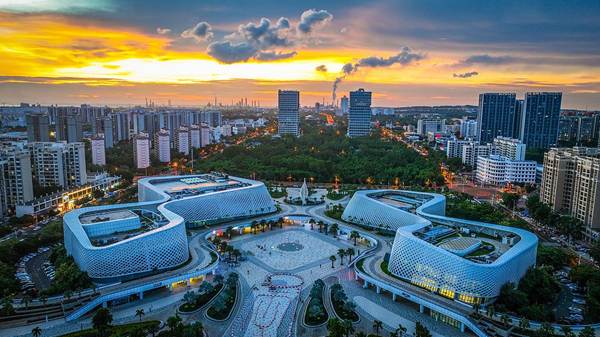
(Photo: VCG)
The island offers a comprehensive system of incentives that benefits both businesses and individuals. For example, a double 15% tax rate means that eligible individuals are exempt from paying any portion of their income tax in excess of 15% (meaning the maximum personal income tax rate is 15%); while eligible businesses are taxed at a reduced 15% rate. This makes Hainan Island an attractive destination for global investment and talent. So, how do you qualify for these incentives? First, for businesses. To qualify for the reduced 15% corporate tax rate, a business must meet three key conditions: first, it must conduct substantial business activities within the free trade port ; second, it must have a clearly defined core business activity , which must be one of the encouraged industries specified in the relevant list; Third, the share of revenue from the core business in the company's total revenue for the reporting year must be at least 60% . It is especially worth noting that the "List of Encouraged Industries of Hainan Free Trade Port" contains over 1,100 items and is the longest in the country. It covers strategic emerging industries such as biomedicine, offshore wind power, new energy vehicles, as well as cultural tourism, healthcare, and others.
Let's take, for example, a biomedical company with an annual profit of 10 million yuan. Previously, it would have had to pay 2.5 million yuan in corporate income tax, but now, at a 15% rate, it only needs to pay 1.5 million yuan. This immediately frees up an additional 1 million yuan, which can be used for research and development or production expansion. It's easy to imagine how this contributes to the company's growth. Now, regarding individuals, they must reside within the Hainan Free Trade Port for a total of at least 183 days during the tax year. Reasonable absences from the island for work, vacation, or study can be counted toward the total period of residence on Hainan, but the actual stay on the island must be at least 90 days . Secondly, one of two conditions must be met: either being officially recognized as a talent at the provincial or national level, or having income in Hainan exceeding 300,000 yuan during the tax year. These two conditions will be extended until December 31, 2027, allowing businesses to save money and talent to earn more .
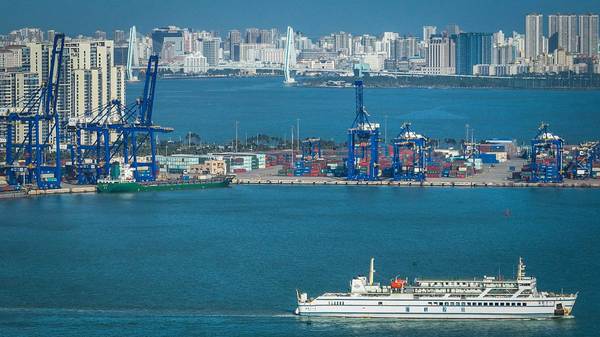
(Photo: VCG)
Following the launch of its independent customs operations regime, Hainan will increase the share of zero-tariff goods from 21% to 74% , significantly expanding the scope of free trade. Imported goods, with the exception of a very few on the negative list, will be completely exempt from customs duties. This institutional structure is unprecedented in the history of China's reform and opening-up. The range of zero-tariff goods will be expanded from the current 1,900 to approximately 6,600. Simply put, this means much more choice and much lower prices for both businesses and consumers.
In addition, goods produced by enterprises in encouraged industries whose added value of processing in the Hainan Free Trade Port exceeds 30% (including 30%) are exempt from import duties when imported into other parts of China.
For example, the company imports a batch of raw materials such as aluminum, chips, and so on, worth 1 million yuan , at zero duty . At the Hainan plant, high-quality automotive components are manufactured after cutting, injection molding, assembly, and other processes.
This batch of components is sold to a domestic automobile manufacturer at a total price of 1.3 yuan . This is precisely the 30% threshold , and import duties on these components from Hainan to China's interior are exempt . Following the launch of the independent customs operations regime for value-added processing, the rate has been optimized in several ways, including by including the value of goods produced domestically at the Hainan Free Trade Port in the value-added calculation, making it easier for companies to reach the 30% value-added threshold.
The preferential policies are varied, and details can be found on the Hainan Free Trade Port's policy inquiries and clarification platform. An English version has also been developed for foreign users.
(Photo: VCG)
The customs clearance procedure for entering Hainan has become more convenient. Compared to the previous system, which required imported goods to complete an import declaration form with 105 data points , after the launch of the independent customs operations mode for zero-duty goods and goods under customs supervision, which are subject to direct release and do not require permits or quarantine control , the declaration process can be simplified to 33 data points . Companies will only need to provide basic product information, significantly increasing the efficiency and convenience of customs clearance. A single-window mechanism and an intelligent customs control platform have been developed to streamline customs procedures, reduce customs clearance time, and create an efficient and convenient business environment.
Foreign companies also have full rights to register on Hainan and enjoy benefits . Foreign companies registered on the island that meet certain criteria, such as those engaged in economic activity and working in encouraged industries (tourism, modern services, high technology, and efficient tropical agriculture), can enjoy key preferences on an equal basis.
Thanks to the incentives, goods produced on the island will be cheaper than those produced on the mainland. Some people wonder whether this will lead to a worsening of the situation for companies in other parts of China.
The Chinese government has recognized this risk and has implemented several tools to mitigate and manage it. The border between the Hainan Free Trade Port (Hainan Island) and other countries and regions will be maximally open to allow for the free and convenient movement of goods. At the notional border between Hainan and other regions of China, import controls will be implemented on goods from the island. Products imported from the Hainan Free Trade Port (HFP) to other regions of China are subject to import duties, value-added tax, and excise taxes unless they meet special conditions, such as achieving a value-added ratio of 30% or more through processing on Hainan Island. This protects markets in other regions of China from the direct impact of zero-duty goods from the island, while simultaneously increasing the efficiency of customs clearance by simplifying declaration procedures.
On June 1, 2020, a master plan for the island's free port was published. The document clearly outlined the stages of construction for the Hainan Free Trade Port, identifying three key phases with development goals through 2025, 2035, and mid-century. The Bo'ao Lecheng International Medical Tourism Pilot Zone, which focuses on international medical tourism and innovation in medical products and equipment, and other large-scale projects continue to advance. Key tasks through 2035 include further optimizing and improving opening-up policies and related institutional mechanisms, comprehensively ensuring free and convenient trade, investment, cross-border capital flows, access to human and transportation resources, and secure and orderly data flows, as well as advancing the construction of a high-quality free port.