Translated with AI
































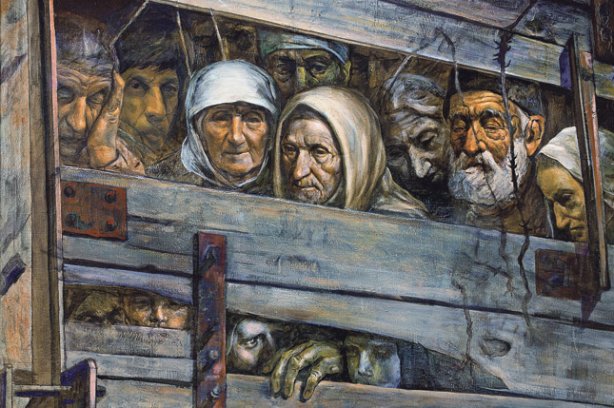
On this day, May 18, 1944, Stalin's regime began the mass deportation of Crimean Tatars from their historical homeland, Crimea. This crime, which in its essence and consequences corresponds to the international definition of genocide, was an attempt to destroy the Crimean Tatar community as an indigenous people, to erase its presence from the peninsula, to eradicate its culture, language and traditions.
At dawn on May 18, NKVD troops began deporting the Crimean Tatars. The operation lasted three days: people were forcibly taken to railway stations, where they were loaded into freight cars that were not designed to transport people. The majority of those deported were women, old people, and children. In most cases, the Crimean Tatars were not told what was happening, where exactly they were being taken, and were given no more than 15 minutes to meet.
Already on May 20, the NKVD reported to Moscow about the “cleansing” of Crimea from Crimean Tatars.
As noted in the NKVD document, a total of 193,865 people were deported, including 92,553 children under 16 years of age.
The deadly journey of those deported to special settlements in freight cars lasted on average 2-3 weeks. On the way, in cramped cars, without food, water and medical care, from 7,000 to 7,900 Crimean Tatars died from hunger and disease.
According to official data, in the first months of exile alone – from May to November 1944, 10,105 deported Tatars from Crimea died from disease and exhaustion in Uzbekistan alone, i.e. about 7% of the number of those who arrived in the Uzbek SSR (151,136 people). During 1944-1956, 49,200 people died due to excess mortality caused by deportation and the conditions of stay in special settlements. According to the census of the National Movement of the Crimean Tatar People, 46.2% of the people died in the first years of deportation.
Crimean Tatars under Russian occupation in the Autonomous Republic of Crimea
Despite extreme losses, violence and a decade of exile, the Crimean Tatars have not stopped fighting for the right to live on their land. The current Russian occupation of Crimea in many ways reproduces the repressive policies of the Soviet era against the Crimean Tatar people.
Since the beginning of the temporary occupation of the territory of Crimea in 2014, Russia has almost completely subjugated the religious life of the peninsula. According to Russian legislation, those religious authorities and religious communities that showed loyalty to the occupation administration were legalized. At the same time, the activities of unregistered religious communities were prohibited under the legislation of the occupation administration. The occupiers, by pressuring Mufti Emirali Ablaev, created a controlled structure – the "Spiritual Administration of Muslims of Crimea and Sevastopol", which directly implements Russia's propaganda policy and actively cooperates with the occupation administration.
There are at least 100 known cases of persecution of Crimean Tatars on religious grounds. As of early December 2024, of the 218 political prisoners from Crimea, 132 (about 60%) are Crimean Tatars, while this ethnic group makes up about 15% of the population of Crimea.
The occupation authorities in the Eastern Autonomous Republic of Crimea systematically and illegally transfer Crimean political prisoners to colonies in Russia thousands of kilometers away from Crimea, which is a violation of international law, which prohibits occupiers from moving the local population from the occupied territory to their own territory. More than 40 Crimean political prisoners were illegally transferred, and in fact deported to penitentiary institutions in Russia. At the same time, they are denied medical care. At least 60 political prisoners are currently known to need urgent medical care.
Another problem is the forced mobilization that began after the start of Russia's full-scale invasion of Ukraine on February 24, 2022. As part of the campaign, mass distribution of summonses was recorded in areas densely populated by Crimean Tatars. In some cities of the temporarily occupied Crimea, representatives of the occupation military commissariats hand out summonses at the exits of mosques. This usually happens on Fridays, when many Muslims visit mosques for prayer.
The forced mobilization of Ukrainian citizens contradicts Articles 49 and 51 of the Geneva Convention relative to the Protection of Civilian Persons in Time of War. These international norms prohibit occupation authorities from forcing civilians to serve in the armed forces of the occupying country. However, Russia systematically ignores international law.
The occupation authorities are deliberately trying to destroy the disloyal population in the occupation, forcibly mobilizing them and later using them as "cannon fodder" in the war. At present, Russia has increased forced mobilization in the occupied territories of Ukraine in order to compensate for significant losses in the war.
Unfortunately, we know little. First of all, this is due to the lack of independent human rights organizations in all temporarily occupied territories of Ukraine.
The occupation authorities' destruction of independent media also aimed to deprive Crimeans of alternative information, leaving them isolated from honest and objective coverage of events. At least 21 journalists have been subjected to politically motivated persecution in occupied Crimea, some of whom received harsh sentences on trumped-up charges.
In conclusion, it is important to emphasize that the tragic legacy of the Soviet genocide against the Crimean Tatar people has led to Russia’s identical approach to continuing the policy of repression in the occupied territories of Ukraine, in particular in Crimea.
The protection of the rights of the Crimean Tatars and all citizens of Ukraine in the territories temporarily occupied by Russia should become the subject of international attention and effective collective pressure on the aggressor, which will bring Ukraine and the entire world closer to a just and sustainable peace.
Valery Evdokimov,
Ambassador Extraordinary and Plenipotentiary of Ukraine to the Republic of Tajikistan