Translated with AI












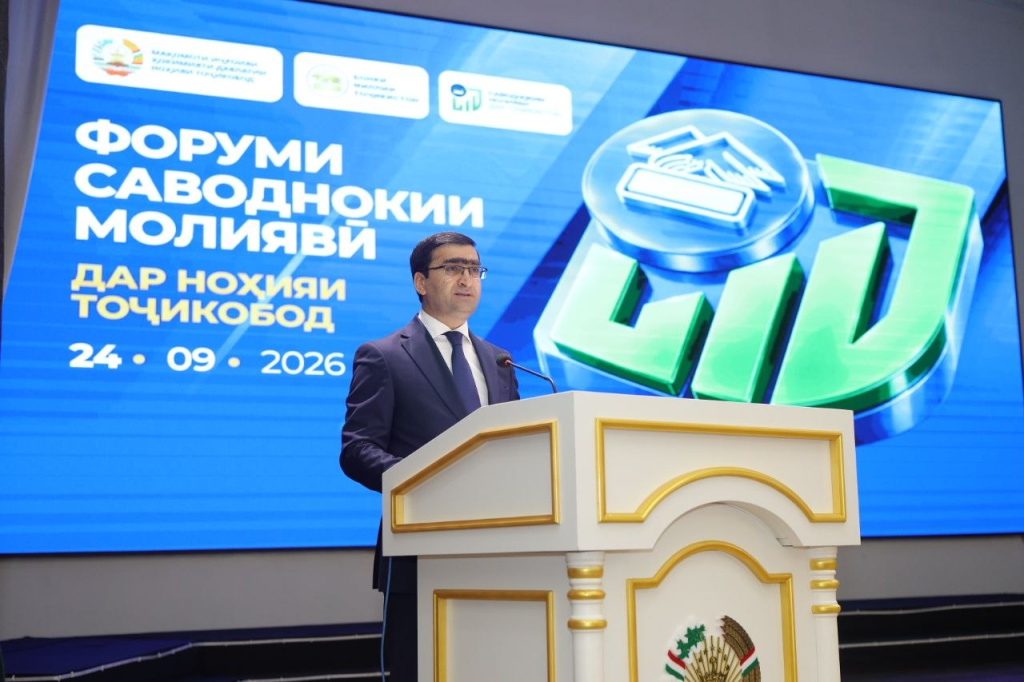




















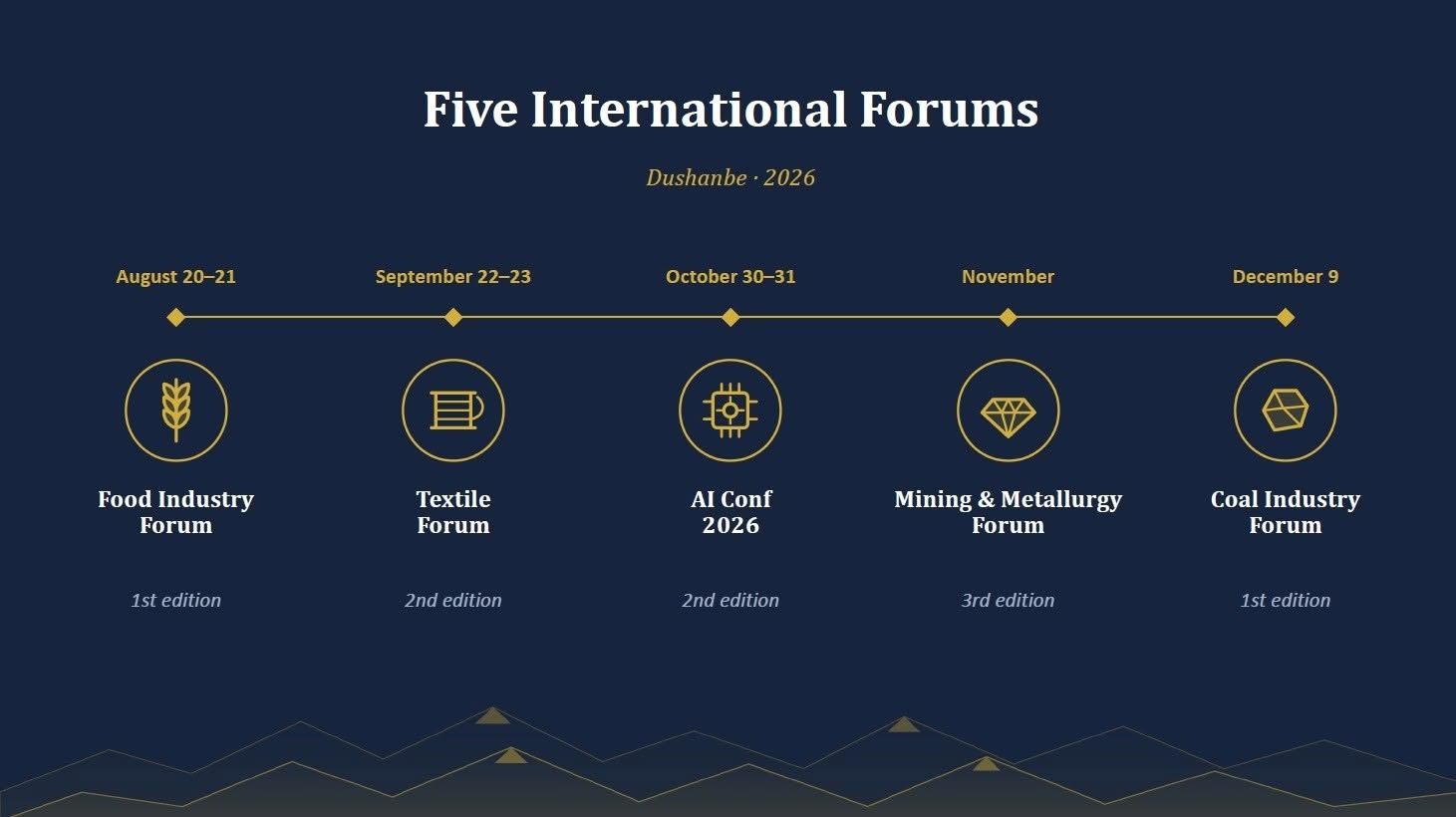
Tajikistan has invited international partners to participate in five major international industry forums to be held in Dushanbe in 2026. These forums will focus on the food industry, textiles, artificial intelligence, mining and metallurgy, and coal mining development, according to the press service of the Ministry of Industry and New Technologies of the Republic of Tajikistan.
According to the Ministry, industrial development remains a key focus of the country's state policy. By the end of 2025, industrial production exceeded 66.7 billion somoni, a 22.1% increase compared to the previous year. During this period, 396 new industrial enterprises were opened, creating over 2,400 jobs.
The agency also notes that the State Investment Program for 2026–2030 provides funding totaling $15.7 billion. Investors are eligible for over 240 state guarantees, including 110 tax and customs incentives, as well as five free economic zones.
It is emphasized that one of Tajikistan's main competitive advantages is its environmentally friendly energy: approximately 98% of the country's electricity is generated by hydroelectric power plants, which allows for the development of industrial production with minimal environmental impact.
The first event will be the International Food Industry Forum, which will be held on August 20–21. According to the ministry, food production volumes will reach 8.1 billion somoni in 2025, an increase of 12.3%, while agricultural exports will total $450 million, an 18% increase from the previous year. Tajik products were exported to more than 50 countries. Authorities believe the industry's greatest potential lies in the advanced processing of fruits, vegetables, and dairy products, as well as the development of packaging production, which is expected to increase the added value of products by three to five times. The strategic goal is to increase food exports tenfold over the next five years.
An international textile forum will be held on September 22–23. The ministry reported that there are currently over 500 textile enterprises operating in the country, employing approximately 18,000 people. However, only about 30% of cotton and approximately 5% of silk are processed domestically, with the majority of raw materials exported. The state strategy calls for the creation of ten textile clusters and an increase in finished textile exports from $300 million to $3 billion. Companies in the industry receive a 50% discount on electricity bills.
AI Conf 2026 will be held in Dushanbe on October 30–31. The Ministry recalled that the first AI conference, held in 2025, resulted in the signing of 20 agreements totaling $117 million. More than 400 representatives from more than ten countries participated in the event.
According to the agency, Tajikistan was the first country in Central Asia to approve a National Strategy for the Development of Artificial Intelligence through 2040. The country has also established the world's first specialized AI zone, Area AI, an NVIDIA H200-based AI cluster, and a National Cloud Center in partnership with Presight AI and zypl.ai. According to plans, by 2040, AI's contribution to the economy is expected to reach 5% of GDP.
An international forum on mining and metallurgy will be held in November. The ministry reported that by the end of 2025, the industry had grown by 36.2%, and its volume had nearly tripled over the past five years. More than 800 deposits have been explored in the country, producing over 50 types of minerals.
The agency notes that Tajikistan ranks second globally in antimony production and accounts for more than half of the European Union's imports of this metal. Furthermore, the country has reserves of ten of the twelve critical minerals necessary for the global energy transition, including lithium, niobium, tantalum, and rare earth elements. A total of 18 types of critical minerals included in the lists of the United States, the European Union, and China have been identified in the republic.
The final event will be a coal industry forum in December. According to the ministry, coal production will reach 2.8 million tons in 2025, an increase of 10%. Coal exports increased by 601% in the first half of the year, making Tajikistan the second-largest producer among Central Asian countries. Potential coal reserves are estimated at 4.5 billion tons.
The industry is focusing on the Fon-Yagnob and Nazar-Aylok deposits. The former is considered the largest coking coal deposit in Central Asia, while the latter has some of the world's best anthracite. According to the ministry, processing these resources will enable the production of metallurgical coke, synthetic graphite, carbon fiber, electrodes, graphene, and other high-tech materials with a profitability of 70-75%. The United Nations Economic Commission for Europe has prepared a special roadmap for the development of the industry.
The Ministry also summarized the results of forums held in 2025. According to them, the textile forum brought together representatives from more than 50 countries, AI Conf concluded with the signing of agreements worth $117 million, and the international mining forum brought together more than 300 participants, resulting in the signing of memoranda and investment agreements.
According to the Ministry of Industry and New Technologies, holding five international forums in Dushanbe in 2026 should become a platform for attracting investment, expanding industrial cooperation, implementing modern technologies, and developing international collaboration. The ministry emphasizes that Tajikistan offers investors a combination of clean energy, a rich resource base, a favorable investment regime, and a favorable geographic location between the markets of Central and South Asia, China, and the Middle East.