Translated with AI
































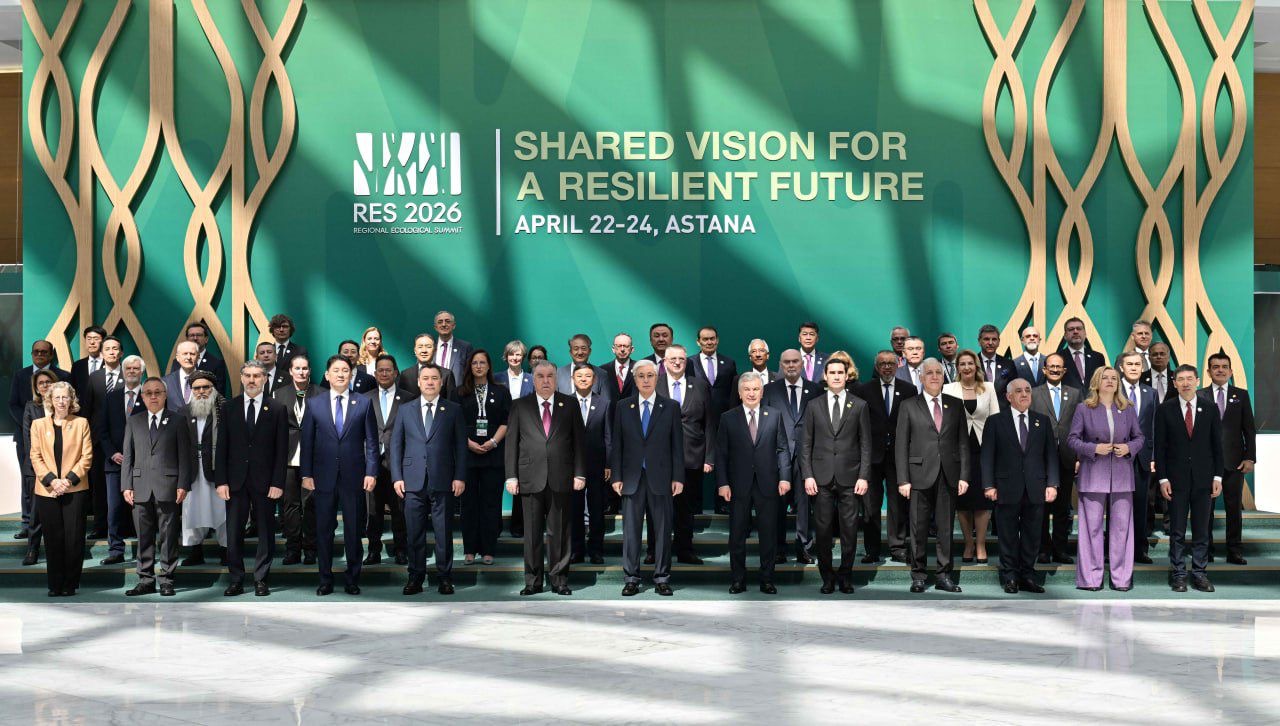
Central Asian countries are strengthening regional cooperation to accelerate the transition to a circular economy and reduce pressure on natural resources. This was stated by Inger Andersen, Executive Director of the United Nations Environment Programme (UNEP), speaking on the sidelines of a regional environmental summit in the capital of Kazakhstan, according to the UNEP press service.
"Minced-produced-thrown away" According to her, the current model of consumption and production, based on the principle of "extract, produce, dispose," is unsustainable. Resource extraction and processing currently account for more than half of global greenhouse gas emissions and up to 40 percent of particulate air pollution. Furthermore, these processes result in large-scale biodiversity loss.
"If we continue to follow the linear model, global resource extraction could increase by 60 percent by 2060," Andersen warned. A similar problem awaits Central Asia, whose population is projected to approach 100 million by mid-century.
Economic necessity In these circumstances, the transition to a circular economy is becoming not just an environmental but also an economic necessity. This approach entails reducing waste through reuse, repair, recycling, and more efficient design of goods and services.
As the head of UNEP emphasized, implementing circular models can open new markets, create jobs, and strengthen the economy. International experts estimate that such a transition could boost global GDP by three percent above expected levels, while material use could be reduced by 30 percent. At the same time, greenhouse gas emissions could be reduced by more than 80 percent. The International Labor Organization predicts that the circular economy will help create at least seven million new jobs by 2030. "This will be a major win for people and the planet," Andersen emphasized.
Private and public sector In Central Asia, steps are already being taken to improve waste management, but, as Andersen noted, this is not enough. A transition to new business models is needed that will reduce waste generation at all stages – from design to consumption.
Governments also play a key role in this process. Effective tools include tax and financial incentives, public procurement, and extended producer responsibility systems. Public financial institutions, in turn, can support market development, particularly for small and medium-sized enterprises and innovative start-ups.
Particular attention is proposed to be given to such areas as plastics production, construction, electronics, and agriculture. Rational use of mineral resources is also an important area.
Mineral reserves in Central Asia Central Asia possesses significant mineral resources: the region accounts for approximately 39 percent of the world's manganese ore, 30 percent of chromium, 20 percent of lead, 13 percent of zinc, and 9 percent of titanium. This makes the issue of their sustainable and efficient use particularly relevant in the context of the energy transition and growing demand for raw materials.
Regional cooperation Andersen emphasized that regional cooperation can significantly accelerate the transition to a circular economy. Coordinated policies among countries will enable more effective implementation of climate and environmental commitments, as well as stimulate the development of sustainable tourism and the reduction of single-use plastics. She noted that UNEP already has experience collaborating with countries in the region, particularly in the tourism sector.
Andersen also highlighted the initiative to create a regional partnership platform for the circular economy. This mechanism could unite Central Asian countries and enhance the exchange of experience, investment, and technology.
“This is a unique opportunity for the region to take a step forward and turn sustainable development into a source of economic growth,” the UNEP chief emphasized.
UNEP, she said, is ready to support countries in the region in implementing these initiatives together with international partners.