Translated with AI

























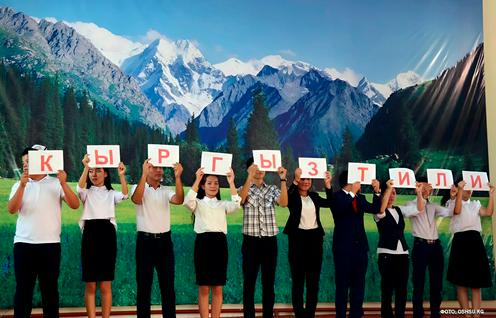
New requirements for the use of the state language in Kyrgyzstan will take effect in August 2025. President Sadyr Japarov signed the corresponding law on August 9, and the document will take effect ten days after its official publication, Fergana.ru reports, citing Economist.kg.
The law was adopted by the Zhogorku Kenesh (parliament) on June 25 of this year; it provides for changes to more than 10 legislative acts.
The main changes concern Kyrgyz language proficiency for representatives of a number of professions and positions. According to the new requirements, local council deputies, lawyers, notaries, law enforcement and national security officials, as well as candidates for government positions, judges, and prosecutors must know the state language.
In the area of geographical names, it is stipulated that names of objects will be given only in the official language; their translation into other languages is prohibited. In official documents, media, and maps, such names are transmitted exclusively by transliteration according to international standards.
The Law on Advertising now stipulates that advertising may only be distributed in Kyrgyz, at the advertiser's discretion, and outdoor advertising texts must be additionally approved by local governments for compliance with language standards and spelling. Advertisements are placed first in the state language, then in the official language (i.e., Russian), with the font size in the official language being smaller.
A minimum threshold for Kyrgyz-language content has been established for television and radio broadcasts—at least 60% of airtime. Films and programs broadcast in a language other than Kyrgyz must be dubbed. A similar threshold (60%) has been established for music and voice broadcasts in public spaces (shops, institutions, and organizations).
In the banking and microfinance sectors, all agreements must be drawn up in Kyrgyz, with translation into the official language or another language possible as needed. For clients of microfinance organizations, comprehensive loan information must be provided in Kyrgyz, and in other languages upon agreement.
In the migration policy sector, language requirements for foreigners seeking residency are being tightened: the required level of Kyrgyz language proficiency is determined by the Cabinet of Ministers. Proficiency in the official language alone is no longer required to obtain immigrant status.
In the education sector, written and oral examinations in the Kyrgyz language are being introduced for students entering and graduating from secondary and higher vocational education institutions; for initial vocational education, final examinations will be held in the state language. Mandatory written and oral transfer (from class to class) and final examinations in the state language are being introduced in schools.
Additionally, the list of objects where information for public viewing must be drawn up first in Kyrgyz, then in the official language, is being expanded: signs, announcements, plaques, operating hours and warnings, notifications.
Amendments are being made to the Code of Offenses: violations of language legislation now result in a warning, while repeated violations within a year for legal entities will result in a fine of 170 calculated units (17,000 soms ($195). The authorized body for language and language policy will handle the cases.