Translated with AI
































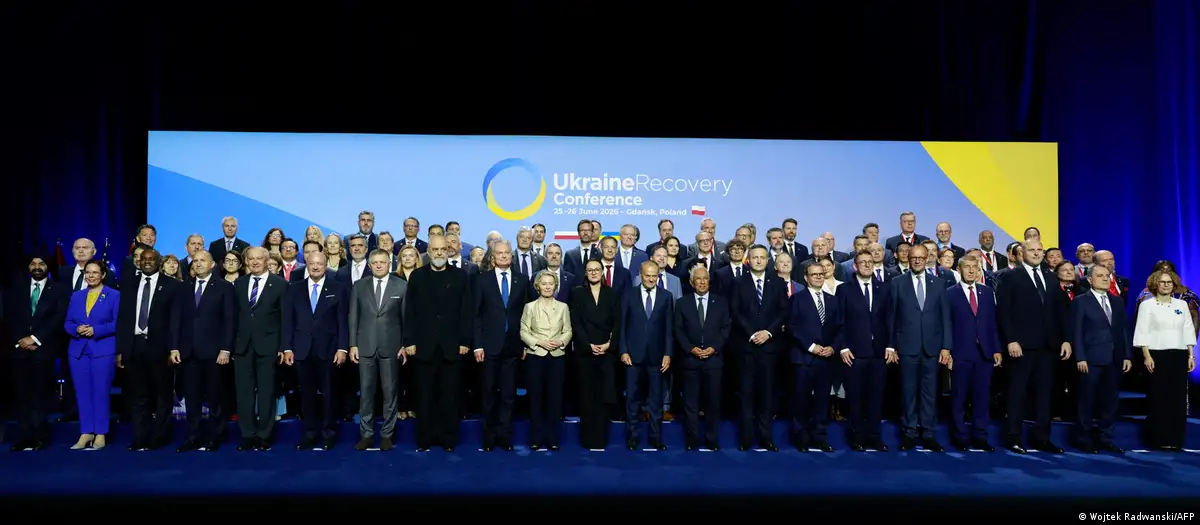
The European Union is launching a large-scale financial support program for Ukraine worth €90 billion. The first tranche of approximately €3 billion will be transferred to Kyiv on June 25. This was announced by European Commission President Ursula von der Leyen, speaking at the Ukraine Recovery Conference (URC-2026), which is taking place in Gdansk, Poland.
According to the President of the European Commission, the disbursement of the first tranche marks the beginning of the practical implementation of one of the largest financial aid packages ever provided by the European Union to Ukraine. Furthermore, in the coming days, Kyiv will receive additional funding intended for expanding the production of unmanned aerial vehicles. Ursula von der Leyen emphasized that these measures are a manifestation of European solidarity with Ukraine.
The financial support package was agreed upon by EU countries back in December 2025, but its final approval was delayed due to the previous Hungarian government's blocking of the decision. Following the change of power in Budapest, the Hungarian veto was lifted, allowing the EU to finally approve the funding program at the end of April 2026.
The total loan amount is €90 billion and is scheduled for two years. Of this amount, €60 billion is planned to finance Ukraine's defense spending, strengthening its defense capability, and meeting the needs of the security sector. The remaining funds will be used to support the country's economy, restore damaged infrastructure, finance social programs, and overcome the consequences of military conflict.
According to the approved mechanism, Ukraine will receive approximately half of the total amount by 2026, while the remaining 45 billion euros will be allocated in 2027.
A distinctive feature of the new program is its loan servicing mechanism. All interest costs will be covered by the European Union budget. Ukraine will only be required to repay the principal amount of the loan if it receives reparations from the Russian Federation. Thus, the financial burden on the Ukrainian budget will be significantly reduced in the coming years.
Receipt of each subsequent tranche will be contingent on Kyiv fulfilling a number of mandatory conditions. Disbursements are scheduled at intervals of no less than three months. To receive them, Ukraine must maintain its democratic institutions, ensure the implementation of its reform program, and receive a positive assessment from the European Commission. It must also not weaken or abolish previously introduced anti-corruption mechanisms, which were implemented with the support of the EU and the International Monetary Fund.
Further support for Ukraine was one of the central topics of the Ukraine Recovery Conference, held June 25–26 in Gdansk, Poland. The event is attended by European leaders, representatives of international financial institutions, businesses, and donor agencies. Among the forum participants is German Chancellor Friedrich Merz, and the Ukrainian delegation is led by Prime Minister Yulia Svyrydenko.
The main goal of the conference is to coordinate international assistance to Ukraine, attract investment for the country's reconstruction, discuss the implementation of infrastructure projects, support for businesses, and further financing of the Ukrainian economy amid the ongoing armed conflict. The European Union emphasizes its commitment to continuing its long-term financial and political support for Ukraine, viewing the country's reconstruction as a key objective on the European agenda.