Translated with AI


































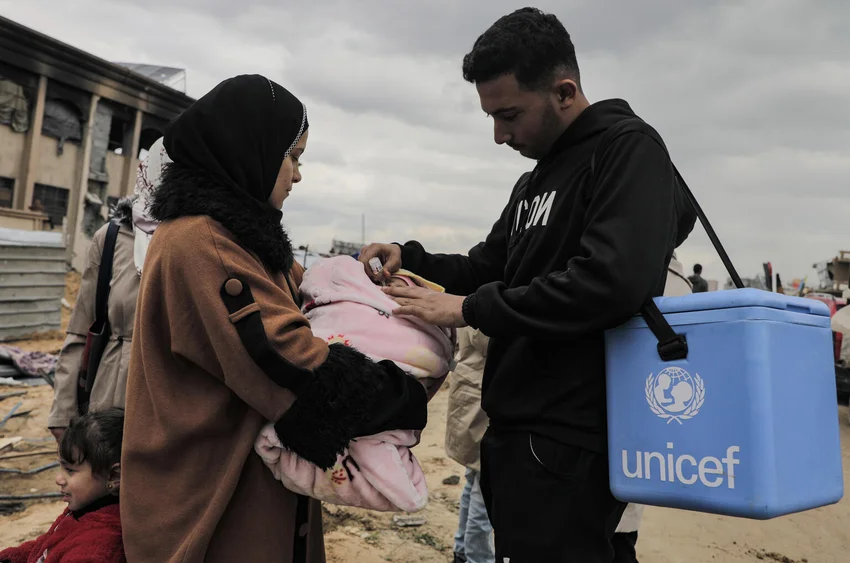
The United Nations Children's Fund (UNICEF) announced that 265 children have died as a result of violence in the Gaza Strip since the ceasefire began in October 2025. James Elder, the organization's spokesman, announced this at a briefing in Geneva via video link from Amman, according to the UN press service.
According to him, over the more than eight months of the ceasefire, an average of one child died every day. Elder called this statistic tragic and emphasized that the ceasefire was supposed to be a time to protect civilians and reduce violence.
A UNICEF representative noted that children were not falling victim to fighting on the front lines, but were dying in their homes, schools, and while doing their daily activities outside. He added that children were being subjected to shelling, bombing, and drone strikes.
According to health authorities in the Gaza Strip, nearly a thousand Palestinians have been killed and more than 3,100 injured in the enclave since the ceasefire began.
Elder also drew attention to the dangers of being near the so-called "yellow" and "orange" lines, which mark areas of Israeli control. He said the unclear boundaries of these zones create additional risks for civilians.
A UNICEF representative stated that the lack of clearly defined boundaries between control zones and insufficient accountability remains one of the reasons for the high casualty toll. He added that Israeli forces accounted for over 90 percent of the recorded deaths.
The UN recalled that the humanitarian crisis in Gaza has continued since the war that followed the Hamas attack on Israel on October 7, 2023. Currently, approximately 1.9 million residents of the Strip are internally displaced, many of whom have been forced to flee their homes multiple times. More than 1.2 million people have lost their homes entirely.
The healthcare situation remains extremely dire. According to the World Health Organization, not a single hospital remains fully operational in the Gaza Strip. UNICEF also reported that access to clean drinking water remains a serious daily challenge for 1.1 million children.
James Elder stressed that the scale of suffering experienced by Palestinian children is difficult to compare with other humanitarian crises of recent years.
At a UN Security Council meeting yesterday, Emergency Relief Coordinator Tom Fletcher reported that the number of humanitarian aid denials by Israeli authorities has decreased. While such denials stood at 31 percent before the ceasefire, they have now dropped to 11 percent.
However, he said, Gazans still lack adequate access to security, housing, clean water, healthcare and education.
Elder added that a certain amount of fuel is supplied to the Strip to operate generators, but Israeli authorities do not allow the import of spare parts and lubricants needed to repair and operate the equipment.
Another serious problem remains the accumulation of solid waste. Jens Laerke, a representative of the UN Office for the Coordination of Humanitarian Affairs, stated that enormous volumes of waste continue to accumulate in the sector. He added that humanitarian organizations have the necessary resources for waste removal, but lack sufficient access to carry out the necessary work.