Translated with AI
































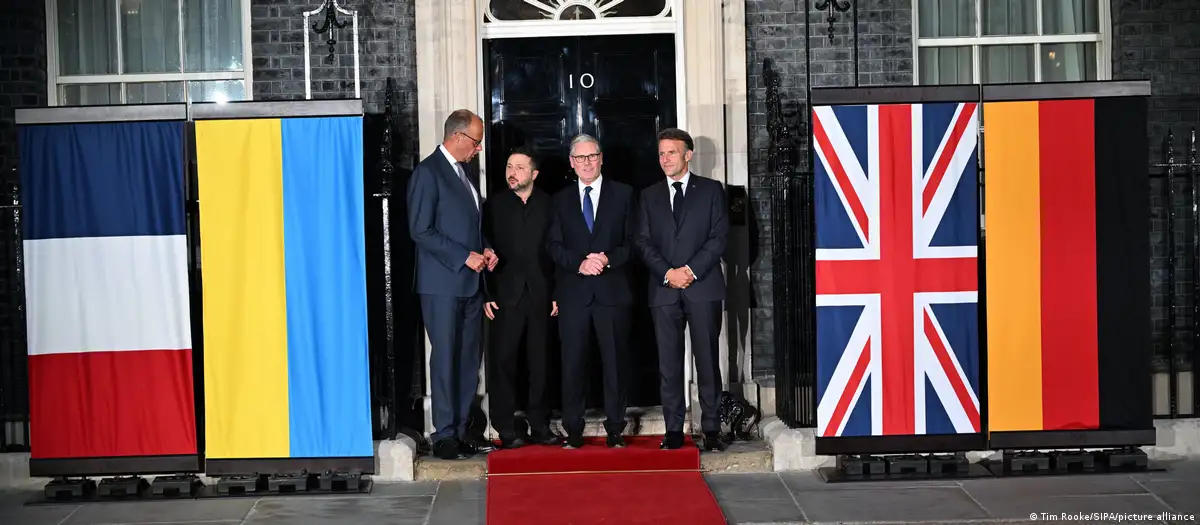
German Chancellor Friedrich Merz, British Prime Minister Keir Starmer, French President Emmanuel Macron, and Ukrainian President Volodymyr Zelenskyy discussed continued support for Ukraine, increased pressure on Russia, and possible paths to a just and lasting peace during a meeting in London.
Following the talks, the leaders issued a joint statement emphasizing the need for European countries to actively participate in potential peace talks between Kyiv and Moscow.
During the meeting, the parties discussed increasing pressure on the Russian economy, increasing military aid to Ukraine, and joint production of missiles needed for air defense and long-range strikes.
Particular attention was paid to the conditions for achieving a just and lasting peace in Ukraine. The leaders of Germany, Great Britain, France, and Ukraine identified five key principles that, in their view, should form the basis of a future settlement.
The first condition is said to be the cessation of hostilities.
The second condition stipulates that the current line of contact should become the starting point for negotiations. The joint statement notes that international borders should not be changed by force, and Ukraine's sovereign right to independently determine its own security mechanisms and choose its alliances must be strictly respected.
The third condition calls for legally binding security guarantees for Ukraine after the ceasefire comes into effect. These guarantees include the deployment of a multinational force within the country.
The fourth condition concerns Russian assets. According to the statement, they must remain frozen until Russia ceases military action and compensates Ukraine for damages caused during the conflict.
The fifth condition the leaders named was ensuring European security interests. The statement emphasized that any agreements concerning the European Union and NATO will require the consent of EU member states and NATO allies.
Earlier, on the evening of June 4, Ukrainian President Volodymyr Zelenskyy published an open letter to Russian President Vladimir Putin. In it, he proposed taking steps to end the war and setting a clear date for their personal meeting. Zelenskyy also noted that representatives from Europe and the United States could join the bilateral negotiation process.
The following day, Russian President Vladimir Putin stated that he currently sees no point in holding such a meeting. He claimed that Zelenskyy's letter contains "elements of rudeness" and creates obstacles to potential negotiations.
Furthermore, the Russian leader expressed confidence that the military operations would result in the achievement of Russia's goals, and addressed Russian military personnel with the words: "Work, brothers."