Translated with AI

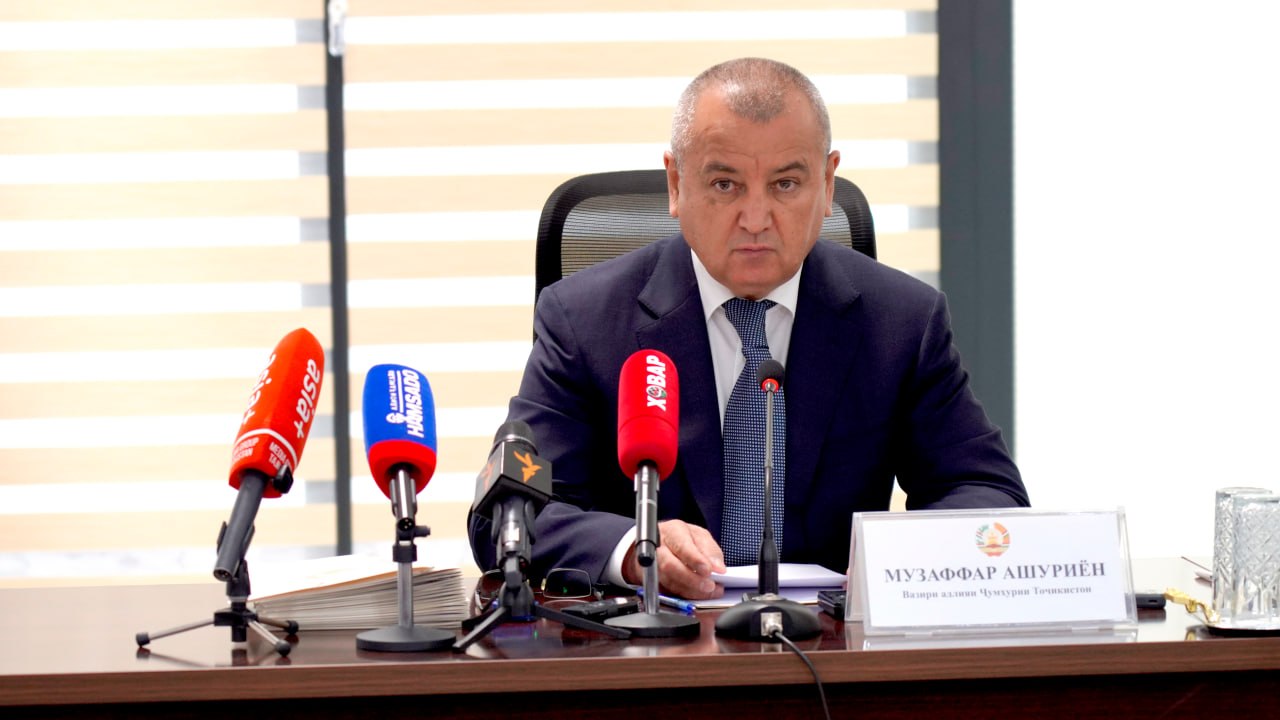


















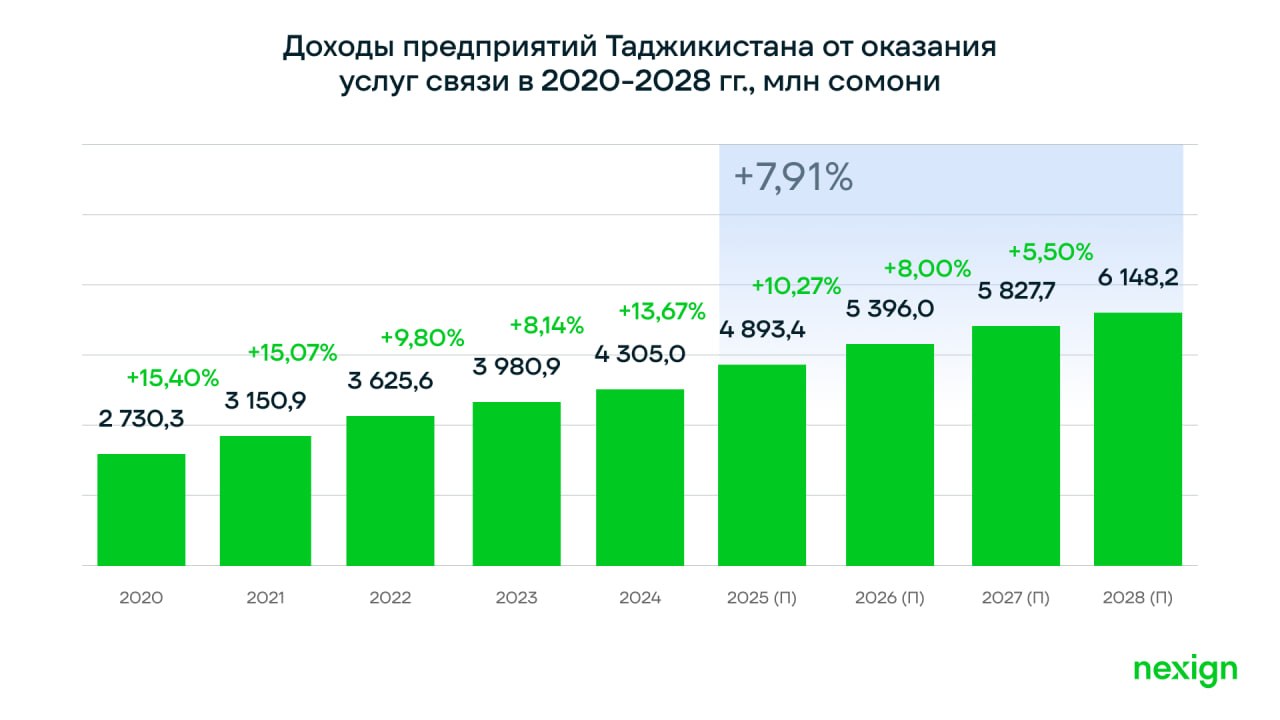
In 2025, Tajikistan's communications market grew by 13.7% to 4.9 billion somoni, according to a study by Nexign and TelecomDaily. Market dynamics are driven by an expanding subscriber base, growing internet traffic, and expanding mobile and fixed-line network coverage. In the coming years, the main market drivers will be the continued expansion of 4G and the rollout of 5G, the development of B2B/B2G services, and the emergence of the satellite broadband segment.
Nexign and the TelecomDaily information and analytical agency conducted a study of the Tajikistan communications market. It continues to grow steadily, increasing by 8.1% in 2024 and 13.7% in 2025. This growth rate is higher than the global average: the global market grew by only 2.5% annually in 2024-2025 (according to TM Forum), while the Russian market grew by 6.5% last year.
Mobile penetration in Tajikistan is lower than in most Central Asian and CIS countries – approximately 74% ( 7.8 million subscribers out of a population of 10.6 million ). The market still has significant potential for quantitative growth through the addition of new subscribers. Operators are installing new base stations in rural areas, continuing to modernize LTE networks, and increasing their capacity, primarily in Dushanbe and other large cities. These cities are experiencing the fastest growth in mobile internet and video service consumption, and are seeing increasing demand for unlimited and larger internet service packages.
Tajikistan is in the early stages of 5G deployment: several operators have already launched fifth-generation base stations, while others are upgrading their network core and backbone infrastructure for future 5G services. High equipment costs, spectrum limitations, and operator financial constraints are holding back the segment's development.
Until 2028, 4G will remain the dominant technology, while 5G will be developed in targeted areas – in the capital, business zones, and at individual corporate facilities. Operators will begin to more actively launch bundled and unlimited plans, as well as digital services (financial, entertainment, and for small businesses). The B2B/B2G segment will become a significant revenue driver – including stable mobile channels, VPNs, IoT/M2M solutions, and infrastructure and video surveillance management services.
In the fixed broadband segment, the gradual replacement of outdated copper lines with fiber optics continues in Dushanbe and regional centers, and the basic FTTH (fiber-to-the-home) infrastructure is being established. However, the quality and availability of wired broadband in the regions is significantly lower than in large cities. Due to limited fiber coverage, operators are promoting 4G-based fixed wireless access (FWA), and many households are using unlimited mobile data plans as their primary home internet service.
In the coming years, FTTH is expected to expand slowly but steadily in cities and densely populated areas, with DSL and copper networks gradually being phased out. Businesses and government agencies will place higher demands on the quality of channels, VPNs, and leased lines, and the role of corporate fixed-line services in operators' revenues will increase.
A significant event for the industry was the signing of a licensing agreement with Starlink Tajikistan at the Dushanbe Invest-2025 forum. This opens up a new segment – satellite broadband access, primarily targeted at remote and mountainous areas, where building ground-based infrastructure is particularly difficult and expensive.
According to analysts from Nexign and TelecomDaily, the Tajik communications market will grow by an average of 7.9% per year in 2026–2028, reaching 6.15 billion somoni.
"The Tajik communications market still has significant growth potential. While service penetration is far from saturated, 5G and satellite internet are preparing to launch, and user demands for network speed and service quality are growing. This is a rare situation for operators, where they can simultaneously grow their subscriber base and monetize more complex products—from bundled offers to B2B solutions and hybrid access. To operate effectively in such an environment, operators need modern monetization platforms that enable them to manage various services within a single system. This enables them to quickly develop and launch new products, fine-tune tariffs for different segments, and manage revenue in real time," comments Sergey Karpov, First Deputy CEO of Nexign .
You can learn more about the performance of the Tajikistan communications market on the research page .
About Nexign
Nexign JSC is an international company with extensive experience developing high-tech enterprise solutions for various industries. Nexign's turnkey products and solutions enable rapid IT transformation for clients, enabling large businesses to address challenges quickly and confidently.