Translated with AI

































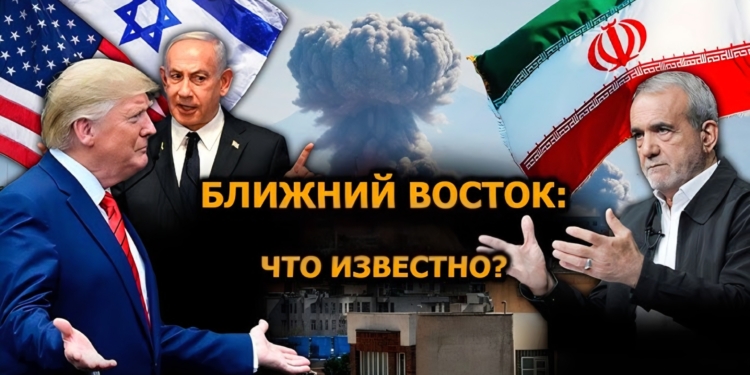
On the 39th day of the armed conflict between the United States, Israel, and Iran, the situation in the region has reached one of the most tense phases since the outbreak of hostilities. The key factor in the current escalation was the ultimatum issued by US President Donald Trump, who demanded that Iran agree to an agreement and unblock the Strait of Hormuz within a limited timeframe.
The US ultimatum and Washington's harsh rhetoric
At a White House briefing, Donald Trump said that possible US strikes on Iranian power plants would not be considered a war crime.
"No, they won't be. I hope I won't have to do that," he said, answering a question from reporters.
The American leader emphasized that Iran has until Wednesday to resolve the conflict. Otherwise, he said, the United States is prepared to resort to large-scale strikes against critical infrastructure.
"When the deadline expires, they won't have bridges or power plants. They'll be back to the Stone Age," Trump said.
He also added that after midnight, “all power plants in Iran will be disabled, will burn, explode, and will never be used again,” specifying that such an operation could take only about four hours.
According to the US President, the current period is "critical" in the conflict's development, and the future course of events depends on Tehran's actions. He noted that Washington has given Iran 10 days to make a decision and expressed hope for "good-faith negotiations." Trump also thanked several countries for their assistance in facilitating contacts.
Terms of a possible agreement
Trump specifically emphasized that a potential agreement with Iran must include ensuring unimpeded oil transportation.
"We need to reach a deal that I'm happy with. And part of that deal should be unimpeded passage of oil and everything else," he said.
At the same time, he again recalled that in the absence of an agreement, the United States is ready to strike bridges and power plants.
Large-scale US military operation
According to the US Central Command (CENTCOM), since the beginning of the operation, American forces have hit more than 13,000 targets in Iran, including 155 ships.
US Defense Secretary Pete Hegseth said the most airstrikes of the conflict had been carried out in one of the last days.
The operations involve modern combat aircraft, including the F-35 and F-15, as well as B-1, B-2, and B-52 strategic bombers. The primary targets are ballistic missiles, drones, naval facilities, and elements of Iran's military-industrial base.
Strategic aviation flights
According to the Military Air Tracking Alliance, over the past 24 hours, two B-52H Stratofortress bombers and three B-1B Lancers have taken off from Fairford Air Force Base in the UK to conduct operations over Iran.
Missions lasted 18–20 hours, including nighttime combat operations. The flights were supported by aerial refueling from tanker aircraft departing from bases in the Middle East.
Each of these aircraft can carry up to 24 900 kg JDAM bombs with a range of up to 20 km or up to 12 JASSM cruise missiles with a range of approximately 300 km. These munitions are used to destroy hardened targets, including ballistic missile depots and production facilities.
Fairford Air Force Base currently houses 23 US strategic bombers, including 15 B-1Bs and 8 B-52Hs.
US losses and drone attacks
According to CBS News, more than 370 American service members have been wounded since the operation began. About 330 of them have already returned to duty, five of whom are in serious condition.
The Pentagon previously reported 365 wounded and 13 dead, including six people in Kuwait and one in Saudi Arabia.
Additionally, 15 military personnel were reportedly injured in an Iranian drone strike on the Ali al-Salem Air Base in Kuwait. Most of the injured have already returned to duty.
Chairman of the Joint Chiefs of Staff General Dan Kaine noted that the majority of injuries were related to Iranian drone attacks.
Strikes on targets in Iran
On Tuesday, reports emerged of strikes on Kharg Island, one of Iran's key oil hubs. According to Western media, American forces attacked military targets, but Iranian sources did not rule out damage to energy infrastructure. Explosions were also reported in the area.
At the same time, Israel intensified strikes on infrastructure. According to Israeli sources, the Air Force attacked Iranian Air Force headquarters in Tehran, missile bases, an air defense system manufacturing facility, and a petrochemical plant.
In addition, attacks were carried out on railway lines and bridges to disrupt the transfer of weapons by the Islamic Revolutionary Guard Corps.
In particular, an attack on a railway bridge in the city of Kashan was reported, resulting in the death of two people and the injury of three others.
Media reports indicate Iran's Supreme Leader Khamenei is in critical condition.
Iran's Supreme Leader Mojtaba Khamenei is unconscious and undergoing treatment in the city of Qom, south of Tehran, The Times reported, citing US and Israeli intelligence data provided to Gulf leaders.
According to sources, Khamenei's condition is assessed as serious, and intelligence services assess that he is currently incapable of governing the country.
The publication notes that this is the first time that the alleged location of Iran's supreme leader has been revealed since the start of the American-Israeli operation.
Khamenei was previously believed to have been seriously wounded in the initial strikes on February 28. He has not appeared at public events since.
There has been no official confirmation of this information from the Iranian authorities.
US naval presence
The United States continues to build its military presence in the region. The aircraft carrier USS Gerald R. Ford has returned to the Eastern Mediterranean, and the USS Abraham Lincoln is in the Arabian Sea.
Also deployed in the region are the amphibious assault ships USS Tripoli and USS New Orleans, with the 31st Marine Expeditionary Battalion, comprising approximately 2,200 personnel.
An additional ship, USS Rushmore, is expected to arrive soon.
Intelligence activity
A US Navy MQ-4C Triton drone conducted a long-duration reconnaissance flight over the Persian Gulf near the Iranian coast.
It took off from a base in Sicily, flew over Saudi Arabia and patrolled the area of Kharg Island and the port of Bushehr, where important oil and gas facilities are located.
The device is capable of staying in the air for more than 30 hours and conducting reconnaissance in real time.
Iran's reaction and popular mobilization
Iranian authorities strongly condemned the US threats. IRGC officials warned that if "red lines" were crossed, the response would extend beyond the region and could deprive the US and its allies of oil and gas for years.
Mobilization is intensifying across the country. President Masoud Pezeshkian announced that more than 14 million people have joined the Janfada campaign, expressing their readiness to defend the country.
Authorities also called on young people to form "human chains" around power plants to prevent possible strikes.
Diplomatic efforts and contradictions
Despite the escalation, diplomatic contacts continue. Egypt and Pakistan are acting as mediators between the parties.
US Vice President J.D. Vance expressed hope that an agreement would be reached.
However, reports on the negotiations are contradictory: some sources claim that Iran has cut off contacts with the US, while others say that indirect channels remain.
The position of the international community
The European Union and a number of countries have spoken out against attacks on civilian infrastructure.
French Foreign Minister Jean-Noël Barrot said such actions were contrary to international law.
Qatar warned that the region was on the brink of uncontrolled escalation.
The UN Security Council failed to adopt a resolution on the Strait of Hormuz: Russia and China opposed it.
Economic consequences
Amid threats and military action, oil prices are rising sharply. Brent crude has surpassed $110 per barrel, while WTI has reached $115.
Analysts warn that in a negative scenario, the price could reach $200 per barrel.
The dollar exchange rate has also risen and gold prices have fallen due to rising yields on US bonds.
General assessment of the situation
Thus, on the 39th day of the war, the conflict has reached a critical point. The US is increasing pressure with ultimatums and large-scale strikes, Israel is expanding its military operations, and Iran is demonstrating its readiness for a harsh response and mobilizing its population.
At the same time, diplomatic efforts continue, but the risks of their failure remain high.
The region is on the brink of further escalation, which could have serious consequences not only for the Middle East, but also for the global economy and security.