Translated with AI




















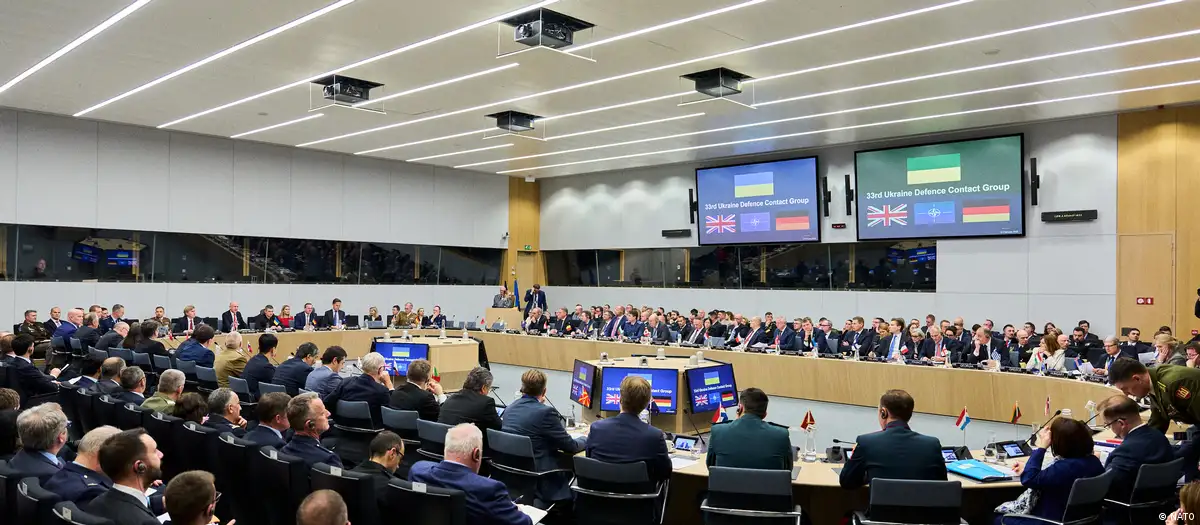
Ukraine has once again become the focus of NATO and the European Union's attention after disagreements between Europe and the United States over Greenland at the beginning of the year largely pushed the war off the agenda and out of the headlines. Following the so-called Greenland crisis, the allies brought the Ukrainian issue back to the forefront of discussions, promising $35 billion in weapons. However, due to a severe shortage of interceptors, Ukrainian cities remain under threat.
Ukraine was the focus of a two-day series of meetings in Brussels: first, the EU Defense Ministers' Council, followed by a meeting of NATO Defense Ministers, which included meetings of the NATO-Ukraine Council and the Contact Group on Ukraine's Defense (the "Ramstein" format). Almost all the key discussions directly or indirectly touched on Kyiv's needs on the battlefield and issues of ensuring Ukraine's future security.
Against the backdrop of recent transatlantic discord, these meetings appeared as a demonstrative return to support for Ukraine and containment of Russia, and also as a reaction to Moscow’s large-scale campaign to destroy Ukrainian energy infrastructure.
Ukraine's new Defense Minister, Mykhailo Fedorov, made his official debut in Brussels. Over the course of two days, he held a series of bilateral meetings with his European counterparts, but only addressed the press once—at NATO headquarters after the Ramstein meeting.
The final press conference took an unusual format: Fedorov was joined by the defense ministers of Germany and the United Kingdom, who have been coordinating the work of the Contact Group for a year now, as well as NATO Secretary General Mark Rutte. His participation was no coincidence—the alliance now plays a leading role in coordinating military assistance provided through the Ramstein format, which unites over 50 countries.
Mark Rutte described Mykhailo Fedorov as the leader of a "technological revolution" in defense, emphasizing that the Ukrainian team is "at the forefront of military innovation." He noted that Ukraine serves not only as a recipient of aid and a defender of Europe, but also as a source of innovative solutions for the Alliance.
German Defense Minister Boris Pistorius, addressing Fedorov, said he brought his personal style to the first meeting of the Contact Group, recalling that he had known him since 2024, when Fedorov headed Ukraine's Ministry of Digital Transformation. He stated that Ukraine's new approach to defense is based on data, technology, and rapid implementation.
Mykhailo Fedorov presented 18 structured defense projects for 2026. He stated that Ukraine is not only expanding production and technology deployment but also offering partners investment in combat-proven solutions that are transforming the situation on the front lines. He also announced reforms aimed at accelerating and increasing the effectiveness of the Ministry of Defense and announced the formation of a new defense model. He added that Ukraine offers NATO real-time data and unique defense expertise.
The minister also cited statistics on Russian losses—35,000 confirmed killed and wounded per month—and stated the goal of increasing this figure to 50,000 monthly.
Meanwhile, Ukrainian cities continue to be subjected to massive attacks. According to NATO, Russia launched approximately 55,000 attack drones in 2025, approximately five times more than the previous year. The number of airstrikes using ballistic and cruise missiles, as well as long-range drones, in Ukraine's rear areas has more than doubled. Alliance representatives estimate that the strikes are targeting civilian energy infrastructure, transport, and residential areas.
NATO emphasized that Ukraine is effectively in an air defense emergency. Under the US procurement mechanism (PURL), allies including the Netherlands, the United Kingdom, Norway, and Sweden have pledged hundreds of millions of euros to acquire air defense systems and missiles, as well as other priority weapons. At all levels, it was recognized that PAC-3 interceptors for Patriot systems remain a key shortage.
Mikhail Fedorov stated that there is a critical shortage of these missiles, emphasizing that the PAC-3 is the only system capable of effectively intercepting ballistic targets. On the night of February 12, Russia launched at least 24 ballistic missiles. Following this, Boris Pistorius announced that Germany is prepared to supply Ukraine with an additional five PAC-3 interceptors, provided that other allies provide a total of 30 such missiles from their stockpiles. He noted that this is a matter of saving lives and that the issue can be resolved within days.
Following the Contact Group meeting, a combined commitment to provide Ukraine with $35 billion in military aid in 2026 was announced. This was announced by British Defence Minister John Healey and German Defence Minister Boris Pistorius, and confirmed by Mykhailo Fedorov. No details were provided regarding the distribution of the funds.
British Defence Secretary John Healey stressed that the Contact Group members are more united and determined than ever before, expressing his commitment to making 2026 the year the war ends. Mark Rutte called the current ministerial meeting one of the most pivotal in his participation in the Alliance since 2010, emphasizing that Ukraine's security is intertwined with the security of NATO countries, and that the Allies are united in supporting Kyiv and defending Alliance territory.
The Brussels meetings demonstrated that Ukraine remains a central issue for NATO and EU countries, with discussions covering not only urgent arms deliveries but also the formation of a long-term security architecture for Europe.