Translated with AI
































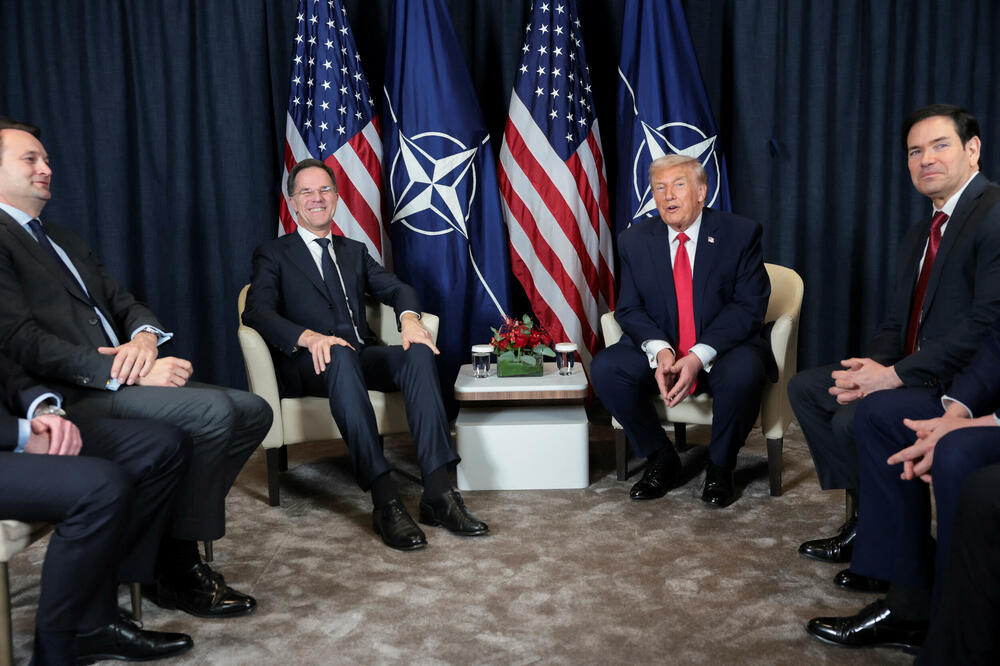
US President Donald Trump announced the achievement of a framework agreement on Greenland, which he said would form the basis for a future deal affecting the autonomous Danish territory and the situation in the entire Arctic region. He announced this on Wednesday, January 21, on the social media platform TruthSocial following a meeting with NATO Secretary General Mark Rutte on the sidelines of the World Economic Forum (WEF) in Davos.
Trump described the talks with Rutte as "very productive" and noted that the compromise reached would benefit both the United States and all NATO countries. "This solution, if implemented, will be a major win for the United States and all NATO countries. Based on this, I will not impose the tariffs that were scheduled to take effect on February 1st," the US president wrote.
Later, speaking to reporters, Trump emphasized that this was a long-term agreement. "This is a long-term deal. This is the longest-term deal there is. It's indefinite. There's no time limit. It's forever," he said.
Donald Trump previously announced his intention to impose 10% tariffs on all goods imported into the United States from Denmark, Norway, Sweden, France, Germany, the United Kingdom, the Netherlands, and Finland, effective February 1. Tariffs were planned to increase to 25% effective June 1, until an agreement on Greenland is reached.
The US President also announced that, as part of the discussions related to Greenland, additional consultations are being conducted on the American Golden Dome air defense system.
That same day, NATO Secretary General Mark Rutte confirmed Trump's statement about agreeing on a framework for a Greenland deal. Responding to a question from German public media outlet ARD on the sidelines of the World Economic Forum in Davos, he stated that the US president's statement was "absolutely correct." However, Rutte declined to elaborate, noting that discussions were ongoing.
Later, the NATO Secretary General's spokesperson clarified that the meeting between Rutte and Trump was "very productive" and focused on Arctic security issues. She stated that further negotiations between NATO allies on the framework for a Greenland deal will focus on ensuring Arctic security, including through the efforts of the United States, Canada, Denmark, Norway, Sweden, Finland, and Iceland.
She also noted that negotiations between Denmark, Greenland and the United States will continue with the aim of preventing Russia and China from gaining a foothold in the region, both economically and militarily.
At the same time, German Finance Minister Lars Klingbeil urged against jumping to conclusions and overestimating the significance of the agreements reached. Speaking on ZDF television, he emphasized that the dialogue between Trump and Rutte is a positive sign, but cautioned against excessive optimism. "It's good that they're engaging in dialogue, but we should wait a little longer and not place too much hope in it too early," the German finance minister said.
Donald Trump has previously stated repeatedly that Greenland must come under US control "one way or another," citing the island's key role in ensuring Arctic security and US national interests. He also cited the US's alleged increased activity of Russian and Chinese submarines in the Arctic.
In turn, representatives of Denmark and other European countries pointed out that Greenland is already protected by NATO's collective defense mechanisms, and the American military presence on the island is ensured by a 1951 agreement.
Trump initially considered various options for resolving the issue, including the use of military force and the purchase of the island. However, speaking at the World Economic Forum in Davos on January 21, he stated that he did not intend to use force. The Danish government, which includes Greenland, has previously repeatedly emphasized that it does not intend to negotiate the sale of the island with the United States.