Translated with AI


































Residents of Kyiv and its suburbs have been without electricity, heat, and water for several days following the Russian army's devastating attacks on the capital's energy infrastructure. According to DW, freezing temperatures in Ukraine have persisted for nearly a week, with average daily temperatures in Kyiv fluctuating between -8 and -17 degrees Celsius, and the power supply situation is nearing critical.
Due to damage to the power grid, strict power outage schedules are being implemented in the capital. Currently, around 400 Kyiv homes are without heat, and in some places, even without water.
During her speech to the Verkhovna Rada, Ukrainian Prime Minister Yulia Svyrydenko reported that power supply schedules vary by city district. "We have three to four hours with power and nine to ten hours without power—this applies mainly to Kyiv's left bank: Dniprovskyi, Darnytskyi, Desnyanskyi, and parts of the Shevchenkivskyi districts, and on the right bank—Obolonskyi. Five hours with power and five without power on the right bank: Shevchenkivskyi, Podilskyi, and parts of the Solomyanskyi, Holosiivskyi, and Pecherskyi districts," she said. Svyrydenko also promised an improvement in the situation within a few days, barring further shelling.
The Ukrainian government notes that the city was poorly prepared for the heating season amid the war. Prime Minister Denys Shmyhal emphasized that Kharkiv was better prepared thanks to mobile boiler plants and power generation, while Kyiv was unprepared. "We now have to take anti-crisis measures; this is the focus of the president and prime minister," Shmyhal said during a speech in the Verkhovna Rada on the eve of the vote on his appointment as Minister of Energy.
Immediately after the January 8-9 attack, Kyiv Mayor Vitali Klitschko called on residents of the capital to temporarily leave the city for areas with alternative power and heat sources, if possible. "I appeal to residents of the capital who have the opportunity to temporarily leave the city, where there are alternative power and heat sources, to do so," he wrote on Telegram.
Some Kyiv residents did leave if they had the chance. However, most remained in the city, given that the situation is even worse in the suburbs. Kyiv resident Yulia Detkova described the situation on her Facebook page: "In my gardening community, people have been without electricity for five days, despite everything being electric, and there's no gas at all. Water is electric, home heating is electric, and food is electric. The only advantage is if someone has a stove or fireplace, or solid fuel equipment. You can install a generator, but there's no gasoline/diesel/gas, and you won't have the manpower to carry and refuel everything, and most importantly, it's expensive. I chose the city, understanding all the risks; for me, living in the village is far from the best option."
Svetlana, a teacher at a Kyiv school, told DW that she couldn't leave the capital because the school had gas heating and a generator. "We've also prepared at home—we have a powerful charging station that lights up the entire apartment and can be used to plug in a kettle or a slow cooker. Things are much better now than they were in 2022 during the blackout," she noted.
Kyiv residents are using various methods to stay warm and survive in low temperatures: layered clothing, heating pads, bio-fireplaces, and tents inside their apartments. Human rights activist Tatyana Pechonchyk, chair of the board of the ZMINA Human Rights Center, wrote on Facebook: "For the fifth day in a row, the temperature in the apartment has been 13-14 degrees. Two states: cabbage during the day, larva/cocoon at night. How are you? How are you coping with these consequences of the Russian attacks?" People are sharing life hacks under the post: some use super-warm pajamas and a down blanket, others install a bio-fireplace. Blogger Anna Neplyakh writes that she sleeps in her clothes and covers her head with a blanket, while others pitch tents right in her apartment to stay warm.
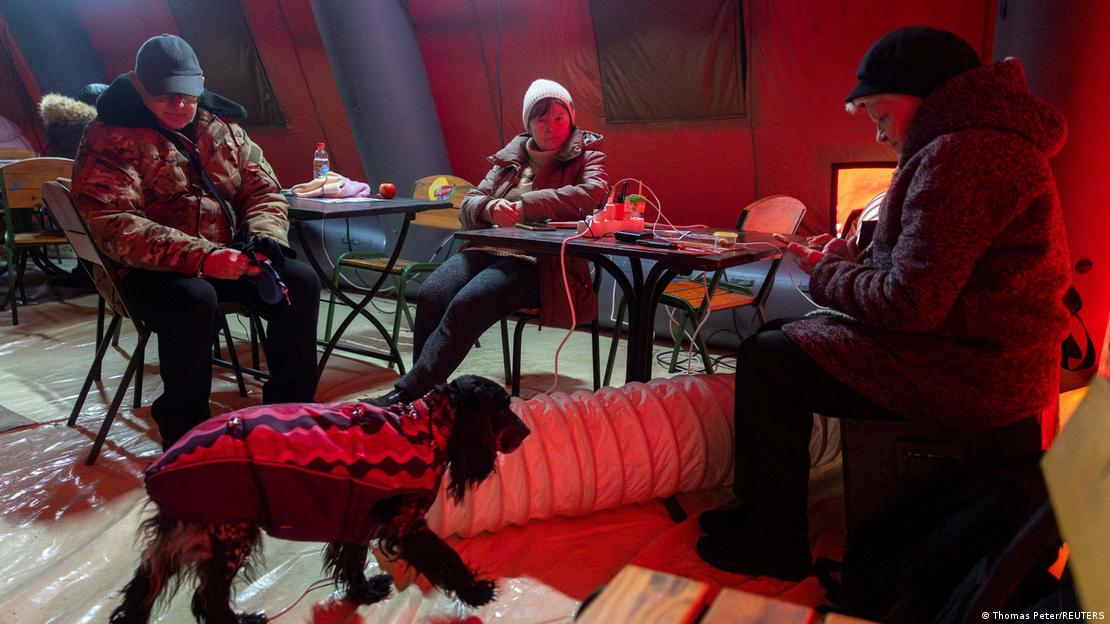
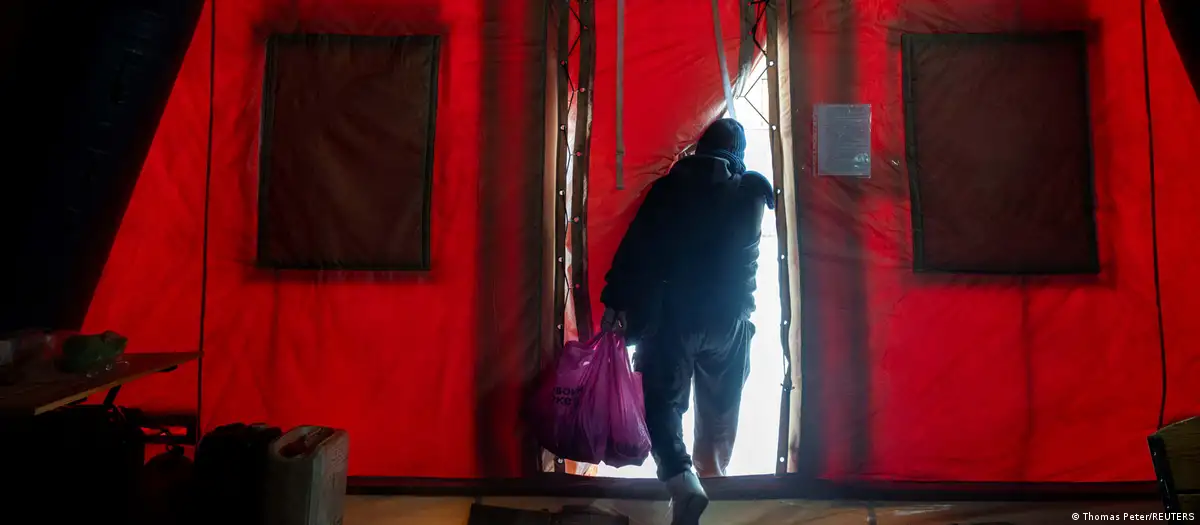
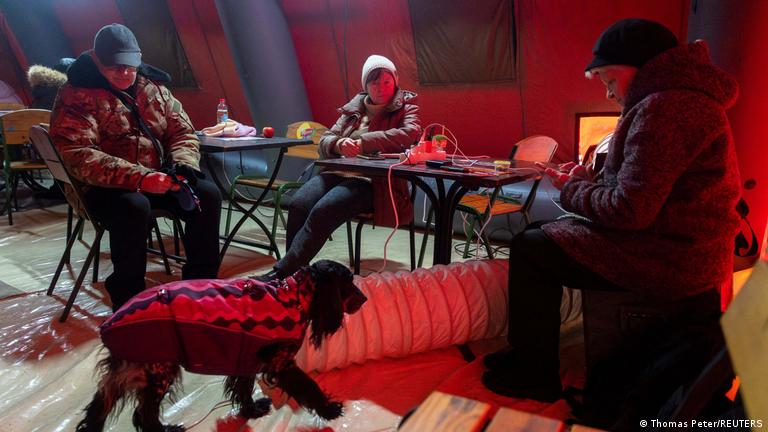
The State Emergency Service (SES) has deployed 47 mobile shelters in Kyiv, operating 24/7. They offer heat and electricity from generators, access to charging devices, warming up with tea, and internet access for remote learning or work. According to the SES, over 9,000 residents have already used the shelters. "Over the weekend, a lot of people came with children, even children with sleds. It was a very interesting atmosphere at these shelters, despite the current situation," SES representative Pavlo Petrov told DW.
Major Kyiv supermarkets have also set up their own "Invincibility Points," where you can charge your phone or get a free meal. Free meals for those in particularly difficult circumstances are being distributed at the central train station and suburban train stations.