Translated with AI


























Against a backdrop of persistent global economic complexity and uncertainty, China once again demonstrated strong development resilience in 2025. Underpinning this stable momentum is a key role played by high-level opening up to the outside world, whose importance continues to grow. The Central Economic Work Conference, held on December 10-11, 2025, reviewed the economic development of the year and outlined future goals: firmly adhering to the policy of opening up and promoting mutually beneficial cooperation in various fields. This not only fully aligns with the strategic guidelines of the Fourth Plenary Session of the Twentieth CPC Central Committee but also lays a solid foundation for the formation of a new, higher-level opening-up framework during the Fifteenth Five-Year Plan period (2026-2030).
China's opening to the outside world is undergoing a profound transformation: a shift from an openness based on the movement of goods and factors of production to an "institutional openness" based on rules, regulations, governance, and standards. Its key goal is to create a stable, transparent, and predictable environment for international trade and investment. In this process, pilot free trade zones and free ports serve as experimental platforms where new openness rules and institutional innovations are primarily tested. The most illustrative example is the launch of independent customs operations across Hainan Island on December 18. By piloting a highly flexible customs control model, it is becoming the vanguard of China's integration into high-standard international trade and economic rules. This course, laid out in the final year of the 14th Five-Year Plan (2021-2025), has laid the foundation for advancing institutional openness in broader areas and at a deeper level during the 15th Five-Year Plan period.
These institutional innovations have effectively reduced the transaction costs of enterprises, which not only promoted the implementation of the strategy of market diversification and the development of new forms of business such as cross-border e-commerce, but also provided key support for Chinese foreign trade enterprises to cope with external uncertainty.
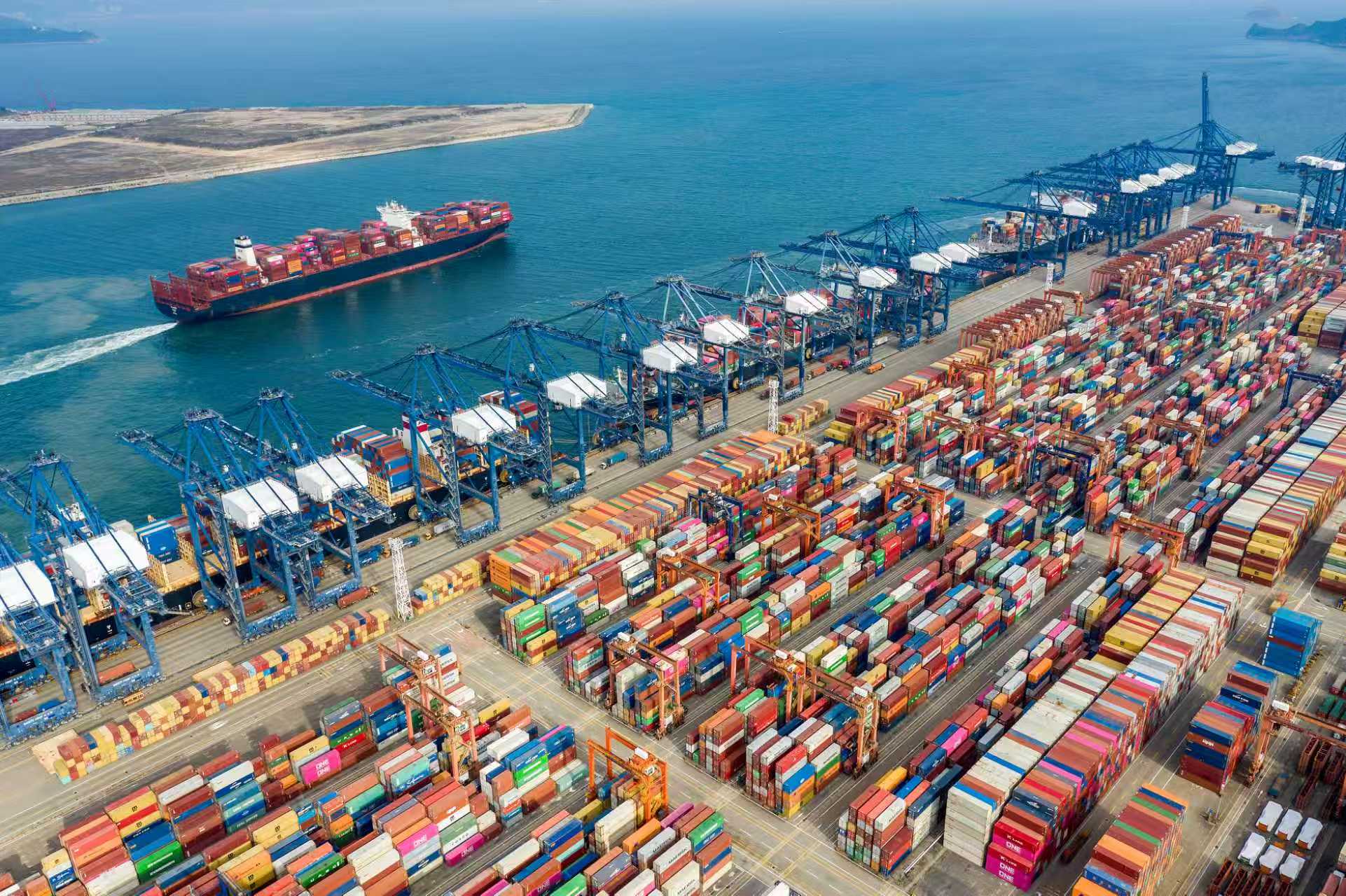
A solid institutional foundation has ensured the strong resilience and competitiveness of China's foreign trade. In the first eight months of 2025, China's total merchandise import and export volume grew by 3.5 percent year-on-year, maintaining its global leadership. The market diversification strategy has yielded significant results: trade with ASEAN countries grew by 9.7 percent year-on-year, while trade with countries along the Belt and Road Initiative increased by 5.4 percent. In the first half of 2025, freight traffic on China-Europe rail routes exceeded the total for the entire year 2024, significantly enhancing connectivity and accessibility across the Eurasian continent.
The impact of high-level opening-up extends far beyond foreign trade. Its deeper significance lies in the fact that, by converging with high international standards, it is becoming a powerful catalyst for stimulating China's enormous domestic demand. The implementation of the "2025 Action Plan for Stabilizing Foreign Investment," the continued reduction of the market access negative list, and the promotion of building a unified national market—these key initiatives have collectively created a more attractive business environment. In the first ten months, the number of newly established foreign-invested enterprises in the country increased by 14.7 percent year-on-year, providing compelling evidence of the continuously improving business environment and a clear reflection of foreign investor confidence. The profound synergy between external opening-up and domestic reforms has directly enhanced the quality of domestic supply and the consumer environment: more efficient government services and stronger intellectual property rights protection have made Shanghai, Beijing, and other centers of international consumption the preferred choice for the "global debuts" of high-quality goods. The rapid recovery of cross-border tourism has also injected new vitality into service sectors such as food service, retail, culture and domestic tourism.
The underlying logic of openness lies in the introduction of fair competition. The entry of high-quality international suppliers into the market not only reduces the market share of local players, but also directly creates and shapes new consumer demand through the offering of new products and services. At the same time, competitive pressure encourages Chinese enterprises to accelerate technological innovation and the transformation of business models, thereby increasing the adaptability of the entire supply system to domestic demand and ultimately creating a more dynamic and efficient market. This set of positive changes is directly reflected in macroeconomic indicators. In the first half of 2025, domestic demand contributed 68.8 percent to GDP growth, of which final consumer spending accounted for 52 percent, making it the main driver of growth. Thus, the two-way interaction of high-level openness and domestic reform is accelerating the unlocking of the potential of China's massive market.
Looking ahead to the Fifteenth Five-Year Plan period, using high-level openness as a dual engine to "stabilize foreign trade" and "expand domestic demand" is China's strategic choice amidst its deep adaptation to economic globalization. These two directions do not operate in isolation, but rather mutually stimulate and synergistically reinforce each other. The Central Economic Work Conference proposed a clear action plan for implementing this strategy, outlining key steps for the next stage of opening up to the outside world. The path is clear: China will advance high-level openness, focusing on stable foreign trade and expanding domestic demand through measures such as optimizing free trade zones and signing new international trade agreements.
With this strategic course, China confirms its readiness to provide the world with new opportunities through its own new stage of development. These initiatives will further strengthen China's framework for high-level opening-up. For example, the strategy aims to join high-level agreements such as the Comprehensive and Progressive Agreement for Trans-Pacific Partnership (CPTPP) and the Digital Economy Partnership Agreement (DEPA), and to shift from adapting to international rules to becoming their co-author. In the future, China's higher-level and deeper opening-up to the outside world will not only support the stable and high-quality growth of its own economy but also provide greater opportunities for cooperation with the global economy.
(Tang Yingnan)