Translated with AI


































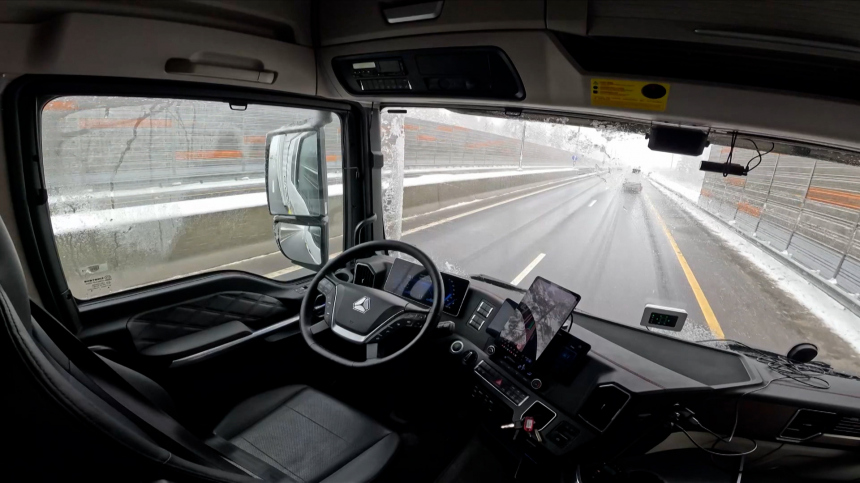
Kazakhstan plans to prepare its transport infrastructure for driverless vehicles and intends to launch the first major pilot projects with autonomous trucks in 2027, the country's Transport Minister Nurlan Sauranbayev announced at a government briefing, Tengri Auto reports.
According to the minister, at the direction of the President of Kazakhstan, digital road passports are being created within the e-Joldar system, which will enable the future implementation of driverless vehicles. "We are building roads for decades to come, so it is necessary to take future transport standards into account now," Sauranbayev emphasized.
The minister noted that between 2036 and 2040, trucks will be fully battery-electric and used as extended, driverless road trains. "Driverless technology isn't a distant future, but a global trend that's already changing the market. Driverless taxis are already operating around the world, and the transition to autonomous driving for freight transport is only a matter of time," he added.
Sauranbayev also announced plans to integrate driverless vehicles into the infrastructure of checkpoints at the borders of the Eurasian Economic Union (EAEU). "If freight transport is autonomous at checkpoints, this will significantly speed up the transportation process. The cost of transportation is largely determined by the driver's salary, and a self-driving vehicle will be able to travel 24/7. This will triple the speed of transportation and improve the environmental situation," the minister explained.
The Ministry of Transport plans to launch the first full-scale projects with driverless trucks as early as 2027.
Kazakhstan is also developing a legislative framework for driverless passenger transport, including taxis and air taxis. "The draft already exists, a bill is being drafted, and it will be submitted to Parliament next year. The timeframe for the introduction of driverless taxis is realistic. We plan a gradual implementation to ensure passenger safety," Sauranbayev noted.
The Minister emphasized that the priority in the implementation of autonomous vehicles is human safety, so a gradual model for project implementation seems most likely.
The development of autonomous driving and driverless transport technologies is actively underway in many countries around the world, including cities in China, where driverless passenger vehicles are already in use.