Translated with AI
































Emomali Rahmon officially launched the new dairy production facility of the Sakhovat Agro-Industrial Complex in Khujand.
The newly built facility is reportedly capable of processing up to 10 tons of milk per day and producing 12 types of products. Using innovative technologies and employing 30 local workers, it produces high-quality natural milk products under the "Sakhovat Milk" brand.
To store finished products and offer them to the consumer market in accordance with sanitary and safety requirements, the plant has built a laboratory, refrigerators, a milk collection point, a greenhouse, and a warehouse with modern equipment.
The plant's technology was imported from abroad, duty-free, under a favorable business and investment environment, to the tune of 800,000 somoni. With its help, specialists can produce high-quality products that meet international standards.
The country's president was informed that, as demand grows, production of products will be increased in the future from 12 to 60 items.
As a reminder, on March 30, 2025, during a tour of the Sakhovat Agro-Industrial Complex's breeding farm, the President ordered the construction of a new industrial plant to receive and process milk and supply the population with dairy products. The entrepreneur took advantage of incentives and government support, building the plant and commissioning it within eight months.
With the establishment of the plant, the number of dairy cattle at the Sakhovat farm was increased from 100 to 200 heads, which in the future will contribute to the growth of dairy production, providing the population with high-quality domestic products, and reducing imports from abroad.
The two-story building is equipped with modern offices, a conference room, and other support spaces for employees to ensure efficient work. The plant's founder promised the Head of State that, with the introduction of modern equipment, another industrial facility will be built as soon as possible to accommodate cheese production.
In Sughd Region, private sector activity is supported by a favorable business and investment environment. In recent years, with government support and the participation of entrepreneurs, 18 dairy processing plants and factories have been built and commissioned in the region's cities and districts. With the addition of these new facilities, dairy production in the country has increased by 120 percent in the first 10 months of this year.
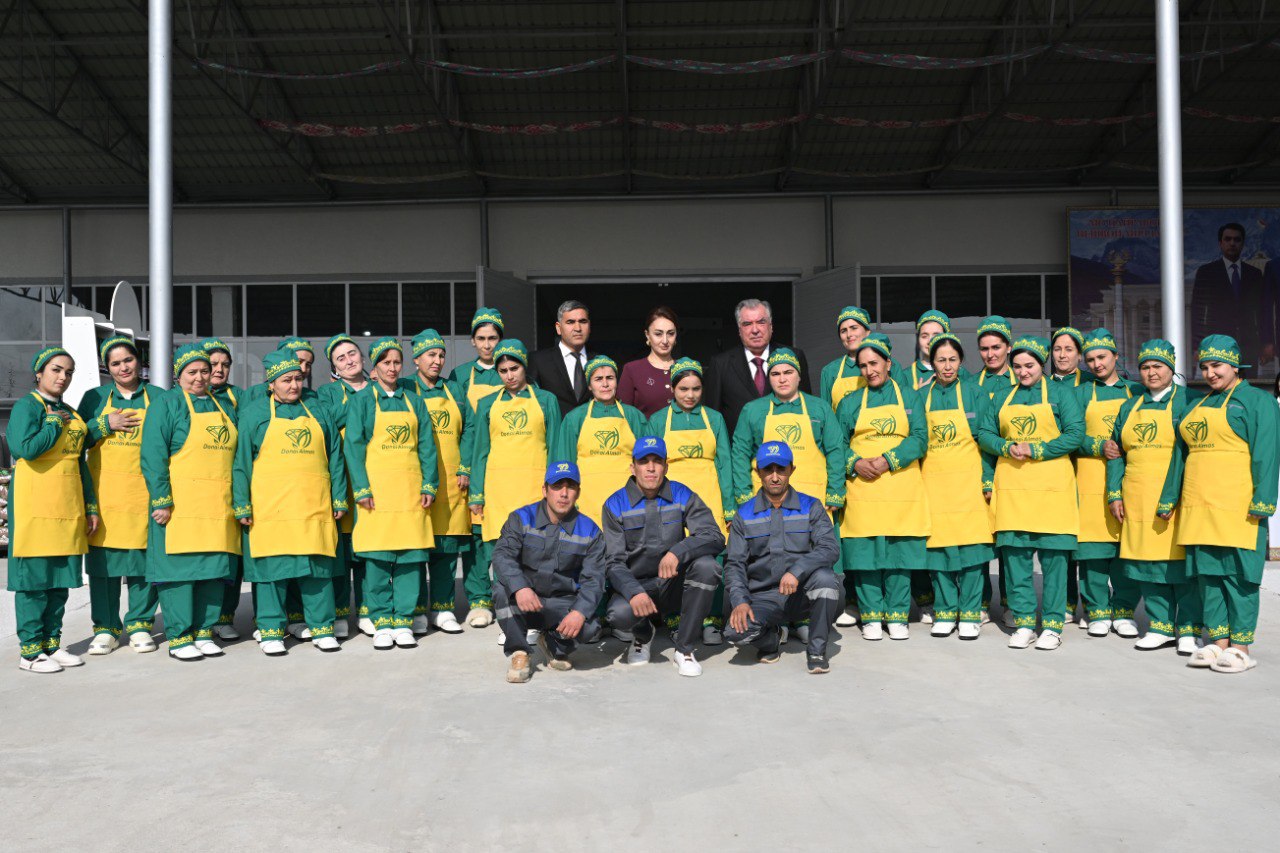
Emomali Rahmon also commissioned the Donai Almos LLC dried fruit processing and packaging plant, built as part of a public-private partnership by local entrepreneur Ozoda Hazratzoda on an area of 4,782 square meters.
The President was shown the production facilities and technological lines used for processing fresh fruit and producing dried fruit. The plant produces over 20 types of products, including dried apricots with pits, pistachios, plums, pomegranates, peanuts, mulberries, and various dried fruit mixes.
The facility is equipped with modern imported equipment capable of processing up to 2,000 tons of fruit per year and packaging the products in a variety of forms. Dried fruits are processed in accordance with international standards and exported to more than 30 countries, including Germany, Russia, China, Belarus, Azerbaijan, Iran, Turkey, and the United Arab Emirates.
The President instructed producers to pay special attention to processing quality, modern packaging, and promoting the national brand to ensure their products are competitive in international markets. Since the launch of the Donai Almos enterprise, 40 local residents have been provided with jobs and decent wages. In the future, work will be organized in two shifts, and the number of employees will double.
Raw materials for the plant are purchased from farmers in the republic's cities and districts. The product preparation process on the plant's production line begins with washing the dried fruit, followed by sorting and processing by type, and finally, packaging in special boxes. The President praised the quality of the construction work and the plant's role in creating new jobs.
An exhibition of industrial products and regional agricultural produce was held in the company's courtyard. It was noted that potato yields in the Kuhistoni Mastchokhsky District average 516 centners per hectare, with some farms achieving up to 1,000 centners per hectare.
During his visit, Emomali Rahmon also inaugurated a new administrative building for the Sughd Region Free Economic Zone. The 10,100-square-meter building, constructed with state funds, is intended for zone employees, entrepreneurs, and regional residents. One hundred local construction workers participated in the construction.
The administrative building consists of three floors and a basement. The ground floor houses the public service departments, while the upper floors house a conference room, management offices, and auxiliary spaces equipped with modern technology. A separate service hall is available for entrepreneurs, allowing them to submit service requests online.
The head of state expressed satisfaction with the creation of modern facilities in the free economic zone and instructed those responsible to produce high-quality products and export them abroad. The building's courtyard features fountains, modern recreation areas, and parking spaces for official vehicles.
The courtyard also features product samples from 48 enterprises of the Sughd Region Free Economic Zone. Various equipment and products manufactured there are supplied to domestic and international markets under the "Made in Tajikistan" brand.
The operation of new factories, the creation of jobs, the expansion of the product range and exports contribute to the improvement of the well-being of the population and the development of the national economy.