Translated with AI











The free port as a tool for stimulating trade has a long history. The emergence of free ports fostered the commercial civilization of ancient Europe, contributing to the formation of the modern international economic order. According to research, the world's first documented free port was established in 1547 in the small town of Livorno in the Tuscany region of Italy. Early free ports were established to stimulate trade and develop foreign trade. They provided convenience and security for ships from various countries and exempted imported and exported goods from customs duties. Later, to promote international trade, Europe and America began to designate special zones within or near ports as free for trade, developing foreign trade with an emphasis on transit trade and gradually adding functions such as warehousing and cargo handling. As the free port model became more enriched and expanded in functionality, it gradually integrated with industry, the city, and society, surpassing the openness of traditional free trade zones and becoming internationally recognized as the region with the highest level of openness.
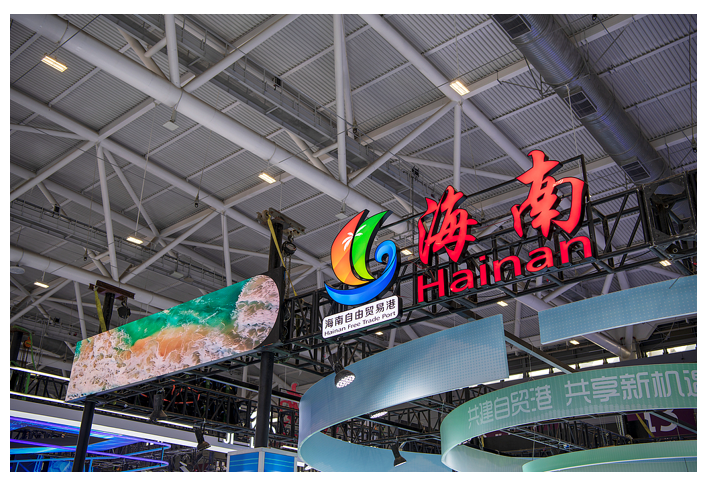
According to statistics, there are over 130 free ports and over 2,000 special economic zones worldwide with similar essence and functions. A free port can be a port itself, a city, and in China, even a province, such as the Hainan Free Trade Port, whose zone of operation extends across the entire island. This southernmost province of the country enjoys a unique geographical location: on the one hand, it relies on the vast market and economy of China's interior regions, developing in conjunction with the Guangdong-Hong Kong-Macao Greater Bay Area. On the other, it has direct access to the Pacific and Indian Oceans, serving as a strategic fulcrum for the construction of the "One Belt, One Road" initiative, facilitating multi-layered and multifaceted pragmatic cooperation with countries and regions along this route. Hainan is also a relatively independent geographical unit and an island economy, with natural geographical conditions conducive to the implementation of an island-wide independent customs operation regime and the application of a special customs regime. At present, Hainan has mainly formed an industrial structure focused on four major industries: tourism, modern services, high-tech industries, and tropical agriculture. The added value of these four leading industries reached RMB 523.21 billion (about US$73.6 billion) in 2024, accounting for 67% of the province's GDP. In the first half of 2025, this figure rose to 68.6%, demonstrating the continued optimization of the industrial structure. The volume of outbound duty-free sales from the island is growing rapidly; the medical technology, equipment, and drugs of the international health tourism pilot zone are comparable to the world level; China's first commercial space launch pad with high-density launch capabilities has been built and put into operation; The gross output of the seed industry exceeded 18 billion yuan. Hainan's modern industrial system, with its unique characteristics and advantages, generates a powerful internal driving force for growth, contributing to the province's high-quality development.
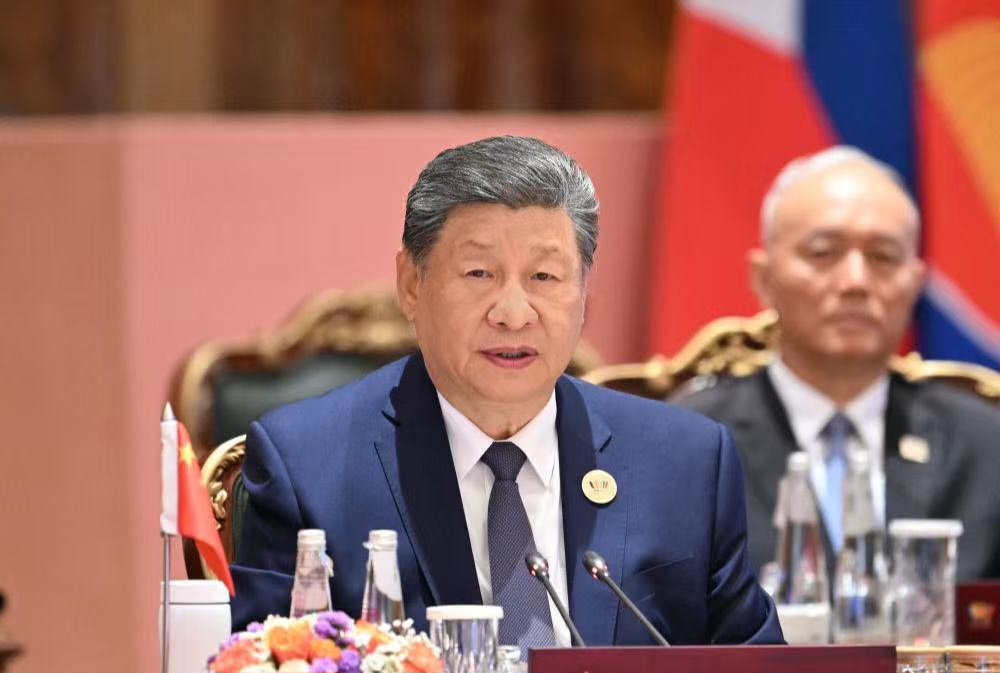
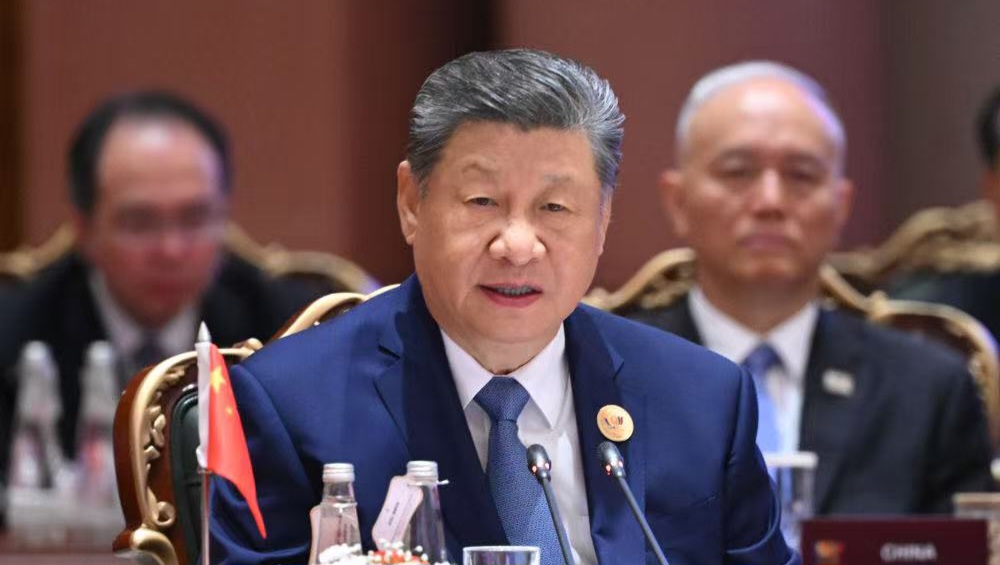
On April 13, 2018, at a ceremony to mark the 30th anniversary of the founding of Hainan Province and the establishment of the Hainan Special Economic Zone, Chinese President Xi Jinping announced the establishment of a pilot free trade zone and port in Hainan Province. On June 1, 2020, a master plan for the island's free port was published. Key tasks through 2035 include further optimizing and improving the openness policy and related institutional mechanisms, comprehensively ensuring the freedom and convenience of trade, investment, cross-border capital flows, access to human and transportation resources, as well as secure and orderly data flows, and advancing the construction of a high-quality free port.
China's creation of a free trade port on an island covering over 34,000 square kilometers and home to over 10 million permanent residents is a groundbreaking step on a global scale. Hainan is also tasked with exploring the coordinated development of cities and villages, environmental and economic benefits, and the inclusion of rural areas in free port construction zones, which distinguishes it from other international free trade ports.
Liberalization and simplification of trade procedures are a fundamental and universal characteristic of developed free ports worldwide and, of course, a crucial element of the institutional design of the Hainan Free Trade Port. The official launch of the island-wide independent customs operations regime is scheduled for December 18. According to Chinese President Xi Jinping, this will be a significant step toward expanding openness and developing an open global economy. This will be achieved after the implementation of the policy characterized by "Opening the First Line, Controlling the Second Line, and Maintaining Freedom Within the Island." This means that China is opening the "first line" between the Hainan Free Trade Port and foreign players to international interaction. However, after the lifting of import restrictions on Hainan, a situation of diverging tariffs will arise. China will establish a "second line" for taxing and including in statistics goods transported from the island to other regions of China. This is called "second line control." This will create a liberalized and convenient environment for trade and investment, whereby imported goods, with the exception of a very few on the negative list, will be completely exempt from customs duties. Such an institutional structure is unprecedented in the history of China's reform and opening-up. The list of zero-rated goods will be expanded from the current 1,900 to approximately 6,600, representing approximately 74% of the total—a 53% increase compared to before the independent customs operations regime was launched. At the same time, the single-window international trade mechanism and intelligent customs control platform will streamline customs procedures, reduce customs clearance times, and create an efficient and convenient business environment.
With the launch of independent customs operations, Hainan's interaction with the international community will become more efficient and unhindered, and the movement of Chinese and foreign citizens will be freer and more convenient. Currently, citizens of 86 countries can enter Hainan visa-free. A multi-tiered visa-free entry system has been established, including 240-hour visa-free transit, 144-hour visa-free entry for foreign tour groups visiting Hong Kong and Macao, and 15-day visa-free entry for foreign tour groups arriving on cruise ships. Haikou Meilan International Airport currently serves 36 international and regional passenger air routes. The average daily passenger flow of foreign citizens is 1,700, primarily from Russia, Malaysia, Singapore, Indonesia, Australia, and other countries.
In exactly 30 days, a new customs regulation format will come into effect across the entire southern island of Hainan. The establishment of the Hainan Free Trade Port is an important strategic decision to deepen reforms and advance openness in the new era. It clearly demonstrates China's commitment to steadily expanding institutional openness. This tropical island is ready to share development opportunities with everyone in the construction of the free trade port!
By CGTN correspondent Li Zheya