Translated with AI

























Kazakhstani companies engaged in international road transport have begun to fall under the restrictions imposed in Russia en masse, threatening the jobs of tens of thousands of drivers and transport companies, according to Bolatbek Aliyev, a member of the Majilis of the Kazakh Parliament, as reported by Tengrinews.kz.
According to amendments to Federal Law No. 115-FZ (as amended on August 8, 2024), foreign citizens entering Russia without a visa are permitted to stay in Russia for no more than 90 days during a calendar year.
"This regulation doesn't take into account the specifics of international road transport. Our drivers are in another country not for personal reasons, but in the performance of their work duties. However, the new requirements effectively place them in the position of violating Russian law," the deputy wrote on Facebook.
According to Aliyev, many carriers have already found themselves in a similar situation. Since the time spent in Russia and Belarus is cumulative, even transit through Belarus is counted as time spent in Russia, which exacerbates the problem.
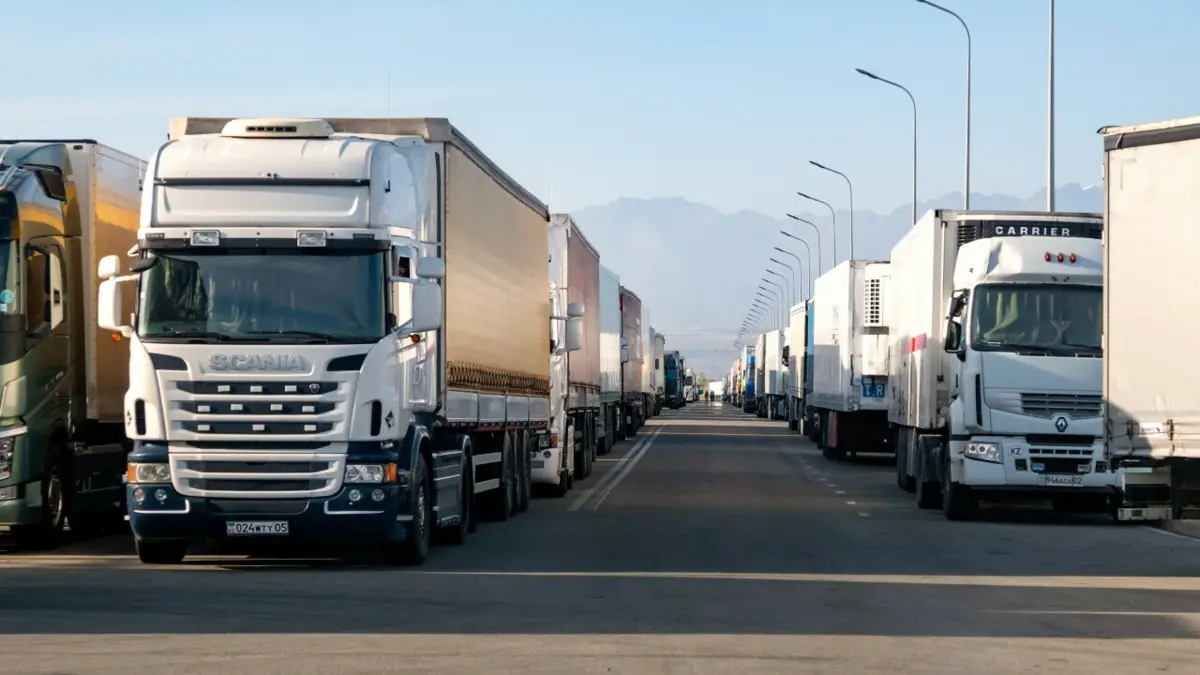
Day-long queues at the borders of the Union State with the European Union, as well as at the Russian-Kazakh border, further complicate the situation. Drivers from Kazakhstan, Uzbekistan, Kyrgyzstan, and other countries are forced to wait for hours for their documents to be processed, and all this time is included in the overall 90-day stay limit.
In response to the difficulties that have arisen, Bolatbek Aliyev sent an official appeal to Kazakhstan's Deputy Prime Minister Serik Zhumangarin, who oversees integration and cooperation within the EAEU. The Ministry of Foreign Affairs and the Ministry of Internal Affairs have also been notified to develop mechanisms to protect Kazakhstani carriers.
Experts warn that the restrictive measures have already led to practical difficulties: Kazakhstani carriers are losing the ability to operate on routes through Russia and Belarus. If the restrictions remain in place, this could lead to a shortage of rolling stock, increased costs, and the displacement of Kazakhstani companies from the market by Russian and Belarusian competitors.
By comparison, Kazakhstan has a more lenient regime for foreign drivers. According to paragraph 6 of the Rules for the Entry and Stay of Immigrants (Government Resolution No. 148 of January 21, 2012), restrictions on the length of stay (90/180 days) do not apply to international and transit drivers of freight and passenger vehicles.
"Kazakhstan has exempted foreign carriers from such requirements, creating conditions for stable and safe transport links. I believe it's essential that this issue be raised at the level of the Eurasian Economic Commission and addressed within the framework of the partnership dialogue between our countries. Our carriers must not become hostages to uncoordinated decisions," Bolatbek Aliyev emphasized.
Kazakhstan's Ministry of Transport previously reported that queues at the Kazakh-Russian border were due to Russia's tightened controls. Russian authorities have stepped up cargo screening, increased vehicle inspection times, and introduced additional document verification measures, as well as sanitary and phytosanitary requirements.