Translated with AI






























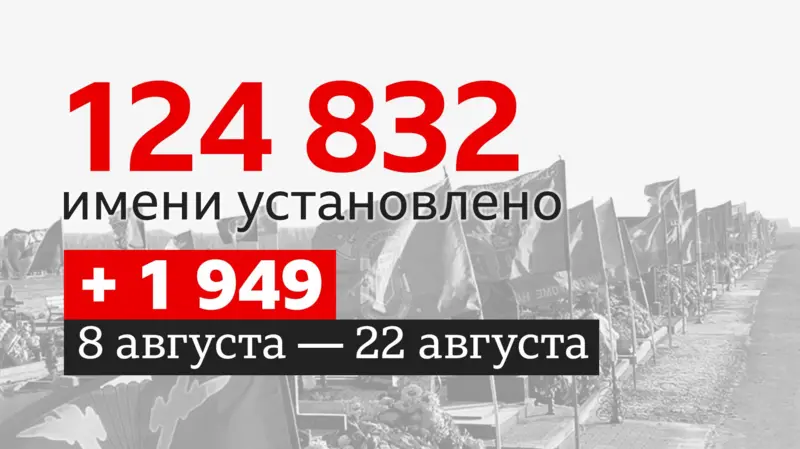
Using open-source data, the BBC, together with Mediazona* and a team of volunteers, identified the names of 124,832 Russian soldiers killed during the full-scale invasion of Ukraine. Of these, at least 11,250 have died since February 11, the date official negotiations between Moscow and Washington to end the war in Ukraine began.
This figure includes all Russian soldiers killed between February 11, 2025, and the present. Where the exact date of death was unknown, we used the date of death confirmation in open sources. The actual death toll for this period will, of course, be higher.
Contract on the day negotiations begin
Since February 2025, official representatives of Russia and the United States have been in regular contact, including on the settlement of the conflict in Ukraine. On February 11, US Special Presidential Envoy Steve Witkoff visited Moscow for the first time.
That same day, 56-year-old Ranif Fazylov, a native of the Bashkir village of Staroyantuzovo, signed a contract with the Ministry of Defense. The following day, for the first time since Donald Trump's return to the White House, the Russian and American presidents spoke on the phone.
Aside from his military service in Orenburg from 1989 to 1991, Ranif Fazylov had no connection with the army. He spent eight years in school, graduated from college, returned to his native village, worked on the Pobeda collective farm, and later " worked in various organizations " in the Sverdlovsk region and Bashkortostan.
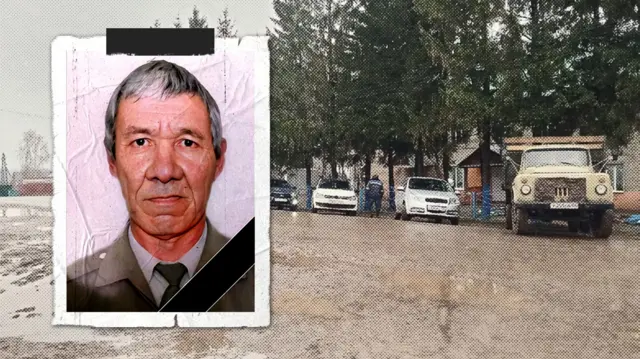
In the last years before going to the front, Fazylov worked as a driver. However, he never had a driver's license—at least that's what he will tell the court.
In 2019, Fazylov was involved in an accident while driving a ZIL. He failed to notice a Seat overtaking him and began changing lanes without using his turn signal. While avoiding a collision with a truck, the car skidded into a ditch and overturned, injuring the passengers—two adults and a child. In his lawsuit against Fazylov, the Seat driver claimed that his daughter was unable to attend university due to the injuries sustained in the accident.
Here we publish only the most important news and the most interesting texts. The channel is available to non-Russian numbers.
Subscribe
The End of the Story: WhatsApp Channel Advertisement
In 2020, the Birsk Interdistrict Court of Bashkortostan found Fazylov guilty of a traffic violation that negligently caused grievous bodily harm. Fazylov avoided prison; the court merely sentenced him to eighteen months of restricted freedom and banned him from driving for three years.
By the time the man decided to go to war, these restrictions had already expired. Russia's full-scale invasion of Ukraine had already been underway for almost three years.
Fazylov went to war with the 80th Guards Tank Regiment. He was given the call sign "Gams." At least, that's what his wife and sisters reported—since late April, they've been trying to learn something about his fate by posting his photos to Telegram missing persons groups.
Fazylov last contacted his family on March 30. An obituary published on the village library's website stated that Fazylov died on April 1 near the village of Novoandriivka in the Donetsk region. The Russian army has yet to capture the frontline village of Novoandriivka, but last week, Ukrainian authorities announced the mandatory evacuation of its residents. Using publicly available data, the BBC was able to identify 173 other soldiers of the 80th Guards Tank Regiment who died in the war, in addition to Fazylov.
The man's obituary on the website of the Bashkir Malonakaryakovskaya rural library states that he had no children. The "Heroes of the Air Defense Forces of the Mishkinsky District" section of the library's website already contains 123 obituaries. Bashkortostan continues to hold the first place among Russian regions for the number of people killed in the war with Ukraine—6,117 as of August 22.
Fazylov went to war from the village of Chebykovo in the Mishkinsky District of Bashkortostan. Chebykovo has a population of 385, including 100 men between the ages of 18 and 60. The BBC knows of at least two other natives of the same village who died in the war. The Chebykovo Community Center's VKontakte page hasn't posted anything about them. However, it does publish poems in support of the war in Ukraine and regularly reports on local residents weaving camouflage nets for the military.
Main trends
27% of the fatalities we identified were volunteers. By comparison, in 2023, they accounted for only 14% of the total casualties.
Former prisoners account for 14.5% of those killed in the war. Their share in the overall death toll is gradually declining, due to investigators and lawyers now being required to notify defendants and suspects of the possibility of avoiding criminal punishment if they sign a contract with the Russian army. Since these individuals have not been formally found guilty by the court, we classify them as volunteers rather than convicted.
Approximately 11% of the dead were mobilized soldiers. However, the actual losses among them may be significantly higher, as obituaries often do not indicate the exact status of the deceased. Because of this, it is often impossible to determine whether a person volunteered for the front or was mobilized.
Russia also continues to suffer officer casualties—a total of 5,621 since the start of the invasion and as of August 22. Among them are 12 generals (including Interior Ministry Major General Andrei Golovatsky, who was sentenced to 8.5 years in prison).
On August 17, another general, Esedulla Abachev, deputy commander of the Sever group, was wounded in the war. According to Dagestan's head, Sergei Melikov, Abachev was "in one of the border regions." The general was hospitalized, and doctors assessed his condition as serious. Ukraine's Main Intelligence Directorate (GUR) reported Abachev's wound on Sunday, August 17. The GUR claimed that Ukrainian forces struck a Russian convoy on the Rylsk-Khomutovka highway in the Kursk region, and that the general's arm and legs were amputated as a result of his wound. Abachev has been fighting in Ukraine since the beginning of the full-scale invasion, and in April 2022, President Vladimir Putin awarded him the title "Hero of Russia."
Four generals were killed in the first four months of the war. During this period, many commanders were close to the front lines, seeking to expedite decision-making with their presence, compensating for logistical problems, operational planning shortcomings, and the lack of reliable, secure communications.
By the summer of 2022, the Russian military had partially restored its supply and communications system—generals and other high-ranking officers were transferred to rear areas, and over the next year, we recorded no confirmed deaths of senior officers.
In the summer of 2023, when Ukraine received long-range artillery systems from its Western allies, Russian generals began to die in precision strikes. By the end of 2024, a new trend emerged: generals were killed by assassination attempts. For example, Igor Kirillov, the head of the radiation, chemical, and biological defense forces, was assassinated in Moscow. A scooter packed with explosives was remotely detonated near the entrance to the general's apartment building as he was leaving for his waiting car.
Overall assessment of Russian losses
The actual scale of losses is clearly significantly higher than those recorded by open sources. According to military experts we interviewed, an analysis of Russian cemeteries, memorials, and obituaries reflects only 45% to 65% of the total number of casualties.
One reason is that the bodies of many soldiers killed in recent months may still remain on the battlefield. Their evacuation carries the risk of further casualties, leaving them vulnerable to drone attacks.
Taking into account the above estimates, the death toll on the Russian side could range from 192,049 to 277,404 people.
The total number of losses increases significantly if we include in the calculation the military personnel who participated in the battles against Ukraine as part of the formations of the self-proclaimed Donetsk and Luhansk People's "Republics."
Since December 2022, the DPR authorities have stopped publishing casualty data, while the LPR has never disclosed it at all. After reviewing available obituaries and reports of LPR/DPR fighters who have been out of contact for long periods, we concluded that by the end of September 2024, the death toll in these formations could have been between 21,000 and 23,500. We later began counting killed LPR/DPR fighters as foreigners serving in the Russian army.
Thus, based on the collected data, it can be assumed that the total number of deaths among pro-Russian forces is in the range of 213,049 to 300,904 military personnel.