Translated with AI
































Air pollution with small particles PM2.5 annually causes more than 65 thousand premature deaths in Central Asian countries. The economic damage from this problem is estimated at $15.2 – 21.7 billion per year, which is 3-5% of the regional GDP. Such conclusions are contained in the World Bank report "Air Quality Management in Central Asia", Fergana.ru reports.
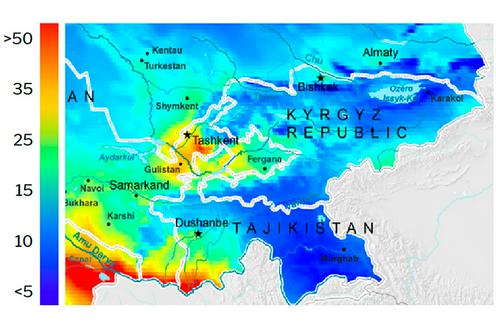
The report highlights that air quality in all countries of the region is a serious concern, especially in cities. Average annual concentrations of fine particles PM2.5 in the largest cities of the region are 6-12 times higher than the World Health Organization (WHO) standard of 5 μg/m³. The main sources of pollution are residential solid fuel combustion, motor vehicles, industry, and a significant contribution from natural dust.
In Kazakhstan (Almaty, Astana), average annual PM2.5 concentrations exceed 30 μg/m³. The main sources are residential coal heating, vehicle emissions, and industrial emissions. Soil and desert dust account for 20–30% of the total PM2.5 level. Overall, 65% of pollution is due to internal sources, and about 5% to transboundary transport.
In Kyrgyzstan (Bishkek), the average annual concentration of PM2.5 is about 32.5 μg/m³. The main contribution is made by the combustion of coal and biomass in residential buildings, especially in the suburbs. The contribution of motor vehicles reaches 26%. Soil and desert dust accounts for about 30% of pollution. Internal sources provide 48% of pollution, 22% – transboundary flows.
Tajikistan (Dushanbe) has some of the highest PM2.5 concentrations, averaging 54.6 μg/m³. Residential solid fuel combustion is the main contributor (42%), with most emissions coming from suburban areas. Motor vehicles and municipal waste make smaller contributions (15% and 12%, respectively). Soil and desert dust account for about 25% of pollution. Domestic sources account for 53% of pollution, and transboundary flows account for 17%.
In Turkmenistan (Ashgabat), the average annual concentration of PM2.5 is lower than in other regional capitals – about 19.2 μg/m³. However, here, more than 80% of air pollution is due to natural dust, and anthropogenic sources account for only 8% of total pollution, which makes the country unique in the regional context.
In Uzbekistan (Tashkent), the average annual concentration of PM2.5 is 40.3 μg/m³. The main sources are residential heating with solid fuel and vehicle emissions. Soil and desert dust account for about 30% of the pollution. Domestic sources account for 53% of the pollution, and transboundary flows account for 14%.
In the central part of the region, where Kazakhstan, Kyrgyzstan, Tajikistan and Uzbekistan border, intense transboundary pollution flows are observed.
World Bank experts recommend that Central Asian countries replace coal heating with gas or central heating, implement modern environmental standards for transport, invest in air monitoring, and update standards according to WHO standards. Particular attention should be paid to cooperation between countries in the region to combat transboundary pollution and implement modern air quality management systems.