Translated with AI
































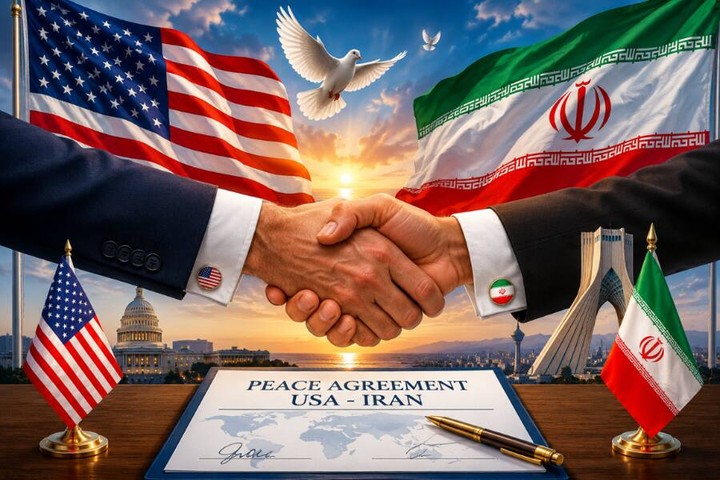
The United States and Iran have signed a preliminary peace agreement providing for a cessation of hostilities, the lifting of sanctions against Tehran, and the launch of a large-scale reconstruction program. This was announced by US President Donald Trump and Iranian officials.
According to Trump, the memorandum of understanding was signed at the Palace of Versailles after a meeting with French President Emmanuel Macron. The US President confirmed his signature on the document, which is valid for 60 days. Iranian President Masoud Pezeshkian signed the document on Iran's behalf.
The memorandum provides for an extension of the ceasefire, announced earlier in April, for another two months. This period is expected to be used by the parties to agree on the terms of a final peace agreement.
Trump reiterated that the United States is prepared to return to military action if Iran fails to fulfill its obligations or if the parties fail to reach a final agreement within the established deadline.
According to the document, the parties agreed to an immediate cessation of military operations on all fronts, including in Lebanon. The memorandum also provides for the end of the American naval blockade of Iranian ports within 30 days and the subsequent withdrawal of American forces from Iran's borders after the signing of a final peace treaty.
One of the key provisions of the agreement is the opening of the Strait of Hormuz to duty-free passage for ships for 60 days. After this, Iran, together with Oman and other Gulf states, is to develop a long-term mechanism to regulate shipping through this strategically important sea route.
The document also provides for the creation of a fund for the reconstruction and economic development of Iran worth at least $300 billion. As US administration officials clarified, the US intends to work with regional partners to develop a program for the country's reconstruction, but does not commit to directly financing the fund.
A separate clause in the memorandum provides for the complete lifting of sanctions against the Islamic Republic of Iran. The parties plan to agree on a specific timetable for lifting them later.
Tehran also pledges not to develop or acquire nuclear weapons. Under the agreement, the United States and Iran intend to cooperate on eliminating Iran's enriched uranium stockpiles.
As US administration officials stated during a briefing for journalists at the G7 summit in Evian, the memorandum is not yet a final peace treaty and does not impose legally binding obligations on Washington. They stated that the implementation of the document's provisions will depend on Iran's further actions.
According to initial reports, the conflict between the US, Israel, and Iran, which began on February 28, has resulted in thousands of deaths, primarily in Iran and Lebanon. In response to US and Israeli actions, Tehran launched strikes against Israel and Washington's allies in the Persian Gulf.
The conflict has also triggered a major energy crisis after Iran effectively closed the Strait of Hormuz, through which a significant portion of the world's oil supplies passes.