Translated with AI

































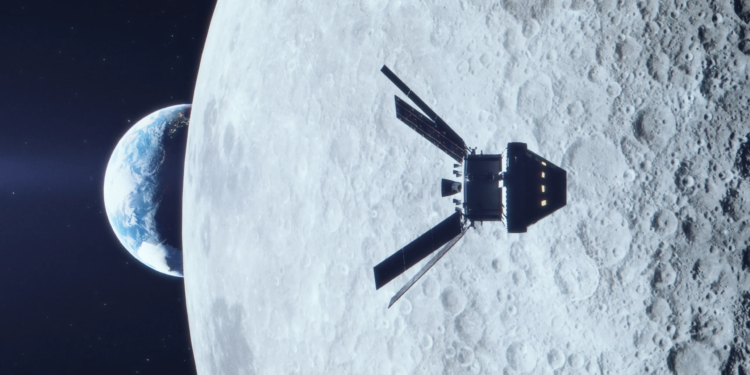
After a 10-day lunar orbit, the crew of the Artemis 2 mission returned safely to Earth. This historic mission, which set a record for the longest human spaceflight, was a major step toward returning humans to the lunar surface for the first time since 1972 and laid the foundation for further space exploration.
This was stated by astrophysicist, television presenter, and UN Ambassador for Outer Space Affairs Brian Cox. According to him, the modern space program goes beyond scientific research and is directly linked to improving life on Earth.
The Artemis program aims to establish a permanent human presence on the Moon, explore its south pole, and test technologies for future manned missions to Mars. Cox emphasized that the development of the space industry is important not in itself, but as a tool for improving the quality of life on the planet.
According to him, space activities have already become part of the global economy. Technologies developed for space exploration are being used to solve key problems, including combating climate change, mitigating the consequences of natural disasters, and ensuring sustainable development.
Satellite systems enable crop yield monitoring, efficient water resource management, and real-time deforestation control. Furthermore, satellite communications facilitate the development of distance education and telemedicine in remote regions.
Cox specifically noted the role of the United Nations in developing space cooperation. According to him, the UN structure provides a platform for states to collaborate on issues of peaceful space exploration, including space traffic regulation, cooperation on lunar exploration, and planetary protection.
He emphasized that space remains an area where countries can unite despite political differences. He cited the Apollo-Soyuz mission, which became a symbol of cooperation between the United States and the Soviet Union, as an example.
According to Cox, increased participation by various countries in space projects accelerates scientific progress. With UN support, countries such as Kenya, Mauritius, Moldova, and Guatemala have launched their first satellites.
At the same time, he pointed to the growing problem of space debris. In 2025, more than 4,500 new satellites were launched, compared to just over 200 ten years ago. Experts estimate that there are up to 130 million fragments in orbit, even small ones posing a serious threat. Scientists warn of the risk of so-called Kessler syndrome—a chain reaction of collisions that could lead to a further increase in debris.
Speaking about prospects, Cox noted that he does not rule out the discovery of microbial life on Mars or the satellites of the planets of the Solar System, but considers the discovery of complex life forms unlikely.
He also expressed hope for another human landing on the Moon and a possible mission to Mars, suggesting that in the future, the United Nations flag could be planted on the surface of the Red Planet as a symbol of the unification of humanity.