Translated with AI























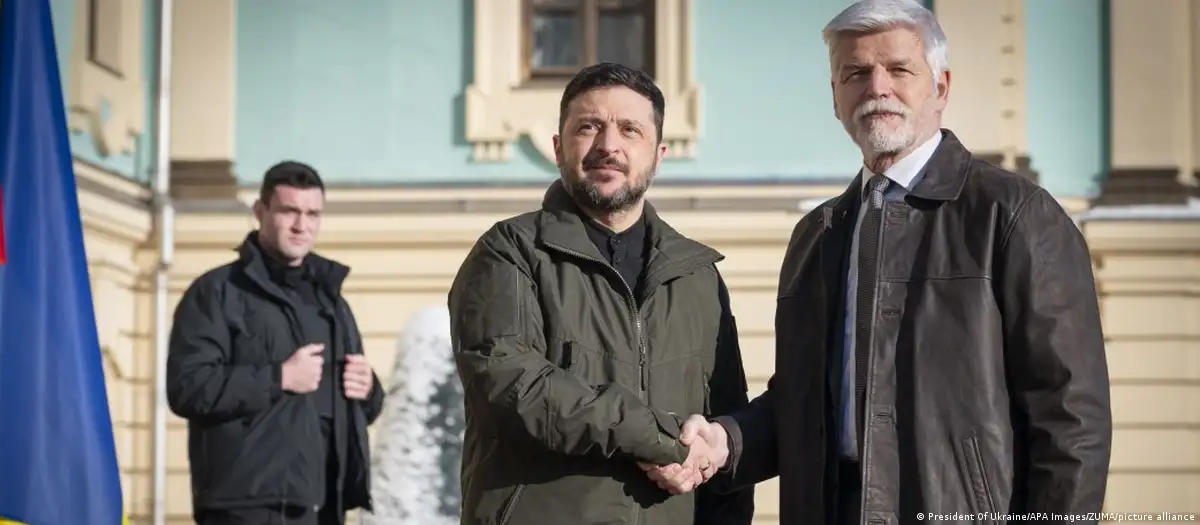
Czech President Petr Pavel made his third visit to Ukraine since the start of Russia's full-scale invasion. During his trip, the Czech leader first visited Lviv and then Kyiv, where he held talks with Ukrainian President Volodymyr Zelenskyy and reaffirmed his continued support for the Ukrainian Armed Forces, DW reports.
Speaking at a joint press conference with Volodymyr Zelenskyy in Kyiv on January 16, Petr Pavel stated that the Czech Republic provides approximately half of the ammunition supplies for the Ukrainian Armed Forces. He added that the current Czech government has continued the corresponding initiative, which had been initiated previously. The president emphasized that Prague will be able to provide approximately the same amount of ammunition as before, and assured that the Ukrainian army will not face a shortage of ammunition and will be in a more favorable position.
Doubts about the future of the ammunition supplies arose during the Czech election campaign. At the time, the leader of the opposition movement ANO, Andrej Babiš, suggested the possibility of abandoning the initiative if he won the parliamentary elections. However, after taking office as prime minister, Babiš announced that his government would continue to support Ukraine with artillery ammunition.
Czech Prime Minister Petr Fiala proposed purchasing artillery shells for Ukraine outside the European Union at an emergency EU summit in early February 2024. Subsequently, at the Munich Security Conference, President Petr Pavel announced the possibility of acquiring up to 800,000 artillery shells from third countries. The largest donors to this project are Germany, the Netherlands, and Denmark. A total of 15 EU and NATO countries are participating in the initiative, having allocated over €1.5 billion for this purpose. Part of the revenue from frozen Russian assets in the EU is being used to finance the purchases.
In the presence of Petr Pavel, Ukrainian President Volodymyr Zelenskyy emphasized the importance of the Czech initiative to supply ammunition. He stated that the Czech Republic and President Pavel personally have supported Ukraine throughout the years of the full-scale war. Zelenskyy noted that the Czech artillery initiative is effective and will continue this year, which is of fundamental importance for Ukraine.
During the press conference, Zelenskyy also announced that he had briefed the Czech President on the situation on the frontline and Ukraine's current recovery needs. He noted that Ukraine is struggling to restore normal life support on a daily basis following Russian strikes. According to Zelenskyy, attacks on energy infrastructure and cities demonstrate Russia's true intentions, which, he emphasized, are not to reach an agreement, but to further destroy Ukraine. This, according to the Ukrainian leader, is precisely why the diplomatic process is progressing so slowly.
Volodymyr Zelenskyy simultaneously announced that the Ukrainian delegation was en route to the United States, where meetings with representatives of US President Donald Trump are scheduled in the coming days. He expressed hope that these meetings would yield greater clarity regarding the documents already prepared with the American side, as well as regarding Russia's response to the diplomatic work already completed.
Zelenskyy also noted the need to finalize a number of documents related to security guarantees and the Ukraine reconstruction package. He did not rule out the possibility that a corresponding agreement could be signed at the World Economic Forum in Davos next week. However, the Ukrainian president emphasized that the issue is not the urgency of signing, but the content of the documents. He stated that it is important that the agreement reflect all aspects discussed with partners, and that post-war Ukraine receive real financial support and reliable security guarantees.
For his part, Czech President Petr Pavel expressed the opinion that Ukraine would likely have to make painful concessions to end the war and that without US participation, ending the conflict would be extremely difficult. At the same time, he emphasized that Europe must make every effort to ensure that the work already done to prepare documents for a possible peace agreement is not in vain.
Volodymyr Zelenskyy, for his part, stated that Ukraine retains the initiative in the negotiation process and that the Ukrainian delegation has accomplished significant work with the American side. He noted that the two sides' positions differ on a number of issues, as the Ukrainian side primarily protects the interests of its own state. Zelenskyy emphasized that ultimatums are not a working model for democratic relations between countries and that the key issue remains effective security guarantees that will prevent a resumption of war in the future.
The Ukrainian President also stated the need for increased US pressure on Russia. According to him, the issue is not the desire to end the war, but the level of pressure on the Russian side. Zelenskyy accused Russia of delaying the prisoner exchange, which the parties agreed to back in late 2025, and emphasized that with sufficient international pressure, the conflict could be ended in the near future.