Translated with AI










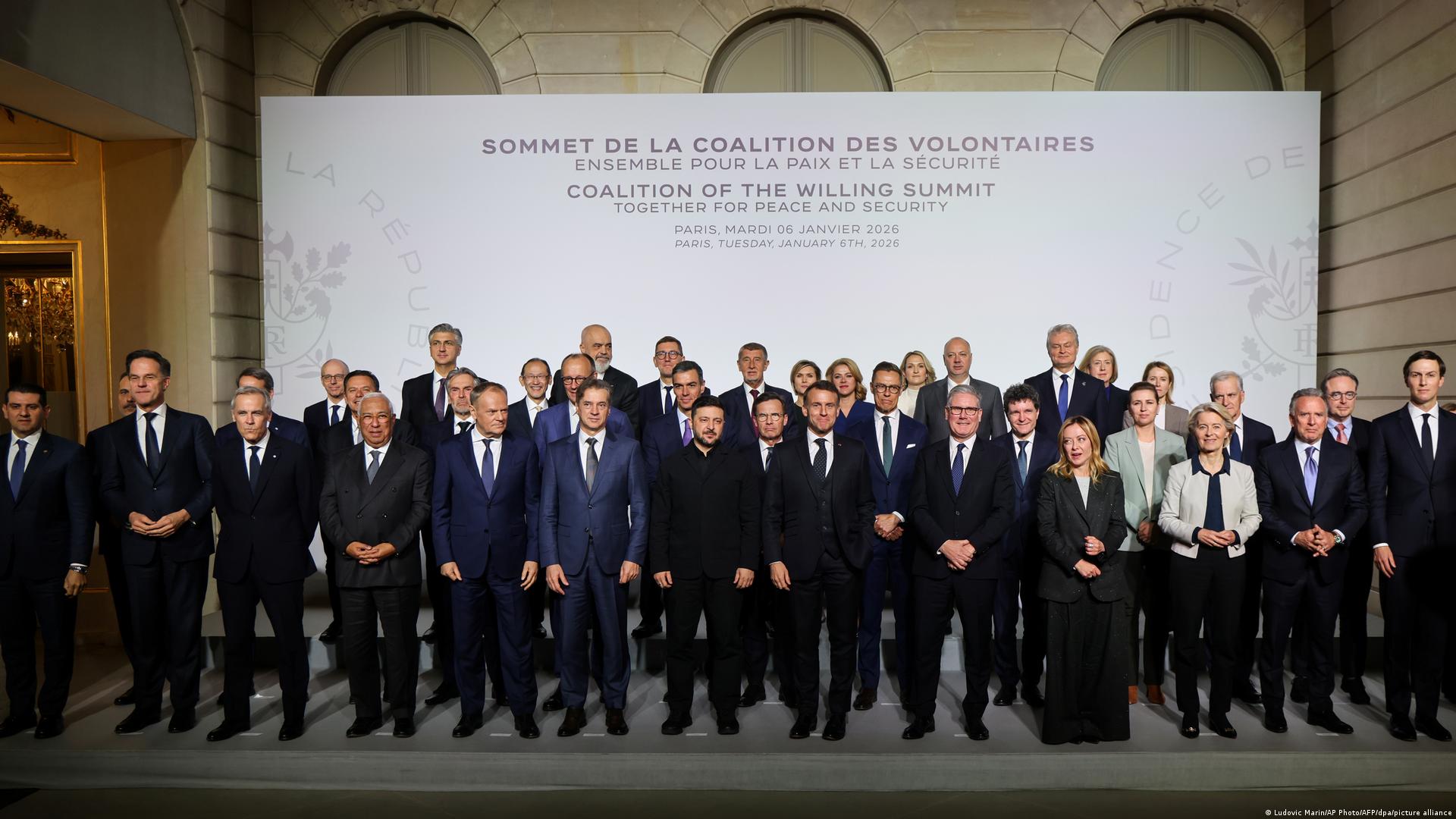
European countries have discussed the possibility of deploying a multinational force to Ukraine to ensure the country's security and reconstruction after the end of hostilities, but significant questions remain about the US's readiness to support these forces in the event of threats from Russia.
Although France and the United Kingdom have committed in writing to sending troops to Ukraine following a peace agreement, the US position on supporting these forces remains unclear. The presence of US presidential envoys Steve Witkoff and Jared Kushner at a meeting of European allies in Paris on security guarantees for Ukraine raised hopes that the EU could be heard in Washington, despite the ongoing dispute over US threats to annex Greenland.
"We've largely completed the security protocols," said Steve Witkoff, standing alongside the leaders of France, Germany, Britain, and Ukraine at the presidential palace in Paris. "This is important to ensure that when this war ends, it ends for good," he added.
This week, France, the United Kingdom, and Ukraine signed a declaration of intent regarding the deployment of a multinational force to support Ukraine's defense, reconstruction, and strategic resilience. Experts noted that the document's written form makes it a more solid and formal guarantee for Ukraine.
On Tuesday, German Chancellor Friedrich Merz announced Germany's possible participation and deployment of armed forces on the territory of NATO countries bordering Ukraine after a ceasefire agreement is reached. Spanish Prime Minister Pedro Sánchez expressed his willingness for the first time to send troops to Ukraine as part of a peacekeeping mission.
The multinational force was given this name so that both European and non-European countries could join it, noted Jacob Funk Kirkegaard of the Brussels-based think tank Bruegel. "Potential participants could include Australia and Turkey, which is a major player in the Black Sea," he said.
The "coalition of the willing" meeting, held on January 6 in Paris, was attended by approximately 30 countries providing assistance to Ukraine and willing to provide security guarantees. The group announced plans to assist in the construction of defensive fortifications inside Ukraine, without disclosing details.
According to experts, these fortifications could be similar to those being built in NATO countries near Russia, including the installation of additional mines and barbed wire. Coalition leaders have also expressed their willingness to participate in a US-led ceasefire monitoring and verification mechanism, using equipment including drones, sensors, and satellites.
The statement noted that the Ukrainian armed forces will remain the first line of defense, while European troops will perform primarily instructional functions and will not participate in combat operations.
However, experts and politicians emphasize that deployment details remain vague. French President Emmanuel Macron has mentioned the possibility of sending "several thousand" troops, but securing parliamentary approval for funding for troop support abroad could prove challenging.
The UK faces similar challenges: Prime Minister Keir Starmer, who signed the declaration, stated that the number of troops would be determined in accordance with military plans, counting on parliamentary support. Experts note that the UK has only a small fraction of its forces ready for deployment at any given moment.
In Germany, the proposal to deploy troops must also be approved by the Bundestag. Other members of the "coalition of the willing" are not yet disclosing their specific contribution, deferring its determination until peace is concluded.
Ukrainian President Volodymyr Zelenskyy noted that the question of whether all coalition partners are prepared to decisively respond to a new Russian attack remains open. "Until security guarantees are approved by the US parliaments and Congress, we cannot say whether our partners are ready to defend us," he stated.
The main obstacle to sending European troops remains the uncertain US position. According to historian and active-duty Austrian Colonel Markus Reisner, establishing a large-scale European force presence in Ukraine is impossible without guarantees of US support. "Without US commitment, Europe is not ready to continue. The US must assume the corresponding obligations," he emphasized.
Reisner noted that such support is particularly relevant while Russia views Western soldiers in Ukraine as potential military targets. He also noted that the US's reputation among European allies following its recent actions in Venezuela raises questions about the credibility of future commitments.
The expert emphasized that the effectiveness of all guarantees depends on mutual trust between partners. In the current political situation, the US's willingness to commit remains uncertain, and cooperation with the Trump administration carries unpredictable risks.