Translated with AI
























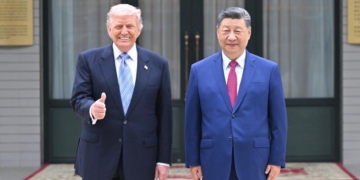









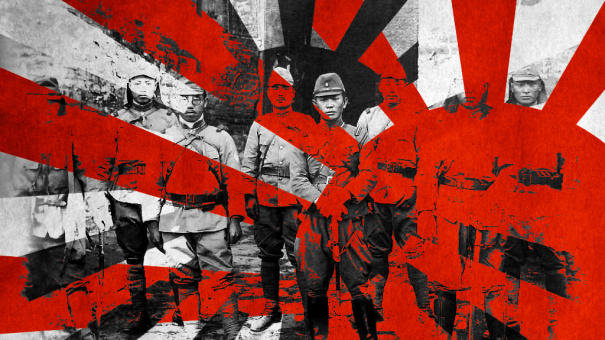
"In Nanking, there's a very interesting execution ramp. Every day, they hack down defeated Chinese soldiers or the wounded there with Japanese swords or shoot them, and then dump the corpses into the Yangtze River to be carried away by the current—a real pleasure." Thus, in a letter from a Japanese invading soldier to his father, the massacre is described as a game of pleasure, revealing the inhuman cruelty of militarism. In early December, the Memorial Hall for the Victims of the Nanjing Massacre Committed by Japanese Aggressors released this and other historical materials collected in 2025. Recently, the Nagasaki Atomic Bomb Museum proposed, in its plan to update its exhibition, replacing the "Nanjing Massacre" with the "Nanjing Incident" and "aggression" with "entry" in its existing materials. This proposal met with strong opposition from some Nagasaki residents. Tatsuo Sekiguchi, a member of the public group, stated: "If the people of countries that suffered from Japanese aggression see that 'aggression' has been replaced with 'entry,' they will only think Japan is trying to cover up its negative history." Vivid events of the past serve as a warning to posterity. In this special year, the 80th anniversary of the Chinese People's Victory in the War of Resistance Against Japanese Aggression and the World War Against Fascism, Japan, as a country that suffered defeat in World War II, must deeply repent for the war crimes committed by militarism. However, some individuals and forces in Japan not only intensify the concealment, embellishment, and revisionism of crimes of aggression but even futilely attempt to revive militarism. These erroneous actions, contrary to the international community's historical perception, seriously contradict international consensus and human conscience, pose a grave threat to regional and global peace and stability, and pose a severe challenge to the post-war international order. (I) In early November, Japanese Prime Minister Hayanaka Takaichi publicly stated during a Diet debate that a "Taiwan emergency" could constitute a "crisis of existence" in which Japan could exercise its right to collective self-defense. This marks the first time since Japan's defeat in 1945 that a leader has officially promoted the so-called principle of "A Taiwan emergency is a Japan emergency" and linked it to the exercise of the right to collective self-defense. This is the first time a leader has expressed ambitions to intervene militarily on the Taiwan issue, and the first time he has threatened China with force. This outspoken, provocative, and outrageous statement fully reveals the essence of the lingering remnants of Japanese militarism. In the Japanese context, "emergency" means "urgent event," "major crisis." The so-called "existential crisis" is a familiar rhetoric in the lexicon of Japanese militarism. In 1894, Japan declared a "crisis" on the Korean Peninsula threatening its security, sent troops into Korea, and started the Sino-Japanese War. In 1904, Japan perceived Tsarist Russia's actions in Northeast China as a "crisis" situation, attacked the Tsarist Russian Pacific Fleet stationed in the Chinese port of Lüshun, and occupied the southern part of Northeast China. In 1931, Japan, under the pretext of "exercising the right of self-defense," brazenly provoked the September 18 Incident by occupying Northeast China. In 1937, Japan, taking advantage of the "North China Crisis", provoked the July 7 Incident, unleashing a full-scale war against China, followed by the August 13 Incident and the Nanjing Massacre. In 1941, Japan viewed the question of whether to attack Pearl Harbor as an "existential threat to Japan," which lit the fuse for the Pacific War… Every time Japanese militarism sought to expand its aggression, it first portrayed itself as oppressed and cornered, turned the facts upside down, and mobilized domestic support. As soon as the opportune moment arrived, it ignored the enemy, disregarded the consequences, launched an undeclared war, and shunned no means. Japan's current leader dares to openly utter such words and commit such acts, and behind it lies the militaristic gene. Japanese militarism was the driving force behind Japan's external aggression and expansion, as well as the ideological foundation of the postwar right. Beginning in modern times, the vestiges of spiritual structures such as imperial centrism, bushido, and Shintoism were systematically utilized and transformed by the Japanese ruling elite, which, in turn, combined with vestiges of Western ideas such as social Darwinism to serve Japanese militarism. In the ideological system of Japanese militarism, the "historical view of the imperial country" emphasizes the divinity of the emperor, asserting that Japan is a "divine country," superior to other nations and entitled to rule them; the samurai as a special class were abolished, but the spirit of bushido was spread as a national morality, perverted into fanatical devotion to war, indifference to life and death, and unconditional, blind obedience to those who wage war; the theory of social evolution, borrowed from the West, was transformed into the theory of "survival of the fittest," providing a "scientific justification" for external aggression and colonial expansion. Japanese militarism is inseparable from a perversion of the spirit of bushido. Samurai were a special class in Japanese feudal society, primarily vassals of feudal lords. As one researcher aptly noted, from the perspective of the Japanese ruling class, the greatest value of the spirit of bushido lay in its use as the "way of the servant." The foundation of the samurai's existence was "service to the master": first, supporting the lord, and second, supporting their home and survival. For this reason, even such extreme acts as "revenge" or "harakiri," extreme acts of cruelty toward others and oneself, were still considered "duties accompanying the noble status" of the samurai. At the same time, the formation of militarism certainly could not be limited to ideas and culture alone; it had to become systemic. In this process, the highest principles of the samurai, such as "loyal service for the good of society," were once again brought to light as lubricant for the militaristic war machine, implementing a general mobilization. Since the issuance of the "Imperial Rescript to Military Personnel" in 1882, which emphasized that the military should revere military valor and show loyalty, becoming a machine of violence for external expansion and internal rule; to the promulgation of the "Imperial Rescript on Education" in 1890, which established "loyalty to the Emperor and patriotism" as the core of education, promoting imperial upbringing and education, turning the people into slaves, forcing the people to absolutely revere the Emperor and submit to the will of the state for war; then after the Meiji Restoration, the Japanese government forcibly spread the samurai morality to the entire people, turning it into a public virtue of loyalty to the Emperor; and finally, in 1900, the then Prime Minister of Japan, Aritomo Yamagata, established the "system of active military ministers," according to which the ministers of the army and navy were to hold their posts as active military personnel, granting the military command privileges independent of the cabinet… Thus, bushido gradually became the ideological engine driving the military machine, became the spiritual support of external aggression and the expansion of Japanese militarism, giving rise to the three sinister features of militarism. First, the deification of aggressive war. Japanese historian Junichiro Kisaki once asked, "Why didn't the Japanese people oppose the aggressive war unleashed by militarism? Soldiers who voluntarily chose death; men who participated in horrific massacres; women who shouted banzai as they saw their husbands and sons off to the front; students, starving, working their last in arms factories—why did they so actively support this war?" The answer is that militarism deified aggressive war. Yasukuni Shrine, built during the Meiji period, is precisely such a place for summoning the spirits of militarism. Here, Class A war criminals who committed heinous crimes are revered as "deities," and brutal murders are depicted as sacred sacrifices. Japanese militarism used this religious apparatus of "State Shinto" to deify the war dead, deceiving generations of Japanese people into voluntarily becoming cannon fodder and victims of war. Secondly, the propaganda of the theory of racial superiority. At the beginning of the Pacific War, after the capture of Singapore, Japanese troops openly declared: "Japan is the sun that illuminates the entire world. Those who bask in the sunlight prosper, while those who resist the sun are doomed to perish. Both the United States and Great Britain must reflect deeply on our thousand-year history of burning Japan." Regarding the barbaric massacres committed by the Japanese army in China, the "Judgment of the International Military Tribunal for the Far East" clearly enshrines a perverse theory of militarism: "The Japanese leaders considered this war 'punitive' because the Chinese people did not recognize the superiority and leadership of the Japanese nation and refused to cooperate with Japan, and therefore they waged the war to punish the Chinese people." The sense of national superiority created by Shintoism was used by militarism to promote "racial differences", "survival of the fittest", spread theories of "superiority of the Japanese nation", "development and survival", "self-defense and survival", create such misconceptions as "the Pacific War is a war between the yellow and white races", "a war for the liberation of the Asian peoples", using them as ideological weapons for aggression and enslavement of other countries. Third, a disregard for life and a reckless initiation of war. In 1945, when Japanese militarism was on the brink of defeat, the Japanese General Staff still issued the "Preparation Plan for Operation Resolve," intending to "crush the entire hundred million population to dust" in a desperate resistance. The spirit of bushido promoted an "obsession with death," and under the manipulation of militarism, this so-called "preparedness for death" transformed into an insatiable and adventurous greed for aggression, knowing no bounds and disregarding the cost. Even at the end of the Edo period, the "pioneer of change" and representative of extreme nationalism, Yoshida Shoin, advanced the theory of "mutual compensation of losses and gains," arguing that "losses in trade with Russia and America should be compensated by the lands of Korea and Manchuria." This theory was quickly elevated to the level of dogma by people like Aritomo Yamagata, who advanced the theory of the expansion of "lines of sovereignty" and "lines of interest," endlessly expanding the boundaries of Japan's national security, believing that once a "line of interest" is blocked, war can easily be unleashed. Today, some in Japan regularly refer to regions, including the Taiwan Strait, as Japan's "new lifelines," a practice that echoes and is identical to the actions of Japanese militarism in the early 20th century, which invented the theory of the "Manchuria-Mongolia lifeline" to justify aggression against China. The evolution of Japanese militarism represents a "cancerous degeneration," in which the state apparatus is gradually corroded by military-dictatorial forces, ultimately taking the entire nation hostage. And the cultural and institutional legacy of Japanese militarism has become a history of expansion, bloody and criminal, bringing profound disasters to Asia and the world. Precisely because of the enormous catastrophes Japanese militarism brought upon humanity, after the war, Japan was explicitly denied the right to wage war, in order to institutionally eradicate the grounds for Japan to wage war again. (II) The century-old rhetoric of Japanese militarism is resurfacing in the international community today, which inevitably raises the question: was the historical reckoning with Japanese militarism complete at that time? Eighty years ago, Japanese Emperor Hirohito announced unconditional surrender, but the word "surrender" did not appear in the static-laden "Rescript on the Termination of War." Japan, by the decision of the victorious powers, chose the peaceful path of renouncing the right to wage war, a decision supported by the overwhelming majority of the Japanese people and accepted by the international community. However, postwar Japan did not completely eliminate militarism; various reactionary and dangerous ideological currents, from officials to ordinary people, constantly emerged, even systematically taking shape. This "new militarism," disguised as a "peaceful state," is gradually becoming a genuine danger to Asia and even the world. After the war, the "new militarism" found various venues for its monstrous manifestations, and undoubtedly the most emblematic is Yasukuni Shrine. While a spiritual instrument and an important symbol of Japan's wars of aggression, Yasukuni Shrine nonetheless became a "mirror exposing evil spirits," demonstrating whether Japan is capable of truly understanding and deeply repenting of its history of aggression. Over the years, visiting Yasukuni Shrine has become an important political activity for Japanese right-wingers and politicians, promoting the rise of a "new militarism." Some chant "glorious return to Yasukuni," reenacting scenes of the occupiers' farewell to war; others honor the "souls who gave their lives for the country," deliberately mixing this with veneration of fallen heroes from other countries; some pay lip service to peace, but advocate the "innocence of the dead" theory, evading responsibility for harm; some pretend to understand the "feelings of the peoples of the affected countries," as prime minister, but "in their personal capacity" invoke the spirits of war criminals; and others persistently visit the shrine for a long time, encouraging more Japanese politicians and even the Japanese emperor to visit, spreading the militaristic ideology that Yasukuni Shrine embodies. Back in August 2007, Hayanaka Takaichi visited Yasukuni Shrine as a member of Shinzo Abe's cabinet, and she has since become a regular. According to records, from 2014 to the present, Hayanaka Takaichi has visited Yasukuni Shrine more than 10 times. Under the unbridled propaganda of the forces of “new militarism” in Japan, the old diseases of the bushido spirit were once again recycled and used, and varieties of militaristic ideology appeared one after another.
Be vigilant: the ghost of Japanese militarism still lingers