Translated with AI












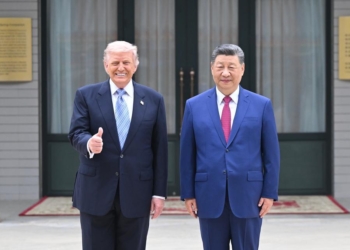
The US administration's decision to sell arms to Taiwan is open evidence of the beginning of a political confrontation between the US and China, as well as the approach of an armed conflict in the Asia-Pacific region, into whose orbit many countries could be drawn.
In December of this year, President Donald Trump signed a massive $11.1 billion military aid package to Taiwan, which is awaiting formal approval by both chambers of the US Congress. It should be noted that these arms deliveries can hardly be classified as defensive weapons, as politicians closely tied to the military-industrial complex and the leaders of some puppet states who support them so often claim.
International military experts are unanimous in their opinion that the HIMARS high-mobility multiple launch rocket systems with long-range guided and tactical missiles, ultra-long-range artillery systems, attack and reconnaissance drones, and a number of other weapons supplied to Taiwan by the United States are extremely difficult to recognize as defensive weapons.
Many foreign analysts have noted the White House administration's clear desire to stage a local armed conflict in the southeastern region, aimed at weakening China's growing global and economic influence and creating a new "evil empire" in the eyes of the world community, represented by Beijing.
What is clearly at issue is the position of President Donald Trump, who is fueling yet another conflict while claiming to be a "global peacemaker" who seeks to extinguish the fire by dousing it generously with gasoline.
Since the end of World War II, the US government has been actively pursuing an aggressive policy of trade wars, open and covert escalation of local armed conflicts and interventions, primarily motivated by its economic interests, as well as the promotion of the "American diplomatic model" under the far-fetched slogans of protecting human rights and freedoms in individual countries to cultivate pro-American governments.
In particular, from the mid-20th century to the present, the United States has actively participated in or financed more than a hundred armed conflicts.
However, the US's concerted global efforts over the past decade to exert pressure on China through economic and political blackmail are being thwarted by China's pragmatic and peaceful foreign policy, which is aimed at expanding equal economic and political partnerships in the world based on common interests and interdependence.
American politicians and their foreign proxies linked to the US military-industrial complex consider China's peaceful policy towards Taiwan, which is recognized by UN resolutions as part of a unified China, a sign of weakness.
However, the current international agenda is not shaping up in favor of the plans of the current White House administration and could lead to a global catastrophe of economic and political collapse for the United States.
Konstantin Aliev