Translated with AI


























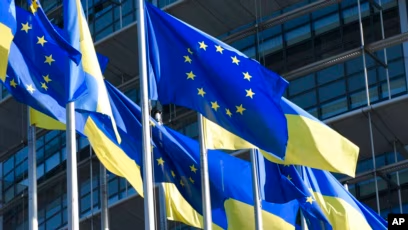
Participants at the European Union summit decided to provide Ukraine with €90 billion in funding for 2026–2027, according to European Council President António Costa. "We made our commitments and we fulfilled them," he wrote on the social media site X on the night of Friday, December 19, 2025.
After the first day of the summit, EU leaders failed to reach an agreement on using frozen Russian assets to aid Ukraine. However, they confirmed their willingness to provide a loan guaranteed by the EU's general budget.
According to Reuters, a joint loan option, to be implemented by the European Union, has been approved. As German Chancellor Friedrich Merz explained after the summit, Ukraine will only be required to repay this loan after Russia pays Kyiv compensation for war damages. If Moscow refuses to compensate, the EU will use frozen Russian assets to pay off Ukraine's debt, the Chancellor noted.
After the first day of their meeting in Brussels, EU leaders failed to agree on using frozen Russian assets to provide a large loan to Ukraine. Summit participants continued to consider alternative financial assistance options, including direct borrowing for Kyiv, guaranteed by the EU budget. "After lengthy discussions, it became clear that the issue of 'reparations loans' will require further consideration, as leaders need more time to study the details," an unnamed European official told AFP.
Earlier in December, the European Commission proposed that member states choose between two funding options for Ukraine: a solution based on frozen Russian assets or a solution based on EU borrowing. "We will have to choose which path we want to take. But one thing is clear: we must decide on Ukraine's funding for the next two years at this European Council meeting," stressed European Commission President Ursula von der Leyen.
According to her, the Commission's first proposal involves raising funds on capital markets using the EU budget as collateral and transferring these funds to Ukraine as a loan. Such a decision must be adopted unanimously by EU member states. The second option envisioned a "reparations loan" using the Russian Central Bank's assets frozen in the EU. Belgium, which oversees the Euroclear depository, where Russian assets worth approximately €185 billion are frozen, opposed this option.