Translated with AI
































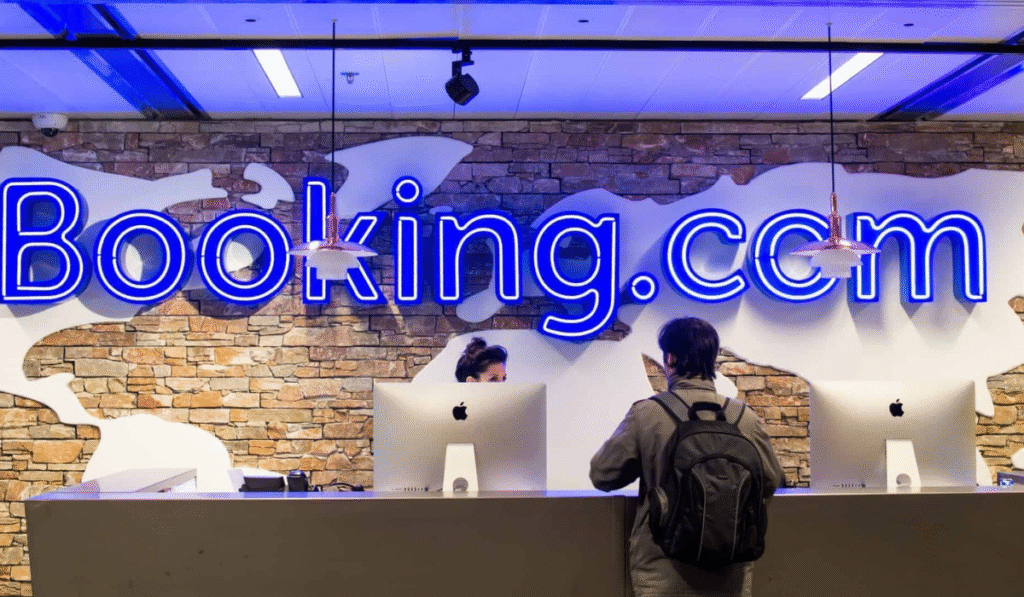
Over 10,000 hotels have filed a class action lawsuit against Booking.com. They claim it imposed unprofitable terms on them for 20 years: hotels were not allowed to offer rooms on their own websites at lower prices than those on Booking.com, the BBC reports.
The European Court of Justice ruled that the "best price" policy, which operated on the platform from 2004 to 2024, violated antitrust laws, prompting Booking.com to abandon the practice. The court ruling served as the basis for a lawsuit by hotels seeking compensation for damages for 20 years.
The lawsuit was initiated by the Association of Hotels, Restaurants, and Cafés in Europe (Hotrec). The case was supported by over 10,000 hotels and 30 national hotelier associations. Due to the high interest, the association extended the registration deadline for hoteliers wishing to join the lawsuit until August 29. This is expected to be one of the largest lawsuits in the history of the European hotel industry.
"The response demonstrates the hospitality industry's strong commitment to addressing unfair practices in the digital marketplace," Hotrec said in a statement.
Hoteliers believe the platform was fighting "free riders"—customers who use Booking.com to search for a hotel but then book directly through the platform, bypassing the platform. Therefore, the company required hotels to offer the "best prices" on Booking.com.
"European hoteliers have long suffered from unfair conditions and excessive costs. Now is the time to unite and demand compensation," he told the Guardian.
The case will be heard in the Netherlands, where Booking.com is headquartered.
Booking.com called the statements from Hotrec and other hotel associations "inaccurate and misleading," adding that it had not received "formal notice of the class action." The Guardian received the platform's statement via email.
According to the company, the court's decision did not declare the "best price" policy itself anticompetitive, but merely stated that such terms fall under EU antitrust law and their impact should be assessed on a case-by-case basis. Booking.com believes that "parity terms have historically facilitated competitive pricing, not hindered it." The company cites survey data showing that 74% of hoteliers said Booking.com made their business more profitable. Many noted increased room occupancy and reduced customer acquisition costs.
However, other industry representatives disagree.
As Véronique Siegel, president of the hotel division of the French industry association Umih, noted in an interview with France Inter, after gaining control of the market, Booking increased its commission, which impacted hotel profitability.
"Out of the 100 euros a client pays, after deducting Booking's commission, the hotelier gets at best 75 euros, from which they have to pay staff salaries and invest," she says.
A study by Hotrec and the University of Applied Sciences and Arts Western Switzerland found that Booking Holding, the website's parent company, controlled 71% of the European market in 2024. The corporation's value is $170 billion, three times greater than Volkswagen.
"This is a rebellion of hotels saying, 'You can't just do whatever you want with us.'"
Rupprecht Podschun, a professor of competition law at the Heinrich-Heine University of Düsseldorf, told the German newspaper Süddeutsche Zeitung that the trial is likely to be protracted and will focus on the complex issue of assessing damages.
"The judges will have to form their own opinion, and then the case will go through all the levels of appeals – all of which is expensive and involves all sorts of legal tricks," he said.
In his view, Booking.com is a classic example of how a digital platform can take over an entire sector.
"It's a rebellion of hotels saying, 'You can't just do whatever you want with us,'" he says.
In June 2025, the Consumer Competition Claims Foundation (CCC) and the Dutch Consumer Association filed a class action lawsuit against Booking.com.
They claim the site artificially inflated hotel prices, causing millions of Dutch residents to overpay for their stays. They accuse Booking.com of abusing its power, misleading customers, and restricting fair competition. They cited "fake discounts, incomplete pricing, and artificial shortages," as well as the fact that hotels listing on Booking.com were unable to offer lower prices elsewhere, resulting in excessively high prices. The consumer association estimates the total damage at hundreds of millions of euros.