Translated with AI

























Participants at the conference held in Avaza, Turkmenistan, decided to establish a Group on Landlocked Developing Countries (LLDCs) under the auspices of the UN Framework Convention on Climate Change. This will allow for more effective addressing the vulnerability of these countries to increasingly frequent natural disasters, according to the UN press service.
The combined area of 32 landlocked developing countries accounts for approximately 12 percent of the world's land surface, yet they account for approximately 20 percent of the droughts and landslides that have occurred on Earth over the past ten years. These figures reflect the vulnerability of these countries to the impacts of climate change.
Adaptation to climate shocks
The Avaza Framework for Action is not the first international document dedicated to development issues in these countries, but it is the first to include the issue of adaptation to the increasing frequency of natural disasters. Natalia Alonso Cano, Head of the Regional Office for Disaster Risk Reduction for Europe and Central Asia, recalled this in an interview with the UN News Service.
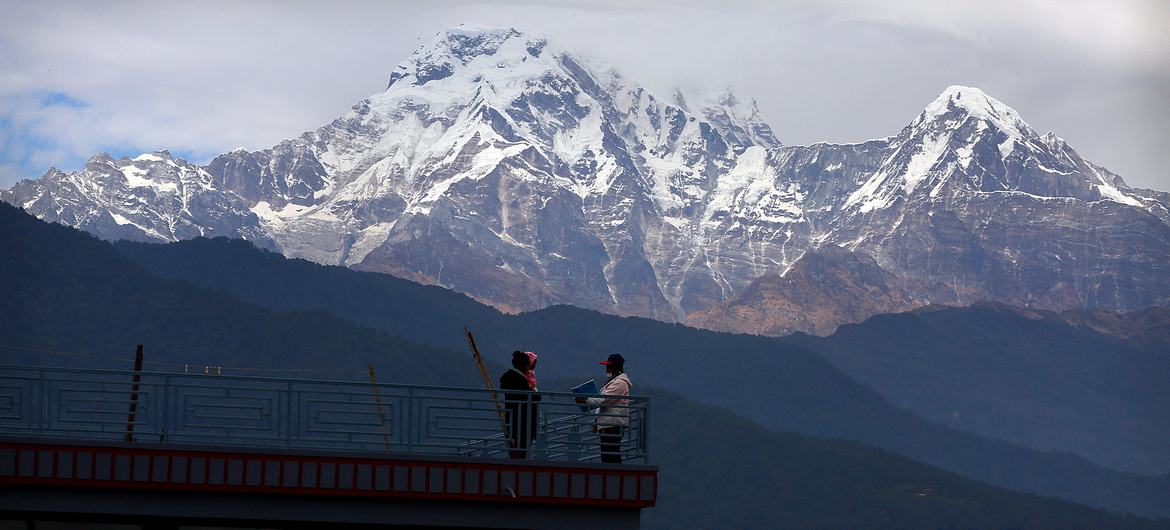
According to her, landlocked developing countries face several challenges at once: more than half of their total area is in arid regions, many of them are located in mountainous areas, and several are in seismically active zones.
"The economic damage from natural disasters in these countries is three times higher than the global average, and the mortality rate from natural disasters is much higher than the global average," explains Natalia Alonso Cano. "This is due to their geographic location and their particular vulnerability to such disasters."
Landlocked developing countries (LLDCs) face significant challenges in addressing climate change due to limited financial resources, undiversified commodity-based economies, and complex governance. In 2024, a third of these countries were in conflict or classified as "fragile."
Early warning
The UN's new 10-year action programme aims to support landlocked developing countries in climate adaptation, sustainable development and disaster risk reduction.
"We know that early warning systems save lives. That's a fact," says Natalia Alonso Cano. "When we can communicate to affected communities that something is going to happen and they need to prepare—they need to evacuate, they need to take certain actions—and they know exactly what to do, that's part of an early warning system."
“These systems not only save lives, but also livelihoods,” she adds.
The UN representative cited the drought situation as an example: "If we start working with communities on preparedness measures well in advance, they can, for example, reduce livestock numbers in advance, group themselves closer to water sources, and so on. There are many steps we can take to prepare."
Natalia Alonso Cano emphasized that the measures taken must be long-term. "We must consider what will happen in 10, 20, 30 years—and climate change will become even more extreme, we know that for sure," she said.
Supporting women and girls
Within vulnerable countries, there are also particularly vulnerable groups, such as girls and women. Gender issues were also on the agenda at the Avaza conference on Thursday.
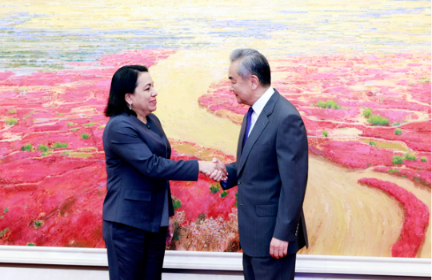
One of the first events of the day was the Women's Leadership Forum, opened by UN Deputy Secretary-General and High Representative Fatima Rabab. She noted that sustainable development cannot be achieved without the full participation of women and girls.
She noted the progress made over the past 25 years in landlocked developing countries. Women now hold a third of seats in national parliaments, compared to 7.8 percent in 2000. "This is higher than the global average," she noted, adding that of the 54 female parliamentary speakers, 11 are from landlocked developing countries.
Women's employment rates differ significantly from men's, and the majority of women in these countries—80 percent—work informally, without an employment contract. Globally, this figure stands at 56 percent.
One in three women marries early—almost twice the global rate—and only one-third complete high school. In the age of rapid digitalization, only 36 percent of women in landlocked developing countries have internet access.
Digital divide
"That's why the call for gender-responsive industrial and development policies is so important," noted Rabab Fatima. "These measures must be tailored to national circumstances, and rural industrial development, business, employment formalization, and strengthening partnerships must be prioritized."
She also called for women and girls to have access to the internet and education opportunities.
The International Telecommunication Union is a specialized agency of the UN that closely addresses these and other issues. In an interview with the UN News Service, Cosmas Lakison Zavazava, Director of the ITU Development Bureau, explained that while some regions, such as the CIS countries, have already achieved gender parity in internet access, landlocked developing countries overall face significant challenges in this area.
"That's why we've developed special programs for women and girls in the region," he said. "It's not just about access, but also about developing programming skills and attracting girls to careers like robotics. Our programs are aimed at motivating young women and girls to pursue high-tech careers."
The Awaza Conference is drawing to a close. At the final plenary session on Friday, participants are expected to reaffirm their political commitment to the Awaza Framework for Landlocked Developing Countries. The time has come for action to, as High Representative Rabab Fatima noted, "turn promises into reality."