Translated with AI
































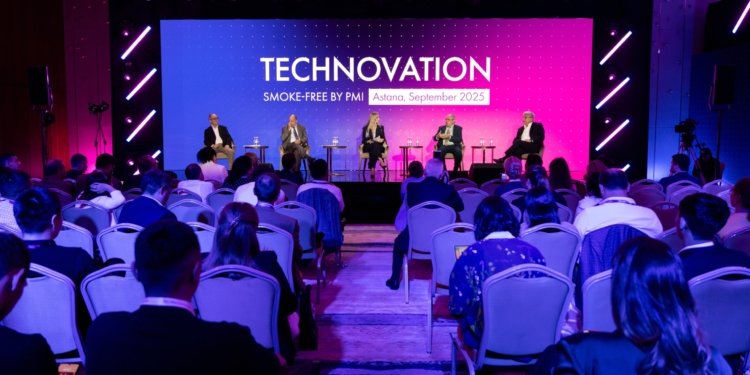
The international conference "TECHNOVATION: A Smoke-Free Future from PMI" was held in Moscow. Organized by Philip Morris International, it focused on scientifically based approaches to reducing the harm of smoking and developing smoke-free products. Experts from the CIS, Central Asia, and other regions discussed how technological solutions in medicine, consumer products, and transportation, with the right policies, are moving from the realm of "innovations" to the everyday norm.
In his welcoming remarks, Tommaso Di Giovanni, Vice President for International Communications and Engagement at PMI, reminded the audience that any major innovation is initially met with skepticism—as was the case with telephones, the first airplanes, and vaccines. We once argued the same way about cars: "Why bother with expensive cars when you can have 'good old horses'?" But when science, government, and business work together, ideas become practical. "Skepticism should not hinder progress," he emphasized, adding that today, more than 1 billion adults worldwide (including approximately 75 million in the CIS and Central Asia) continue to smoke cigarettes, making harm-reducing solutions strategically important.
The substantive portion of the conference focused on the intersection of science and regulatory issues. Speakers reiterated the long history of discussions on tobacco harm reduction, which began in 1997, when the UN raised the issue of reducing the toxicity of tobacco products. In 2001, the US Institute of Medicine proposed a scientifically based approach to creating less harmful products, and in 2015, the World Health Organization (WHO) reiterated the importance of such developments. A key goal for the coming years is to make the CIS and Central Asian countries predominantly smoke-free within the next decade. Practical discussions included how to combat misinformation, ensure people have access to objective information, and develop policies centered on the informed choice of adult consumers.
The key scientific framework was clear: the primary source of risk is tobacco smoke and combustion products; nicotine is addictive but not the primary contributor to deaths. Therefore, smoke-free solutions are seen as an opportunity to reduce the individual risk for adults who would otherwise continue smoking. Tomoko Iida, Director of Scientific Engagement at PMI in Southeast Asia, the CIS, and the Middle East, spoke about this in Astana, emphasizing that international experience shows that a wider choice of smoke-free products increases the likelihood of quitting cigarettes.
Harm reduction from a medical perspective has become central to the debate. Evgeny Imyanitov, MD, professor, and Honored Physician of the Russian Federation, noted that clinical practice daily documents the consequences of smoking, from COPD to cancer; the threat is posed by thousands of toxic compounds in tobacco smoke. Therefore, if the goal is to reduce risks, the first step is to eliminate smoke. Against this backdrop, Asya Kazantseva, a science journalist and author of popular books on neuroscience, emphasized that a harm reduction approach does not eliminate risks, but helps to significantly reduce them for those who are not ready to completely quit.
International consumption trends were discussed separately. Using examples from Sweden and Japan, speakers demonstrated how the spread of smokeless alternatives correlates with a decline in cigarette consumption and improved public health indicators: in Japan, cigarette consumption has fallen significantly over the past decade following the introduction of new systems, while Sweden boasts some of the lowest rates of smoking-related illnesses in Europe.
The business context confirms the industry's technological transformation: in the second quarter of 2025, 41% of PMI's net revenue globally came from smoke-free products. Regionally, participants reaffirmed the stated goal of transitioning the region to predominantly smoke-free alternatives.
Omar Abdellatif, PMI's new Managing Director for Kazakhstan and Central Asia, set a local focus: he emphasized the region's high potential for innovative growth, noting his intention to personally build a dialogue with the community.
In addition to discussions, the program included technology demonstrations and VR demos, as well as a separate discussion on combating the illegal tobacco trade—a topic that directly impacts both public health and the effectiveness of any harm reduction policy.
The TECHNOVATION conference in Astana resulted in a consolidated position: a smoke-free future is built on evidence-based science, technological solutions, and the responsibility of all parties – from manufacturers and regulators to the medical community and the media.
SPEAKER QUOTES:
Tommaso Di Giovanni, Vice President of International Communications and Engagement at FMI:
"Skepticism shouldn't slow down progress. Any technological change is initially met with doubt—that's what happened with telephones, aviation, and vaccines. We once argued about cars in the same way: why bother with expensive cars when you can have 'good old horses'? But when science, government, and business work together, solutions become the norm. Today, approximately 1 billion adults worldwide—and approximately 75 million in the CIS and Central Asia—continue to use tobacco or nicotine. If people don't quit completely, our responsibility is to offer scientifically proven smoke-free and combustion-free alternatives, reduce exposure to toxins, and simultaneously strictly enforce the rules: no communication for young people, clear restrictions and controls. Our goal is simple and ambitious: to make the region largely smoke-free in the coming years—through collaboration with doctors, regulators, and the media, open data, and the fight against illegal trade, which undermines both healthcare and trust in the rules."
Tomoko Iida, Director of Scientific Cooperation at FMI (Southeast Asia, CIS, Middle East):
"Nicotine isn't a carcinogen, but it is addictive; the main danger comes from tobacco combustion and smoke products. The goal of harm reduction is to eliminate combustion and reduce exposure to toxins for adults who would otherwise continue smoking. International data—from Sweden to Japan—shows that where people have access to smoke-free products and accurate information, the proportion of cigarettes declines. However, strict restrictions are mandatory: no use by minors, pregnant or breastfeeding women."
Evgeniy Imenitov, Doctor of Medical Sciences, Professor, Honored Doctor of the Russian Federation:
"Clinical practice sees the consequences of smoking every day: COPD, cardiovascular events, cancer. The danger isn't so much the nicotine itself, but the thousands of toxic compounds in tobacco smoke. Absolute zero risk doesn't exist, but the risk gradient is real: the fewer toxins from combustion products the body receives, the lower the likelihood of serious outcomes. From a medical perspective, the logic is simple: if a person doesn't quit completely, the first thing to do is eliminate smoke and reduce the toxic load."
Asya Kazantseva, science journalist and author of books on the brain and behavior:
"The harm reduction approach is about honesty and maturity. It doesn't eliminate risks or encourage consumption, but rather helps reduce harm for those who aren't ready to quit completely. The role of the media isn't to demonize or romanticize, but to carefully explain who smoke-free solutions are for and why they're not for those just starting out or for young people, but for adults who would otherwise continue smoking cigarettes."
Omar Abdelatif, Managing Director of PMI for Kazakhstan and Central Asia:
"Kazakhstan and the Central Asian region have significant potential for implementing science-based innovations. I recently started my new role and am personally focusing on dialogue with the medical community and regulators, supporting education for adult consumers, and combating illegal trade."
NOTE: Conference materials are intended for adults only. Nicotine is addictive, and smokeless products are intended only for adult smokers who would otherwise continue smoking cigarettes.