Translated with AI
































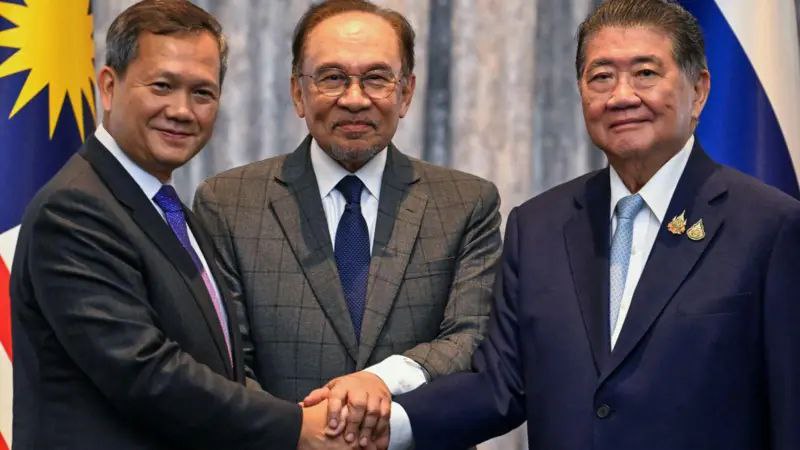
Cambodia and Thailand have agreed to an immediate and unconditional ceasefire after five days of fighting along their border, Malaysian Prime Minister Anwar Ibrahim said following a trilateral meeting of leaders of the conflicting parties in the country's administrative capital.
The two sides agreed to cease hostilities from midnight on July 29 and resume direct political dialogue. The talks were held under the auspices of the Association of Southeast Asian Nations (ASEAN), which is currently chaired by Malaysia.
"We have reached a final agreement. An immediate and unconditional ceasefire will come into effect as of midnight. The parties have committed to fully comply with it," Ibrahim said at a joint press conference.
Cambodian Prime Minister Hun Manet said the meeting had achieved "an important result that gives hope for a speedy end to the suffering of civilians and the restoration of stability." He said there had been numerous civilian casualties and displacements in recent days.
Acting Thai Prime Minister Phumtham Vechayachai, who had previously expressed doubts about Cambodia's intentions, reiterated that the ceasefire agreement would be "implemented in good faith by both sides."
The conflict between Cambodia and Thailand escalated on July 24 amid a long-running territorial dispute over the ancient temples of Preah Vihear and Ta Moan Thom. For five days, both sides conducted artillery and air strikes along their shared border, which stretches for about 800 km. According to preliminary data, at least 33 people were killed in the fighting, and thousands of residents were forced to flee their homes.
The Malaysian prime minister has initiated the talks, and China and the United States have also offered mediation efforts. US President Donald Trump has held telephone conversations with the leaders of both countries and has warned that Washington will not enter into new trade agreements with the parties to the conflict until peace is achieved.