Translated with AI















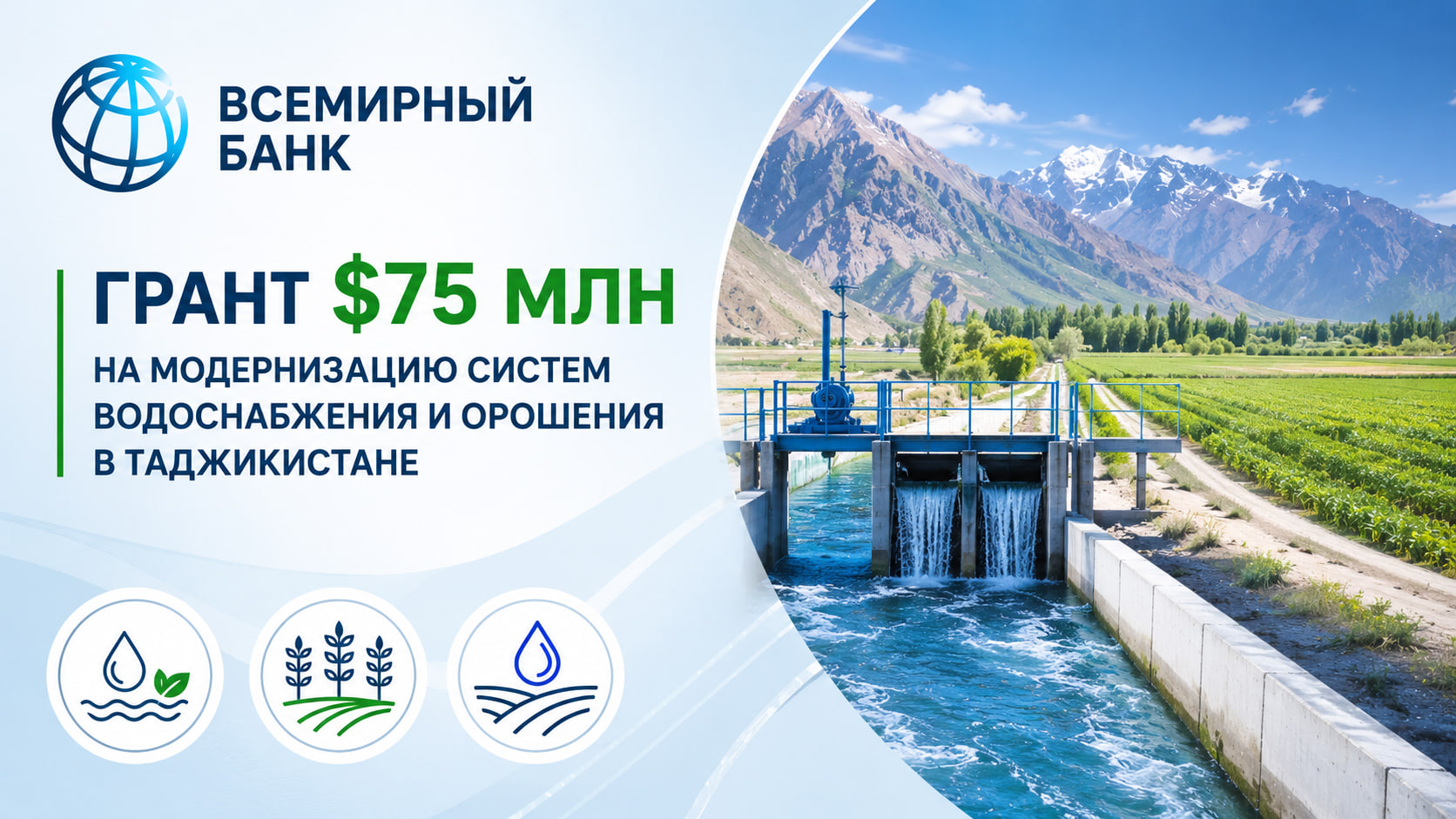
The World Bank Board of Directors approved a new project aimed at modernizing water supply and irrigation systems in Tajikistan and supporting water sector reforms. The initiative aims to improve the quality of irrigation services and expand economic opportunities for approximately 470,000 farmers and rural residents.
The second project, Strengthening Water Resources and Irrigation Management, will be financed by a $75 million grant from the International Development Association (IDA). The funds will be used to restore and modernize irrigation infrastructure serving approximately 100,000 hectares of agricultural land.
In addition, the project envisages the implementation of institutional reforms aimed at improving water resources planning and management, as well as increasing the efficiency of irrigation service delivery in Tajikistan's river basins.
“These investments reflect the World Bank’s deep commitment to building a more resilient and sustainable future for Tajikistan,” said World Bank Group Country Manager for Tajikistan Gaël Raballand.
According to him, modernizing the systems that directly impact farmers' well-being will allow the country to fully realize its agricultural potential, strengthen food security, and create the foundation for sustainable economic growth.
The project includes the reconstruction of at least 20 pumping stations and key gravity irrigation facilities, including the Dangara diversion tunnel and the Beshkent hydraulic structure. The modernization is expected to improve water delivery efficiency by 60–80%, achieve cumulative energy savings of 65,000 MWh, and reduce emissions by approximately 29,000 tons of CO₂ equivalent annually.
The project's implementation is also expected to create approximately 8,160 new, higher-paying jobs, increase climate resilience for approximately 180,000 agricultural enterprises, and strengthen food security for approximately 200,000 people.
In addition to infrastructure modernization, the project includes a large-scale institutional reform program. Specifically, it includes digitalization of the national water resources and irrigation management system, strengthening water user associations and basin irrigation management structures, and the creation of a carbon finance program that will enable the sector to attract climate finance over the long term.
The project is being implemented with the support of international partners. The OPEC Fund for International Development and the Islamic Development Bank have each confirmed their commitment to provide $50 million in co-financing for the infrastructure work. With additional financial commitments, the total project funding could reach approximately $175 million.
The project is supported by analytical and technical support from the Central Asia Water and Energy Programme (CAWEP) Multilateral Trust Fund.
The World Bank Group noted that it is one of the world's largest sources of financing and expertise for developing countries, helping reduce poverty, improve prosperity, and achieve sustainable development. Currently, the International Development Association is financing 25 projects in Tajikistan totaling $1.93 billion, while the International Finance Corporation (IFC) manages a $69 million investment portfolio, supporting seven private sector clients.