Translated with AI

























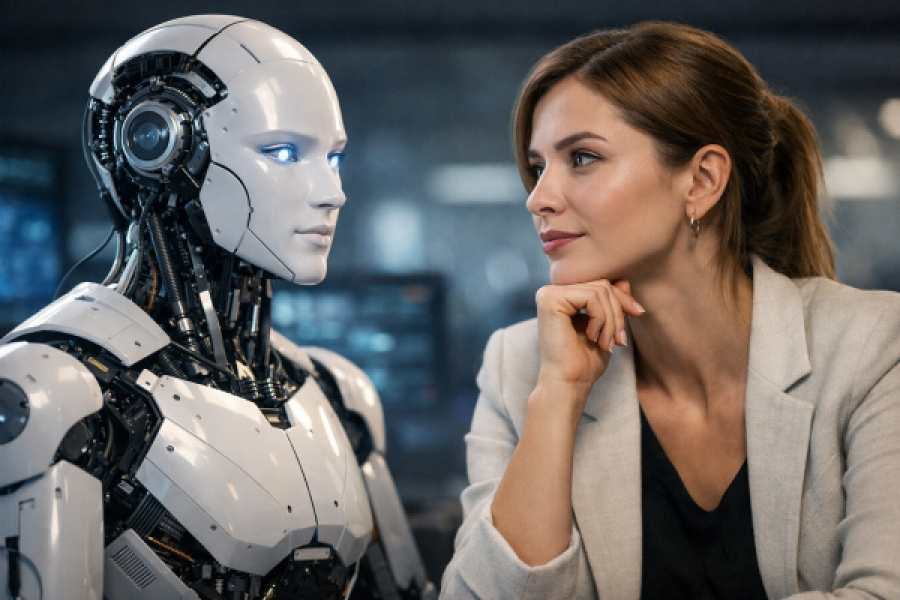
Artificial intelligence is increasingly impacting people's daily lives, but its proliferation also perpetuates and exacerbates existing forms of discrimination. This is according to a new report from UN Women, which warns that modern technologies are perpetuating outdated notions about women's roles in society, fueling online violence, and limiting women's participation in decision-making about the digital future, according to the UN press service.
The warning comes amid research demonstrating the rapid spread of generative artificial intelligence. Today, such technologies are used by billions of people to write emails, prepare presentations, and conduct information campaigns. At the same time, the report's authors note, discriminatory algorithms are exacerbating existing inequalities. In the UK, according to the data cited, 88% of advertising and media companies already use such technologies in some form.
Ahead of the UN Global Dialogue on Artificial Intelligence and the AI for Good Summit, which will take place in Geneva in early July, UN Women called on governments, companies, and developers to integrate gender equality principles into the design, implementation, and regulation of AI systems.
According to a study of 133 artificial intelligence systems, gender bias was detected in 44% of cases, and more than a quarter of the systems simultaneously exhibited both gender and racial bias.
The researchers note that large language models often associate women with domestic responsibilities, family, and childcare, while men are associated with business, leadership, and career advancement. In some cases, the artificial intelligence generated responses that portrayed women as sexual objects or as subordinate to men.
According to UN Women, when testing language models, approximately one in five responses to queries that included a person's gender included sexist or misogynistic elements. Some responses described women as property or objects.
Experts emphasize that this is not a random technical glitch, but a systemic problem. They say artificial intelligence models are trained on massive data sets reflecting decades of unequal representation of men and women in society.
In an interview with the UN News Service, UN Women Digital Technology Expert Jayathma Wickramanayake stated that artificial intelligence systems inherit biases that have been present in human-generated texts for many years. She believes the problem lies not in technical shortcomings, but in the lack of necessary public policy solutions.
According to the study, out of 138 countries worldwide, only 24 mention gender issues in their national artificial intelligence development strategies, and only 18 states provide specific measures to ensure gender equality.
The report also emphasizes that the development of artificial intelligence is fueling the rise of certain forms of online violence. According to UN Women, nearly one in four women surveyed—human rights defenders, activists, or journalists—reported experiencing online violence using AI tools. Another 12% reported having their personal images disseminated without consent, and 6% were victims of deepfakes or altered photos and videos.
As AI-generated content becomes more prevalent, concerns are growing that bullying, manipulation, and image abuse will become increasingly difficult to detect and prevent.
The report's authors also note the underrepresentation of women in sectors related to the development of artificial intelligence technologies. According to the International Labour Organization, women make up only 30% of the global workforce in this field.
UN Women warns that the developers of such technologies do not reflect the full diversity of society. Without greater participation of women and other underrepresented groups, existing biases could become entrenched in future technologies.
The report devotes special attention to the economic consequences of the spread of artificial intelligence. It notes that women are almost twice as likely as men to be employed in occupations at high risk of automation. Factors such as race, disability, income level, and location may also have an additional impact.
Experts believe that without targeted support measures, already vulnerable groups could find themselves even further removed from the opportunities created by the digital economy.
UN Women emphasizes that combating bias is not only a human rights issue but also an economic imperative. Research by the Unstereotype Alliance initiative has shown that advertising without gender stereotypes delivers better commercial results. Companies that adopt an inclusive approach demonstrate higher sales growth, greater customer loyalty, and a more sustainable market position.
In June 2026, the initiative released a practical guide to help marketers identify bias before publishing content created using generative AI.
In conclusion, the report's authors emphasize that, when used responsibly, artificial intelligence can help identify, expand the representation of diverse populations, and make technologies more accessible rather than reinforce existing stereotypes. However, this depends on who is involved in developing such systems and whose expertise is incorporated into their design.
The organization calls for consideration of gender equality principles, as well as the rights and experiences of women and girls, at all stages of the artificial intelligence lifecycle—from development to implementation and regulation. Experts believe that if women and girls are not involved in shaping the future of artificial intelligence, existing inequalities could persist in future technologies.