Translated with AI































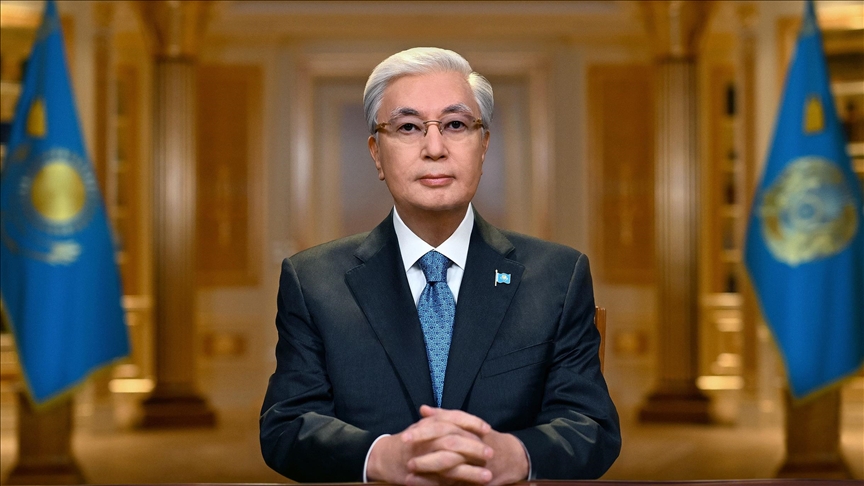
The partnership between Kazakhstan and the European Union is more important than ever, writes Kazakh President Kassym-Jomart Tokayev in an opinion piece for Euronews, outlining three key strategic goals for the next stage of the strategic partnership.
A decade after the signing of the Enhanced Partnership and Cooperation Agreement (EPCA) in 2015, the European Union is now Kazakhstan's largest trading and investment partner.
Thousands of European companies operate successfully in our country, generating profits and benefits for Europe while simultaneously contributing to the modernization and diversification of our economy.
This was and remains a great achievement. But is it enough in a rapidly changing world? I don't think so.
I return to Brussels with a clear commitment and a firm conviction: the partnership between Kazakhstan and the European Union is more important today than ever before. That's why it must be strengthened.
Kazakhstan-EU Cooperation: Three Key Strategic Goals for Both Sides
In particular, the next stage of cooperation between Kazakhstan and the European Union should be aimed at achieving three key strategic goals for both sides: 1) strengthening resilience, 2) expanding connectivity across all areas, and 3) creating new opportunities for citizens.
This is necessary because the old geopolitical assumptions no longer apply. Geography and power are once again taking center stage.
Resurgent competition is rapidly reshaping trade, technology, and investment flows. Global supply chains have once again become vulnerable. Trade and economic interdependence are increasingly becoming hostage to national security considerations.
As Europe well knows, in such circumstances, countries can either lock themselves into rival blocs or build new partnerships based on mutual respect and common interests.
Kazakhstan also understands this well: our geographical location is at the crossroads of continents, and our foreign policy seeks to connect them.
Kazakhstan's linking role is increasingly reinforced by economic strength
This connecting role is increasingly reinforced by economic strength. In 2025, Kazakhstan's economy grew by 6.5%, and GDP reached $306 billion.
According to the IMF's World Economic Outlook, Kazakhstan's GDP is expected to exceed $360 billion in 2026. A larger and more dynamic Kazakhstan means a stronger partner for Europe in the heart of Eurasia.
Every traveler understands: the more uncertain the path, the greater the value of reliable companions.
As our world becomes increasingly uncertain, Kazakhstan and Europe are already such companions. Our balanced, pragmatic, and constructive approach to international cooperation remains unchanged.
We remain firmly committed to the Charter of the United Nations. We continue to prioritize dialogue and the peaceful resolution of conflicts. We may not always agree, but we know each other.
"Energy security is a clear example of our mutual trust."
Interdependence strengthens resilience. Take energy, for example, where reliability has quickly become strategic. Today, Kazakhstan accounts for nearly 13% of the European Union's oil and petroleum product imports and 16% of its natural uranium supplies.
Energy security is a clear example of our mutual trust, strengthening resilience and ability to deliver on commitments even in a more unstable world.
Why not apply the same approach to agriculture? Food security is becoming an increasingly important strategic issue worldwide. Kazakhstan is one of the world's largest grain producers and exporters and has significant potential for European markets in need of diversification.
At the same time, European knowledge, technology and investment can contribute to the development of deeper processing and agricultural production with higher added value in our country.
Likewise, the global economic transition to sustainable growth will require unprecedented levels of collaboration. Critical raw materials, renewable technologies, energy efficiency, and new industrial ecosystems are rapidly shaping the competitiveness of the future.
And here, Kazakhstan can offer significant resources and industrial potential if Europe responds with expertise, technology, and investment. Both our economies will grow, and both will become more resilient.
Safe and efficient transport routes are strategic arteries
Building on our first decade of cooperation, is it not time to evolve our economic relations from the traditional “raw materials in exchange for investment” model to a partnership that creates value at every stage – through advanced processing, technology transfer, research collaboration, and joint ventures?
Let's consider the issue of connectivity. In Kazakhstan, we understand that safe and efficient transport routes, like the Silk Road, have always been strategic arteries.
This is why we are developing the Middle Corridor between Europe and Asia, which naturally aligns with the EU Global Gateway strategy.
However, connectivity means more than just faster movement of goods across borders. The Middle Corridor is more accurately viewed as the foundation of an emerging system linking European markets and economic hubs with Central Asia's resources, its developing industrial base, and its logistical potential.
Genuine connectivity—think of the canals, sea routes, and roads of antiquity—has always created value through new opportunities. It integrates markets, stimulates investment, supports entrepreneurship, and brings societies closer together. It transforms geographic advantages into economic opportunities.
Artificial intelligence, digital governance, innovative ecosystems, and reliable technologies
That's why our partnership must now encompass the technologies that will ensure future prosperity. Artificial intelligence, digital governance, innovative ecosystems, and reliable technologies are rapidly becoming central factors in economic competitiveness and national resilience.
Kazakhstan has set ambitious goals to become a more digital state through the digitalization of public services, the development of data-driven governance, and investments in artificial intelligence.
We intend to continue our close cooperation with European technology companies to ensure that technological progress remains inclusive, secure and people-centred.
Above all, a truly strategic partnership must deliver tangible benefits to citizens. Significant progress has been made on the visa regime, which will make travel more accessible and convenient and will bring practical benefits to students, researchers, entrepreneurs, and families across the board.
The bar needs to be raised in the fields of education, science and innovation
We must also renew our ambitions in education, science, and innovation. Kazakhstan's participation in the Erasmus+ and Horizon Europe programs already demonstrates the scale of its potential. We need more academic mobility and collaboration, more joint innovation, and more opportunities for young people.
Time moves on for none of us. Kazakhstan enters the next decade of its partnership with the European Union as a country undergoing a profound renewal, convinced that resilience begins within.
Our new Constitution marks the first major reset since independence. It reflects the aspirations of a new generation to live in a just country based on law and order, as well as the strict respect and protection of fundamental human rights and freedoms.
It also enshrines comprehensive political and economic reforms aimed at strengthening public accountability and increasing the effectiveness of institutions in accordance with the formula: “Strong President – Influential Parliament – Accountable Government.”
We want our partners and investors to find in Kazakhstan not only new markets, but also stable rules and predictable, fair, and transparent economic governance.
The last decade has given us confidence in our ability to successfully develop our partnership. Looking to the next decade, I am convinced that our partnership must produce significant results.
The good news is that Europe and Kazakhstan already have most of the tools and resources to strengthen this partnership. We will create the rest together.
Kazakh President Kassym-Jomart Tokayev is visiting Brussels for talks with European Union leaders on June 22-23.