Translated with AI
































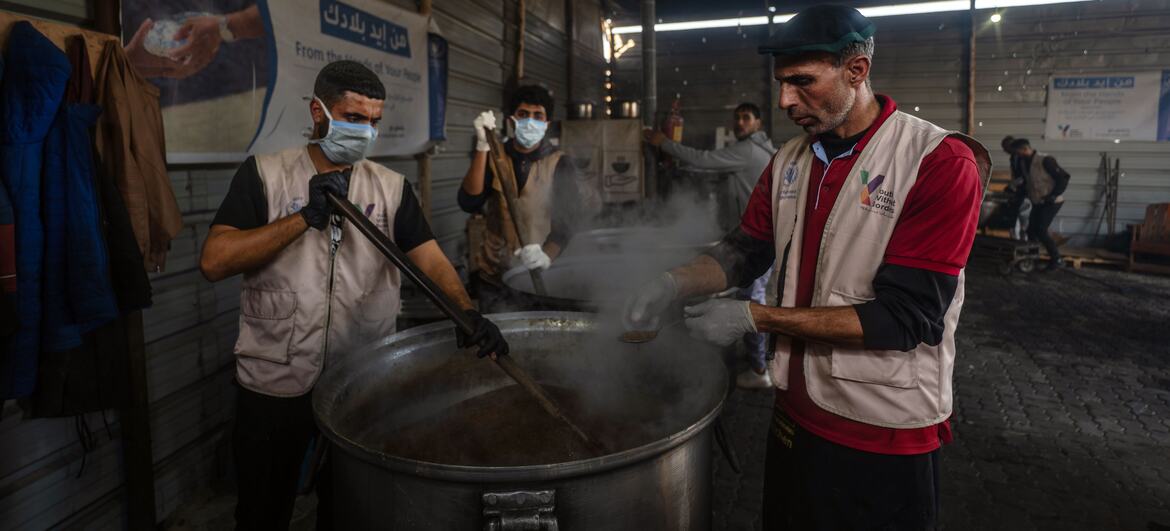
The UN Security Council held a meeting to discuss the humanitarian situation in the Gaza Strip, which, according to the United Nations and humanitarian organizations, remains extremely dire despite the current ceasefire.
The meeting took place on 18 June 2026 at the initiative of the ten non-permanent members of the Security Council, with the support of the four permanent members: the United Kingdom, China, Russia and France.
Addressing the meeting, UN Under-Secretary-General for Humanitarian Affairs and Emergency Relief Coordinator Tom Fletcher recalled that Security Council resolution 2803 (2025), adopted after lengthy mediation efforts, had made some progress. He noted that since the ceasefire came into effect in October 2025, the number of civilian casualties resulting from Israeli strikes on Gaza has decreased, the remaining hostages taken during the Hamas attacks on October 7, 2023, have been released, and some obstacles to the delivery of humanitarian aid have been removed.
Fletcher noted that six months after the ceasefire began, the Gaza Strip is no longer considered to be in a state of mass famine. However, he emphasized that the humanitarian situation remains extremely dire.
According to a UN representative, Resolution 2803 and the plan proposed by US President Donald Trump were intended to lead to much more far-reaching changes. He stated that the results achieved are only the minimum required by the people of Gaza and what international law requires.
As Fletcher noted, this is only a move away from the most catastrophic scenario, while even the basic needs of the enclave's residents remain unmet.
According to the Gaza Health Ministry figures he cited, nearly a thousand Palestinians have been killed since the ceasefire was declared.
The UN representative also reported that approximately 70 percent of the population is in need of shelter, and the service delivery system is on the verge of collapse. Meanwhile, the humanitarian response plan is less than a quarter of what is needed.
In this regard, Tom Fletcher called on the Security Council to ensure the protection of civilians, including humanitarian workers, to ensure safe and unimpeded access for humanitarian assistance throughout the Gaza Strip, and to mobilize funding commensurate with the scale of the crisis.
"The civilian population cannot wait for a more opportune diplomatic moment to receive the means they need to survive," he stressed.
Bushra Khalidi, Head of Humanitarian Policy at Oxfam International, also spoke at the meeting. She stated that the current ceasefire does not address existing problems or provide the necessary conditions for normal life for the population.
She said she spoke not only as a representative of a humanitarian organization but also as a Palestinian mother living in the West Bank. Khalidi recounted how her husband's family was trapped in Gaza, and her son experienced separation from his family and forced displacement.
She noted that more and more residents of the sector are forced to live in an ever-shrinking area, continuing to face displacement, hunger and lack of protection.
According to Bushra Khalidi, peace cannot be judged by official statements, but by the ability of people to live full lives.
She also reported that since October 2023, Oxfam International staff and their Palestinian partners have provided assistance to nearly 1.5 million people in the Gaza Strip. However, the humanitarian infrastructure needed to rebuild the region has been destroyed, and several international humanitarian organizations, including the United Nations Relief and Emergency Management Agency for Palestine Refugees in the Near East, are being obstructed in their work.
In closing, Khalidi recalled that Resolution 2803 was adopted to maintain the ceasefire and address the humanitarian crisis in Gaza. However, she noted that seven months later, even these basic goals remain unachieved.