Translated with AI

























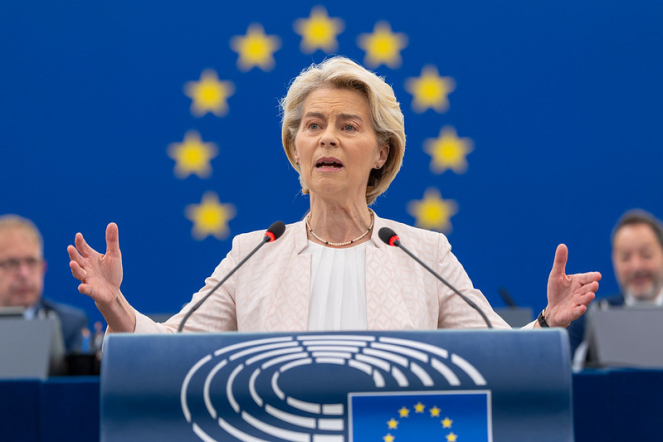
EU President Ursula von der Leyen presented the draft of the 21st European Union sanctions package against Russia in Brussels. The new set of restrictive measures covers a wide range of areas, including energy, the financial sector, trade, technology exports, and, for the first time, includes sanctions against the fishing industry.
One of the most notable proposals from the European Commission was a ban on entry into the European Union for individuals who took part in Russia's war against Ukraine. According to Brussels, the restrictions should apply to all those who served in the Russian armed forces after the outbreak of full-scale hostilities in Ukraine.
Speaking to reporters, Ursula von der Leyen emphasized that the European Union intends to maintain a tough approach to sanctions policy. According to her, Europe must remain closed to those who participated in the invasion of Ukraine.
The head of the European Commission also stated that the goal of the new package is to maintain and intensify pressure on the Russian economy. According to her, the current restrictive measures are already having a significant impact on the economic situation in Russia. Specifically, energy export revenues at the beginning of 2026, according to the European Commission, will have fallen by approximately 40 percent compared to previous periods.
A significant portion of the new measures concerns the energy sector. The European Commission proposes adding 30 more vessels from Russia's so-called "shadow fleet" to the sanctions list. Currently, 632 such vessels are already under sanctions. Furthermore, for the first time, it is proposed to impose restrictions on companies and vessels that support the "shadow fleet," including providing refueling and technical support services.
Restrictions may also apply to infrastructure facilities related to the trade, transportation, and refining of Russian oil. Brussels believes such measures will hinder Russian energy exports and reduce revenues to the country's budget.
In the financial sector, the European Commission is proposing to significantly expand the list of organizations subject to restrictions. Specifically, this includes extending the ban on operations to an additional 31 Russian banks. At the same time, restrictions could apply to 20 banks, cryptocurrency companies, and oil traders registered in third countries and, according to Brussels, involved in schemes to circumvent existing sanctions.
A separate section of the new package is devoted to trade restrictions. The European Commission proposes introducing additional bans on the export to Russia of goods and technologies that could be used by military-industrial complex companies. The list includes various components and equipment, including products used in the production of unmanned aerial vehicles.
At the same time, it is proposed to expand restrictions on the import of Russian goods. According to the proposals, the new bans could apply to imports of products worth approximately 60 million euros.
For the first time since the sanctions campaign began, restrictions could also affect the fishing sector. Brussels is proposing to limit the import of certain types of fish products of Russian origin, and to impose a complete ban on certain categories of goods to EU countries.
To take effect, the new sanctions package must receive unanimous support from all EU member states. Once agreed upon at the EU level, the restrictions can be officially approved and implemented.
The European Commission has repeatedly emphasized that the development of each new sanctions package is aimed not only at expanding the list of restrictions but also at eliminating existing mechanisms for circumventing the sanctions regime. Brussels states that the primary goal remains the maximum reduction of financial resources that, in the EU's view, enable Russia to continue its military actions against Ukraine.
Earlier, High Representative of the European Union for Foreign Affairs and Security Policy Kaja Kallas announced that additional proposals for expanding the sanctions list had been prepared for the upcoming meeting of EU foreign ministers, which will take place on June 15 in Brussels.
According to her, the issue concerns the inclusion of another 80 individuals and organizations on the blacklist, which are allegedly linked to the Russian defense industry and Russian media.