Translated with AI

































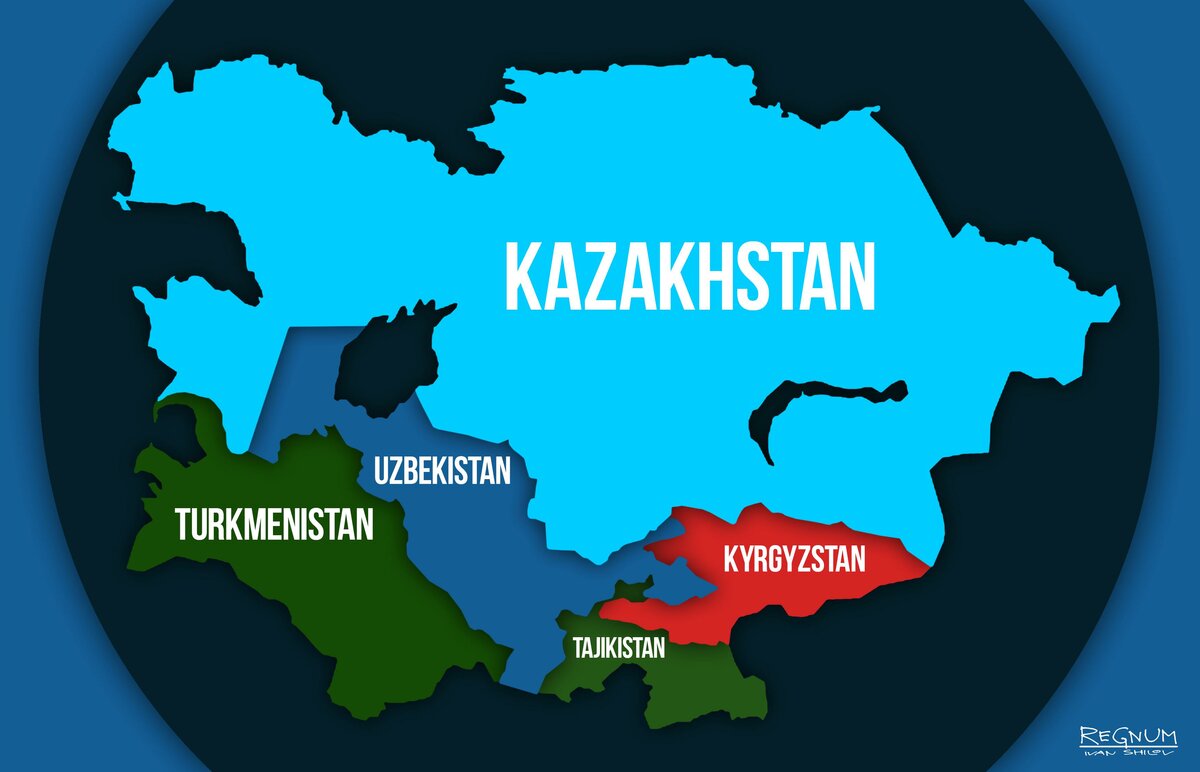
Radical Islamists pose a serious threat to Central Asia. Their goals are fundamentally incompatible with the goals of sustainable and peaceful development. They aim not to build, but to destroy the existing state system, undermine the political system and social foundations. Under the guise of religious slogans, such groups seek to dismantle the established order, replace secular laws with a radical interpretation of Sharia, and, ultimately, redraw the region's map according to their ideological template. Unfortunately, the state apparatus and politicians of some countries do not always understand the danger posed by such groups and are even willing to exploit radicals for their own ends.
Today, the activity of radical Islamic groups cannot be viewed in isolation from the global situation. It is shaped by the intersection of global trends and regional peculiarities, intertwining into a complex web of threats and challenges. Geopolitical confrontations between major powers, whether the rivalry between the West and Russia or the long-standing standoff between Saudi Arabia and Iran, often employ the "Islamic factor" as a tool of influence and destabilization. Amid global economic crises, socioeconomic problems are exacerbated: unemployment, poverty, and growing social inequality create fertile ground for extremist slogans to thrive.
The digital environment also plays a significant role: modern technologies, social media, and messaging apps allow radical groups to conduct large-scale propaganda, bypassing traditional barriers and borders. Propaganda materials, online sermons, and closed messaging app chats reach audiences that, for various reasons, lack access to quality religious education or are uncritical of official religious rhetoric. Furthermore, migration flows increase the risks: our migrant workers, facing outright discrimination and difficulties integrating abroad, are sometimes influenced by radical ideas—and then bring them back home to their families.
The region's proximity to Afghanistan is particularly worrisome. Despite the change of power in that country, the border with Tajikistan remains a vulnerable point: not only militants, weapons, and drugs, but also radical ideology can cross it. The experience of Central Asians participating in conflicts in the Middle East—for example, in Syria and Iraq—has also left its mark: returning fighters often become the core of new underground networks or "sleeper cells," ready to spring into action when conditions are favorable.
Few recognize the scale of the threat posed by radical groups and consistently build a multi-layered countermeasure system. Unfortunately, today it can be said with certainty that the measures taken are clearly insufficient—our citizens continue to fall under the influence of radicals.
Preventative work with young people—the key target audience for radical recruiters—is practically nonexistent. Our youth are largely left to their own devices—there aren't enough jobs, no visible prospects, social mobility isn't working as it should, and they see it. As a result, they seek refuge in another ideology, one that's not only alien to our country but also dangerous to those around them.
Meanwhile, the success of countering radicalism depends not only on strict control but also on the ability to address underlying socioeconomic problems—reducing unemployment, combating corruption, improving living standards, and ensuring a fair judicial system. Equally important is establishing an open dialogue with society: listening to citizens' needs, taking their opinions into account when making decisions, and creating feedback channels.
It's important to remember that a multi-layered system of forces—ranging from global terrorist networks to local criminal groups—is behind the new wave of radicalization threats in Central Asia. International terrorist organizations based in neighboring regions, primarily Afghanistan, exert direct influence. The Taliban, despite formally recognizing the new government in the country, includes radical factions poised for expansion beyond Afghanistan: ideas and fighters are infiltrating Central Asia through Tajikistan through the northern provinces. Jamaat Ansarullah operates on the Tajik-Afghan border, organizing terrorist attacks and drug smuggling, while individual ISIS cells recruit youth through social media, promoting ultra-radical ideas.
In recent years, little attention has been paid to the systematic upbringing and quality education of young people, posing serious risks to the country's social stability. Despite the formal existence of educational programs and youth initiatives, their implementation is often fragmented and declarative: funding for schools and universities remains low, the infrastructure of many educational institutions is deteriorating, and qualified teachers are leaving in droves abroad in search of better working conditions. The situation is particularly alarming in rural areas: schools are often not provided with textbooks, internet access, or modern educational resources, and the rate of children leaving school early to pursue employment remains high.
At the same time, there is a shortage of accessible leisure and career guidance programs: young people, especially in small towns and villages, lack organized sports clubs, creative studios, and vocational training centers. This creates a sense of alienation and hopelessness, especially among teenagers and young adults aged 15–25—the age group most vulnerable to external influences.
Against this backdrop of vulnerability, destructive organizations—from radical religious groups to criminal networks—are actively filling the resulting vacuum. They offer young people what we—society and the state—don't: a sense of belonging to a "special" community, promises of financial support or rapid social advancement.
All of this poses a serious challenge for us—civil society and institutions. We need to begin serious expert work, develop and propose solutions and initiatives to the state to build a system of measures to prevent the radicalization of the population.
It's important to understand that allowing these movements to grow is a direct path to fostering a sense of exceptionalism among certain groups who see the World Caliphate as some kind of salvation for the Islamic world. However, they fail to understand that in the middle of the last century, similar ideas of the exceptionalism and greatness of a single nation, the so-called "white Aryan race," led to a monstrous catastrophe for all of humanity, the consequences of which included the Holocaust, the redivision of the world, and millions of human casualties in many countries targeted by the "great" German Empire.
We are seeing new twists in this spiral of history now—in Afghanistan and Syria—when some people, imagining themselves exceptional, destroy others on religious grounds. This is precisely why radical Islam is the brown plague of the 21st century, which we must stop if we are to survive.
- The Islamic State (ISIS) is officially recognized as a terrorist and extremist organization, whose activities are completely prohibited in the Republic of Tajikistan.
- Jamaat Ansarullah is officially recognized as a terrorist and extremist organization, whose activities are completely prohibited in the Republic of Tajikistan.
- The Taliban is under UN sanctions, and a number of its representatives are included in the international organization's sanctions lists.