Translated with AI































Wang Xiaobo
While disagreements persist over the global climate crisis and the tension between development and environmental protection continues, the transformation of bamboo forest carbon credits into real income, the restoration of pristine lake waters, and the recovery of rare bird populations tell the story of China's ecological civilization through concrete, practical actions. Rooted in Xi Jinping's thought on ecological civilization, this practice addresses the needs of the people and China's development, and makes a tangible and easily understood Chinese contribution to global sustainable development. Through small changes, it paints a larger picture, allowing the world to understand the "green code" of a beautiful China.
I. Clean Lakes: Ecology for Society, Strengthening the Green Foundation for General Well-Being
A healthy environment is paramount to people's well-being, a clear value proposition of Xi Jinping's vision of an ecological civilization. China is taking a comprehensive approach to water resource management, embedding environmental protection into the lives of ordinary people and releasing "green" dividends for the people.
Yuandang Lake in Xiamen (Fujian Province) was once transformed into a fetid "problem lake" due to uncontrolled wastewater discharges. Local authorities carried out systematic cleanup efforts, eliminating the sources of pollution, enhancing water circulation, and restoring the ecosystem. Today, the lake has become a "city living room," where white herons flit about, and a favorite recreation spot for locals.
Dianchi Lake in Yunnan Province, whose waters were once seriously polluted and whose "pearl of the lake" itself had become dull, has also been restored. Environmental "red lines" were strictly observed, hazardous industries were shut down, and the coastal areas were rehabilitated. As a result, not only have the clear waters and seagulls returned, but local residents have also gained their own "ecological" livelihood.
From the banks of the Yangtze to lakes in arid regions, environmental governance in China is always people-centered. Instead of projects just for show, they focus on tangible results: ensuring people drink clean water and breathe fresh air. This focus on people's needs resonates deeply with the shared aspirations of people around the world for a clean environment and healthy lives, vividly demonstrating the humanistic essence of this ideology.
II . Green Bamboo: Transformation Based on the "Two Mountains" Principle, Solving the Global Dilemma of Development and Ecology
"Green mountains and emerald waters are mountains of gold and silver"—this key idea of Xi Jinping's ecological civilization dispels the traditional misconception that development and environmental protection are in conflict. A striking example is the village of Yucun in Anji County, Zhejiang Province.
In the past, the residents of Yucun village relied on quarrying and ore mining for their livelihood, but this led to dire consequences—ecological destruction. Implementing the "Two Mountains" concept, local authorities closed polluting industries, protected forests, and began developing ecotourism and a bamboo industry using bamboo groves. Furthermore, they implemented an innovative carbon trading system for the carbon sequestered by bamboo forests, transforming ecological resources into capital for development. In this way, they achieved harmony between a beautiful environment, thriving industry, and a prosperous lifestyle.
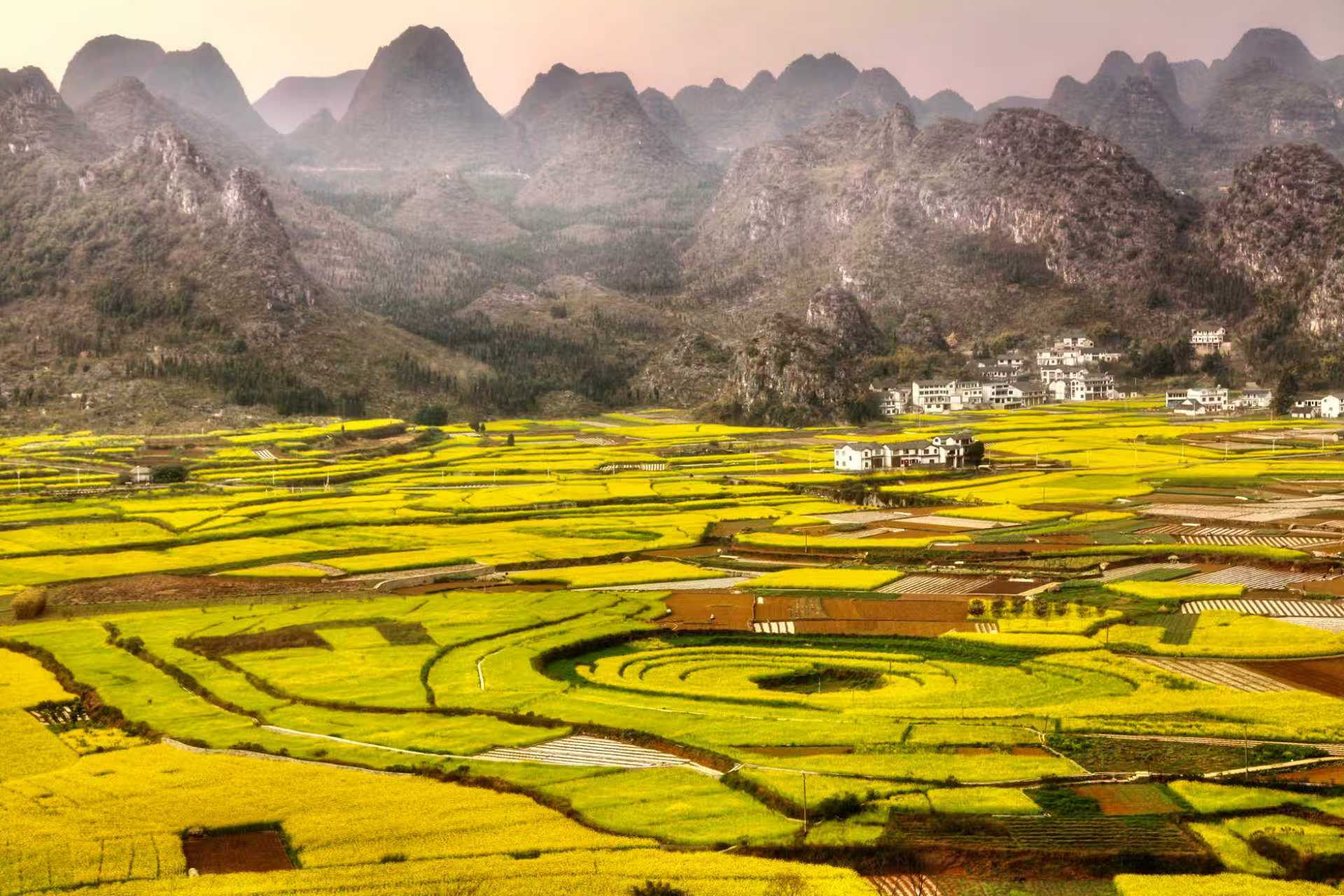
Soil erosion control in Changting (Fujian Province), the transformation of the Saihanba wasteland into a forest, and the environmental boost to rural tourism on the Yunhe rice terraces are all living examples of the "Two Mountains" concept. This model completely rejects the outdated "polluting first, cleaning later" approach and demonstrates that environmental protection creates new drivers of development. It offers developing countries a practical way to resolve the dilemma between development and environmental protection and implement a "green" transformation.
III . Rare birds: integrated environmental management, implementation of the Eastern wisdom of respect for nature
The harmonious coexistence of humans and nature is the fundamental principle of Xi Jinping's ecological civilization thought. China is pursuing comprehensive environmental work across all areas: mountains, waters, forests, fields, lakes, grasslands, and sands, preserving biodiversity through scientific methods.
The crested ibis (Crow's ibis), known as the "Jewel of the East," was once on the brink of extinction—only seven individuals remained in the world. China launched a systematic protection program: wetland restoration, strict control of human impact, interregional breeding, and release into the wild. Today, the ibis population has grown to several thousand, marking the end of its existence.
Thanks to a ten-year fishing ban, river dolphins have reappeared in the Yangtze River, the giant panda's endangered status has been reduced, and the Tibetan antelope population has recovered. National park projects and the Three Norths protective forest program are restoring the ecological foundation through a systems approach. This management method, based on respect for nature and an integrated approach, inherits the Eastern wisdom of the "unity of Heaven and Man," aligns with modern scientific ecological concepts, and offers a scientific solution to the problems of global biodiversity loss and ecosystem degradation.
IV . Responsibility: joint advancement, finding a common solution to the global environmental problem
Xi Jinping's ecological civilization thought is based on the concept of a global community with a shared future and calls for the joint protection of our common home. China, through openness, is deepening local efforts, contributing to global processes, and demonstrating the responsibility of a major country in environmental governance.
The concept of "Green mountains and emerald waters are mountains of gold and silver" was presented at the UN, and the ideas of an ecological civilization are being integrated into the international consensus. China established the South-South Cooperation Fund for Climate Change and the Kunming Biodiversity Fund, integrated "green" development into the Belt and Road Initiative and the Global Development Initiative, sharing technologies and experience in environmental governance. China announced goals to achieve carbon neutrality and peak carbon emissions, and halted the construction of new coal-fired power plants abroad, thereby contributing to climate governance through tangible actions.
Adhering to the principles of joint consultation, joint construction and shared benefits, respecting the national characteristics of different countries and advocating common but differentiated responsibilities, China, through pragmatic cooperation, is joining forces for global environmental governance, overcoming unilateral restrictions and in line with the fundamental principle of multilateralism.
V. The Beacon of Ideas: The Key to the Future Sustainable Development of Humanity
The "micro-practice" of one lake, one bamboo forest, and one bird builds the holistic logic of Xi Jinping's ideas on ecological civilization, which are based on the following formula: the initial goal is to benefit the people through ecology; the path is to transform the "two mountains"; the method is systemic governance; the responsibility is global cooperation; and the goal is the harmonious coexistence of humans and nature. This ideology, rooted in Chinese practice and responding to the challenges of the times, has not only become a guide for epochal changes in China's ecology but is also reshaping understandings of global development and environmental governance.
Amidst persistent grave global environmental challenges and the obvious shortcomings of traditional development models, Xi Jinping's Ecological Civilization Thought offers a new civilizational paradigm and development path. China will continue to adhere to this ideology, deepen domestic ecological development, expand international cooperation, and work with all countries to safeguard our green home. China will promote the principles of people-centered ecology, green development, and win-win cooperation to take deep root, providing lasting impetus for the sustainable development of humanity.