Translated with AI

























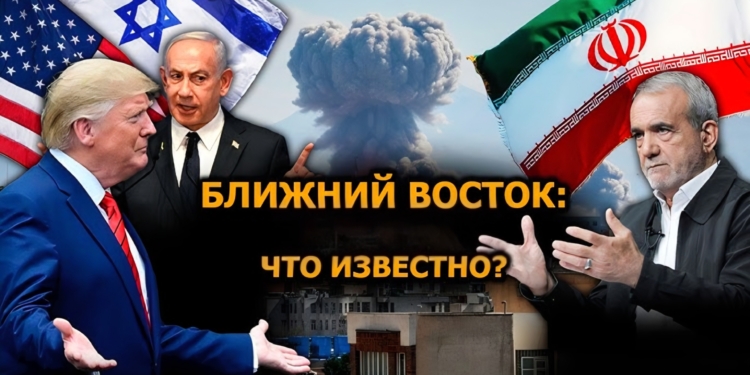
Fighting in the Middle East has entered its 20th day and is accompanied by further escalation, an expansion of the geography of strikes, and increased tensions around the region's energy infrastructure.
On March 18, Israel, which is participating alongside the United States in the military campaign against Iran, launched strikes against gas industry facilities on the Persian Gulf coast. The attacks targeted petrochemical plants near the industrial city of Asaluyeh, according to Iranian news agencies Tasnim and Mehr.
According to Axios, citing government sources, the strikes were coordinated with the United States. The deputy governor of Bushehr province reported that several gas production facilities were damaged in the attacks. Iranian authorities urged the population to stay away from the affected areas.
Iranian state television reported that airstrikes hit a production facility at one of the largest gas fields in the Persian Gulf, causing a fire. Fire crews were dispatched to the scene.
Near Asaluyeh lies the world's largest gas field, South Pars, which Iran shares with Qatar. This region is crucial to the country's energy system and provides approximately 70 percent of its domestic gas supply. Almost all of Iran's natural gas production is used domestically.
Following the strikes on gas infrastructure, Tehran issued harsh statements. Iranian authorities threatened to strike the "source of aggression," as well as the fuel, energy, and gas infrastructure of the countries from which they claimed the attacks originated. Iranian state television published a list of "legitimate targets," including oil and gas facilities in Saudi Arabia, Qatar, and the United Arab Emirates, indicating that attacks could follow in the coming hours.
The Islamic Revolutionary Guard Corps command declared that the period of limited clashes had ended and the conflict was entering a phase of "all-out economic warfare." The statement emphasized that the strikes targeted civilian and vital infrastructure in Iran.
Iran later launched a missile strike on Qatar's Ras Laffan industrial zone, home to liquefied natural gas production facilities. According to the Qatari Ministry of Defense, five missiles were launched toward the country, four of which were intercepted, but one hit its target and caused a fire. Authorities reported that the fire was quickly extinguished. Qatar Energy reported significant damage to industrial facilities, but no casualties were reported.
In response to the attack, Qatar condemned Iran's actions, calling them a violation of sovereignty and a threat to national security. The country's authorities asserted the right to retaliate and declared the Iranian military and security attachés personae non gratae, demanding their departure within 24 hours.
Amid the escalation, Saudi Arabia reported the interception of more than 15 drones and two ballistic missiles heading toward Riyadh and the Eastern Province. A drone was also recorded crashing into the SAMREF oil refinery in Yanbu, where damage assessments are underway.
The United Arab Emirates also recorded incidents at energy facilities, including the Habshan gas complex and the Bab oil field, where operations were temporarily suspended.
Special attention was paid to the situation surrounding Iran's Bushehr nuclear power plant, which had previously been attacked. IAEA Director General Rafael Grossi stated that the damage to the plant was minor. He stated that a small building housing a laboratory was damaged, but that the reactors were undamaged and there were no casualties. He emphasized the need to prevent any attacks on nuclear facilities.
The conflict is having a significant impact on the global economy and energy markets. Brent crude prices exceeded $115 per barrel during trading, reaching their highest level since early March, before declining slightly. The price increase is attributed to attacks on energy infrastructure and threats of further escalation.
Significant changes are also observed in maritime logistics. Ship traffic through the Strait of Hormuz has dropped sharply: while before the active phase of the conflict, an average of 84 ships passed through per day, since the outbreak of hostilities, this has fallen to around 10. Daily shipping volume has fallen from 3.4 million tons to 342,000 tons. Meanwhile, energy still accounts for approximately 70 percent of cargo.
Against this backdrop, Iranian President Masoud Pezeshkian stated that strikes on the country's energy facilities could lead to uncontrollable consequences on a global scale, affecting the entire world.
For his part, US President Donald Trump stated that Washington was unaware of Israel's plans to attack the South Pars gas field and emphasized that Qatar was not involved in these actions. He also warned that if Iran launches further attacks on Qatar, the United States could launch a major strike against Iran's gas infrastructure.
Trump also said he does not seek to further increase destruction, but stressed his readiness to take tough action if attacks continue.
At the same time, the US administration is considering expanding its military operation in the Middle East. According to media reports, discussions are underway to deploy thousands of additional American troops, secure tanker routes through the Strait of Hormuz, and strengthen the military presence in the region.
The Pentagon may reportedly request over $200 billion from Congress to fund the military campaign against Iran. According to sources, the funds are planned to be used to increase weapons production and support future operations.
At the diplomatic level, calls for de-escalation are intensifying. Qatari Emir Tamim bin Hamad Al Thani and French President Emmanuel Macron stated that attacks on gas infrastructure pose a threat to regional stability and global energy security. They called for an immediate ceasefire and the prevention of further spread of the conflict.
Foreign ministers from a number of Arab and Islamic countries also called on Iran to stop attacks, citing the risk of drawing new states into the conflict.
Thus, on the 20th day of the war, the situation in the Middle East continues to rapidly deteriorate, moving from local military actions to a large-scale confrontation affecting energy security and economic stability at the global level.