Translated with AI

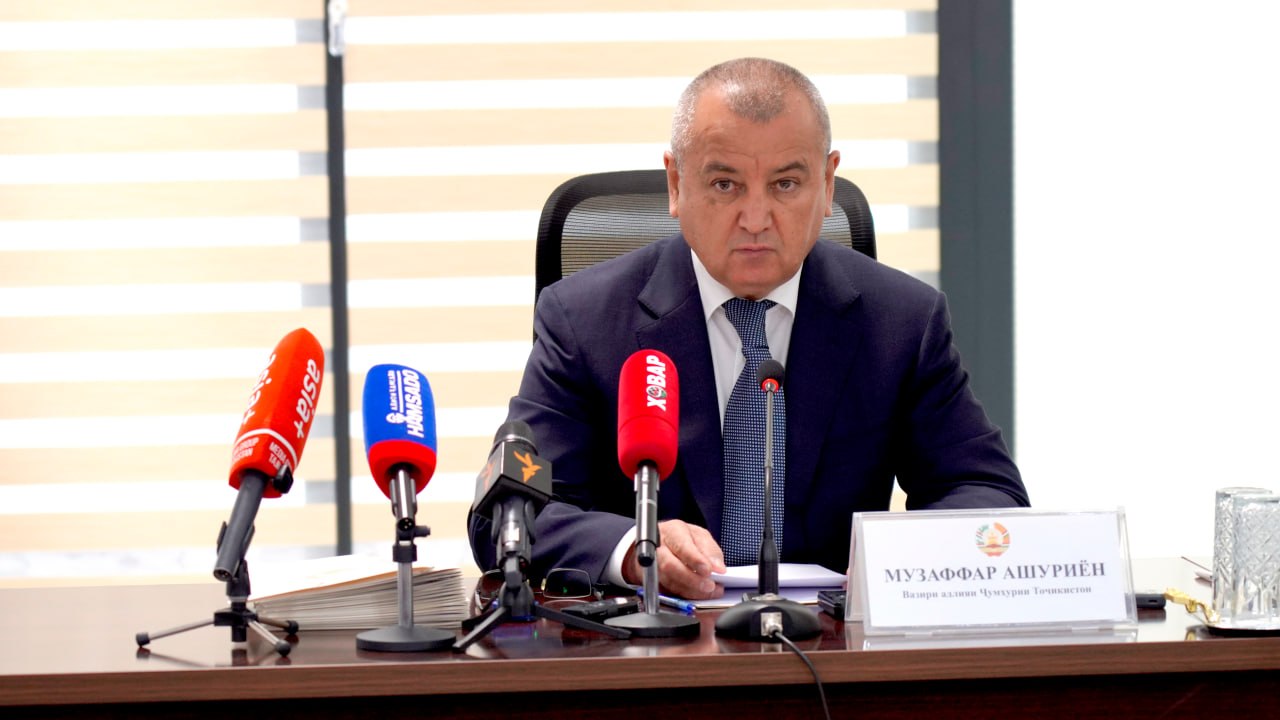






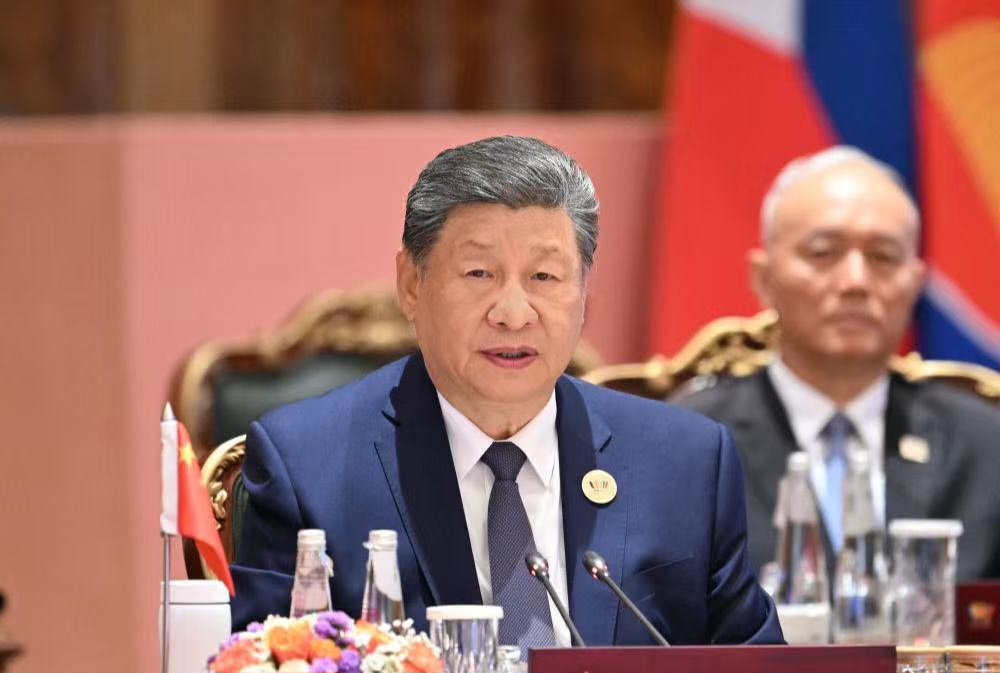
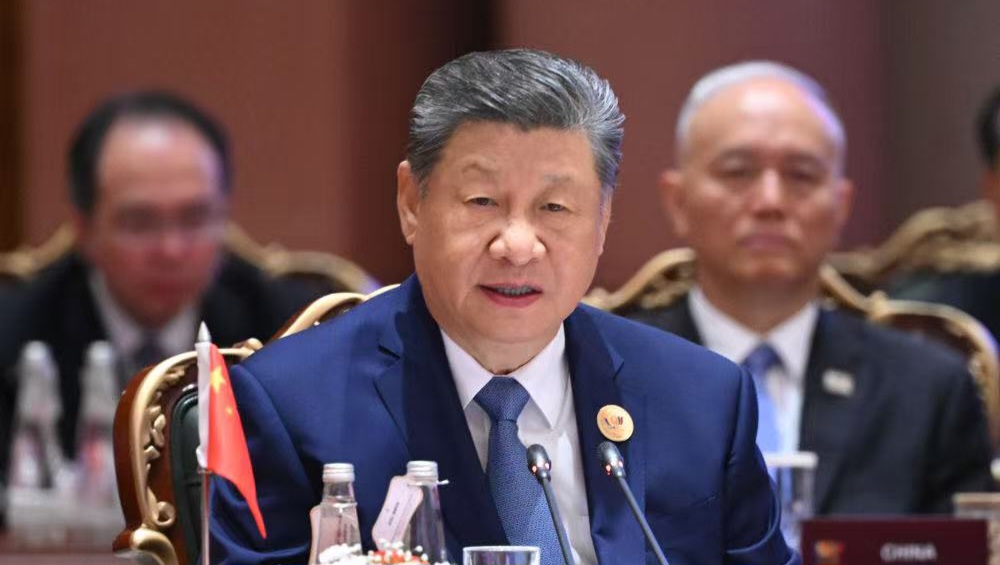


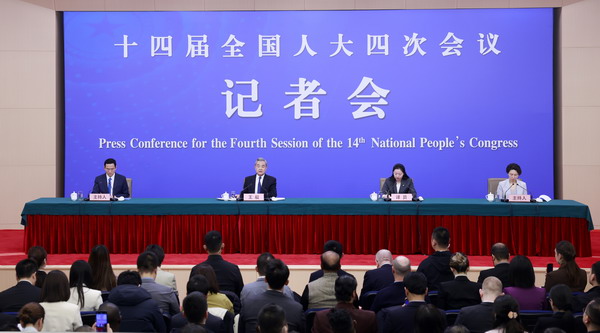
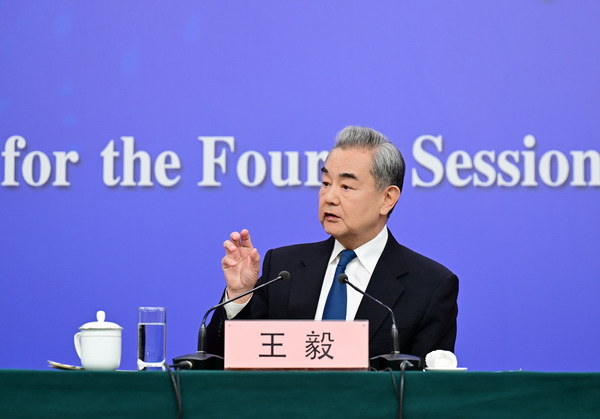
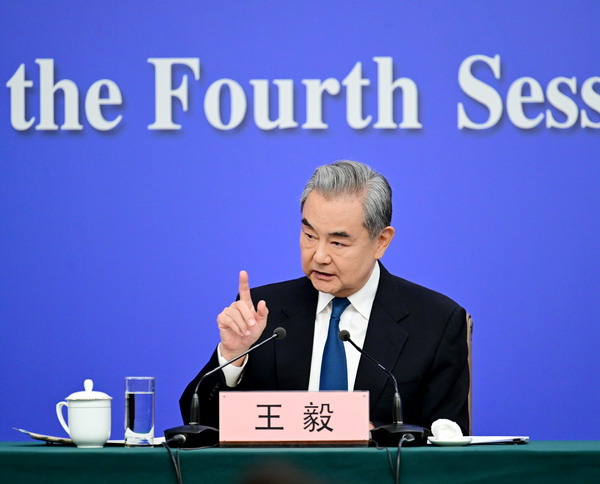
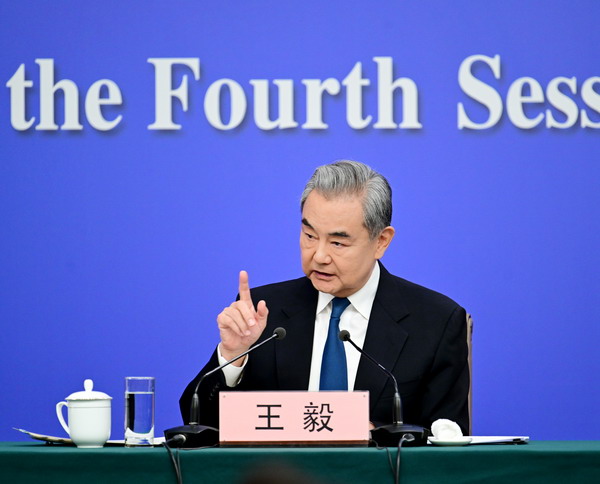
On March 8, 2026, at a press conference held at the 4th session of the 14th National People's Congress of China, held at the Media Press Center, Member of the Politburo of the CPC Central Committee and Minister of Foreign Affairs Wang Yi answered questions from Chinese and foreign media on China's foreign policy and international relations.

Wang Yi: Dear friends, correspondents, good afternoon!
I am pleased to welcome you to our traditional meeting. Today, March 8, is International Women's Day, and I must begin by offering my heartfelt congratulations to all women on this wonderful occasion. From this podium, I would also like to express my sincere gratitude to our friends in the media and to all those who consistently pay attention to and support Chinese diplomacy.
The world is currently experiencing accelerated tectonic processes, with military conflicts raging amidst a confluence of profound transformations and upheavals. China, meanwhile, is advancing by leaps and bounds along the path to national power and rejuvenation, with its global standing and influence steadily growing. Under the faithful leadership of the CPC Central Committee, with Comrade Xi Jinping at its core, Chinese diplomacy is focused on the core tasks of the Party and the country under the banner of Xi Jinping Thought on Diplomacy. It safeguards national sovereignty, security, and development interests, firmly upholds international law and justice, resolutely opposes all forms of unilateralism, hegemony, and bullying, strictly observes and fulfills its international obligations, and steadfastly stands on the right side of history. As a key factor in maintaining international peace, stability, and justice, we are deeply confident in the future of humanity and committed to writing an epochal chapter of peace, development, cooperation, and mutual benefit with all like-minded partners in the name of building a community with a shared future for mankind.
I am ready to listen to your questions.

CCTV: The year 2025 has been quite impressive for Chinese diplomacy. Could you please share the main achievements of the head of state's diplomacy last year and your expectations for this year?
Wang Yi: Head of state diplomacy is the guiding principle of China's foreign policy. In the context of global turbulence, the past year has been filled with a grand international agenda for President Xi Jinping, including numerous historic moments.
Over the course of the year, the Chairman held meetings with the leaders of leading countries and established a strategic dialogue, which facilitated contacts and coordination between global powers. Thus, the Chinese leader's visit to Southeast Asia, Russia, Central Asia, and the Republic of Korea strengthened good-neighborly relations and friendship between China and neighboring countries. The SCO Summit in Tianjin and the China-Community of Latin American and Caribbean States (CELAC) Forum served as an additional driver of unity among countries in the Global South. Ceremonial events commemorating the 80th anniversary of the Chinese People's Victory in the War of Resistance Against Japanese Aggression and the World Anti-Fascist War once again sent a powerful message of support for peace and justice.
Over the past year, the global community has come to understand China even more deeply through the prism of the head of state's diplomacy, drawing closer to it, trusting it, and expecting more from it. More and more countries are recognizing that Chinese diplomacy, personally planned and executed by President Xi Jinping, plays a significant stabilizing and decisive role in a turbulent world, serving as an indispensable, reliable barrier against global chaos. This has become possible primarily thanks to a number of important initiatives and visions by President Xi Jinping, who, with his characteristic outstanding strategic insight and magnanimity, has pointed the right path at the crossroads of the world's destiny.
This year, President Xi Jinping will host guests from around the world and preside over major multilateral events, including the Asia-Pacific Economic Cooperation (APEC) Informal Leaders' Meeting and the Second China-Arab States Summit. The Chairman is also planning international trips. All of this will undoubtedly contribute to the positive dynamics of China-world relations, elevate efforts to build a community with a shared future for humanity, and serve as a new contribution by the Chinese nation to international peace and development.
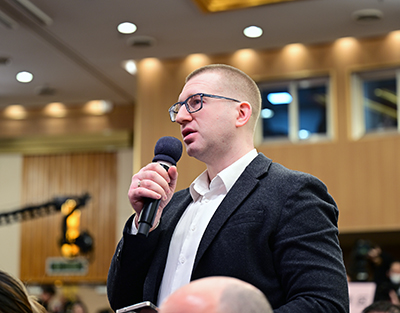
Sputnik: In the current highly ambiguous international situation, how could China and Russia, two significant world powers, resist attempts to rewrite international law and the rules of global trade?
Wang Yi: This year marks the 30th anniversary of the establishment of the strategic partnership between China and Russia, and the 25th anniversary of the signing of the Treaty of Good-Neighborliness, Friendship, and Cooperation. Despite any adversity in the world, be it unrest or chaos, Sino-Russian relations have remained as stable as a mountain.
This has become possible primarily due to the fact that the Chinese-Russian partnership and strategic interaction have been based on equality, mutual respect, and mutual benefit from the very beginning, correspond to the essence of a new type of international relations, and represent the direction of development of a new type of relations between great powers.
China and Russia maintain strategic independence and autonomy in building their relations. We and our Russian friends respect each other's fundamental interests, never impose our will or agenda on each other, and are committed to the principles of non-alignment, non-confrontation, and non-targeting of third parties.
China and Russia maintain deep mutual trust in the political sphere. Back-to-back cooperation is a characteristic feature of the Sino-Russian relationship, which is immune to any external provocation or pressure and possesses strong strategic resilience.
China and Russia closely cooperate and coordinate their actions. On the international and regional agenda, Russia and I, like no other, share the most aligned strategic views and maintain the closest coordination, including the issue you mentioned of protecting the international order and framework.
Having stood the test of the last 80 years, the post-war world order is experiencing a fateful moment. Last year, the leaders of China and Russia participated in mutual celebrations of the Great Victory in the World Anti-Fascist War. Three significant joint statements were issued, dedicated to the comprehensive deepening of strategic cooperation, strengthening global strategic stability, and upholding the authority of international law. A clear signal was sent to the entire world about the importance of steadfastly upholding the historical truth about World War II and the great Victory, and opposing acts of unilateralism and bullying. Eighty years ago, the Chinese-Russian tandem made a significant contribution to the creation of the post-war world order, and today, 80 years later, it is fully capable of devoting its strength and energy to the cause of shaping a multipolar world.
ShenzhenTV: China announced it will hold the 33rd Asia-Pacific Economic Cooperation (APEC) Informal Leaders' Meeting in Shenzhen this November. What key results can we expect?
Wang Yi: This year marks China's three-year presidency of APEC. Twenty-five years have passed since China first hosted the APEC summit, beginning in Shanghai in 2001, then in Beijing in 2014, and this year in Shenzhen. The past quarter century has witnessed a challenging journey of integration cooperation, but also China's unwavering commitment to the joint development of the Asia-Pacific region.
During our presidency, we will focus our efforts on the key task of translating into practice the construction of an Asia-Pacific community, which has existed as a concept for decades but remains on paper and unfulfilled. We hope that the Shenzhen summit will help resolve this issue by consolidating understanding, identifying priority areas, and developing appropriate steps to establish an Asia-Pacific community as a universal consensus and a vibrant practice of the peoples of the region.
Following close contacts with all partners, the theme of the upcoming summit has been defined as "Building an Asia-Pacific Community for Shared Prosperity." The summit's agenda will focus on three key areas: openness, innovation, and cooperation, which are intended to guide APEC, which stands at a crossroads. We intend to develop systemically important aspects for building an Asia-Pacific community, coordinate various options for promoting free trade zones in the Asia-Pacific region, develop a sound plan for regional connectivity, and comprehensively facilitate the transition to a digital, intelligent, and green economy. We plan to hold over 300 events across the country, involving various cities and provinces, and welcome the participation and contributions of all APEC member economies.
Shenzhen is one of the main windows of China's reform and opening-up, a hallmark of socialism with Chinese characteristics, and a leading force in innovation, building on the Guangdong-Hong Kong-Macao Bay Area. China is committed to working with all partners to ensure that Shenzhen becomes APEC's starting point for building an Asia-Pacific community.
Phoenix TV Channel: Due to the latest US and Israeli military strikes on Iran, the conflict has spread throughout the Middle East. What is China's position on the Iranian settlement?
Wang Yi: This issue is of concern to everyone and has become the focus of global politics. China maintains an objective and impartial position and has repeatedly outlined its principles, which can be summarized in one call: a ceasefire. As the Chinese proverb goes: weapons are instruments of evil, and their use should be approached with extreme caution. Regarding the Middle East, which is suffering from hostilities, I would like to say the following. This is a war that should never have started and a war that will bring no one any benefit. The history of the Middle East repeatedly teaches that there is no solution by force; hostilities breed new hatred and exacerbate an already tense situation. We once again strongly call for an immediate cessation of hostilities and the prevention of further escalation of the situation, in order to prevent the spread of armed conflicts.
We believe that a proper resolution of the situation around Iran and in the Middle East will be impossible without adherence to the following basic principles:
First, respect for state sovereignty. Sovereignty is the cornerstone of the modern world order. We believe that the sovereignty, security, and territorial integrity of the Persian Gulf countries, including Iran, must be respected and not violated.
Second, preventing the abuse of force. A strong fist does not mean a compelling argument. The world must not be allowed to return to the law of the jungle. Power does not manifest itself in fists and bayonets, and innocent people must not become victims of war.
Third, non-interference in internal affairs. The peoples of the Middle East are the true masters of this region; the countries of the region must resolve Middle Eastern issues independently. Attempts to provoke color revolutions and regime change will not find popular support.
Fourth, a political settlement of hot spots. We always believe that a bad peace is better than a good quarrel. We must quickly bring everyone back to the negotiating table, resolve differences through equal dialogue, and make efforts to achieve common security.
Fifth, major powers must play a constructive role, using their own capabilities with good intentions. As another Chinese proverb goes: If goodwill and fairness are not demonstrated, the balance of power in offense and defense will shift.